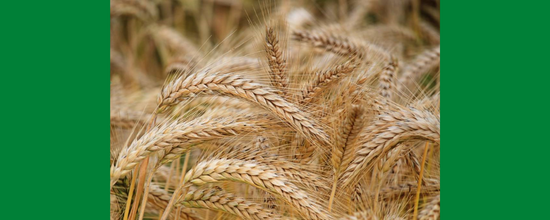
Irrigation should be given at this stage because of flowering stage starts.
Loose Smut of Wheat
Symptoms:
It is very difficult to detect infected plants in the field until heading. At this time, infected heads emerge earlier than normal heads. The entire inflorescence is commonly affected and appears as a mass of olive-black spores, initially covered by a thin grey membrane. Once the membrane ruptures, the head appears powdery. The disease is internally seed borne, where pathogen infects the embryo in the seed.


Management of Loose Smut of Wheat
Physical Control:
Sun Heating:
The sun in the months of May and June is very hot. The suspected grains are soaked in water in flat, shallow bottomed basins with water level about two inches above the level of grain. The basins are placed in the direct rays of the summer sun for about 4 to 6 hours, say from 8 a.m. to 12 noon. During this period the dormant fungus mycelium becomes active. The water is then drained off. The softened grains are spread in thin layers on the brick floor in the midday sun to dry.
Chemical Control-
- Seed treatment with fungicides like Vitavax 75 WP or Benlate 50 WP @ 2 g/kg seed reduce the pathogen infection.
- Foliar Spray with Propiconazole 25 EC OR Tebuconazole 25 EC @ 1 ml/lit of water if infection is seen in crop
Leave a Reply