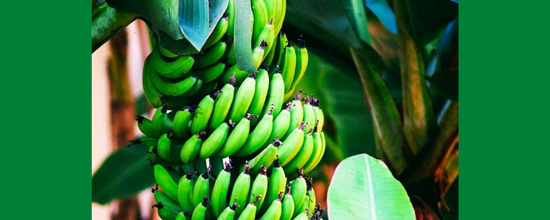
The soil around the plants should be pressed firmly for better and quick establishment of the plants. Gap filling should be done to replace the un-sprouted as well as rotten suckers, for additional income and for effective land use efficiency, short duration crops such as onion, green-gram, beans, radish and marigold. Give irrigation in this week to banana plants for better growth.
Erwinia rot: Erwinia carotovora sub sp. carovora
Symptom:
- This disease is more pronounced on young suckers leading to rotting and emitting of foul odour
- Roting of crown region is a characteristic symptom followed by epinasty of leaves, which dry out suddenly
- If affected plants are pulled out it comes out from the crown region leaving the corm with their roots in the soil
- Splitting of pseudostem is common in late stage of infection in cultivars Robusta, Grand Naine and Thella Chakkerakeli
- When affected plants are cut open at collar region yellowish to reddish ooze is seen
- This soft rotting may spread radially towards growing point through the cortical tissues. The rotten corm emits foul smell
- The disease can be spread by infected plant debris, plant wounds and injuries. Hot and damp weather with plenty of rainfall trigger the disease to occur. Water is required for the bacteria to invade into the plant


Crown rottening Bacterial ooze
MANAGEMENT:
- Good drainage and soil conditioning can control the disease to some extent.
- Plant disease free suckers.
- Remove infected plants immediately.
- Remove plant residues after harvest.
- Dip suckers in copper oxychloride (40g/10l) + streptocycline (3g/10lit) for 30 min before planting.
Banana aphid, Pentalonia nigronervosa f. typica


Banana bunchy top Aphids on under surface of leaves

Winged adults
Symptoms of damage
- Leaves are bunched into a rosette appearance
- Leaf margins are wavy and upward rolling
- Stunted growth of the plant
- Do not produce bunches
- Vector of bunchy top disease.
- Seen in colonies on leaf axils and pseudostem
Identification of pest
- Nymphs – are dark in colour
- Adult – Brownish and has black veined wings
Management
- Ensure clean cultivation
- Use healthy and pest free suckers to check the pest incidence
- Destroy diseased plants with rhizome
- Spray methyl demeton 25 EC 0.05% or monocrotophos 36 SL 0.072%
- Direct the spray towards the crown and pseudostem base upto ground level
- Inject monocrotophos 36 SL 1ml/plant (1ml diluted in 4 ml of water)
- Avoid injection of monocrotophos after flowering
- Encourage activity of predators:
- Scymnus, Chilomenes sexmaculatus, Chrysoperla carnea and other coccinellids;
- Use entomopathogens, Beauveria bassiana
Inspect the field and if thrips are present in the banana field then use control measures as recommended. In this week irrigate the field two times or as needed.
Leaf Feeder
Castor hairy caterpillar, Pericallia ricini

Symptoms of damage
- Caterpillar scraping the chlorophyll content and windowing in unfurled leaves.
Identification of pest
- Larva – Black with brown head having long brown hairs
- Adult – Grey coloured with dark spots on the pinkish hind wings.
Management
- Collect and destroy egg masses and caterpillars
- Use burning torch to kill the congregating larvae
- Use light trap to attract and kill the adults
- Spray chlorpyriphos 20 EC or quinalphos 25 EC 2ml/lit
Cut worm, Spodoptera litura
Symptoms of damage
- Young larvae feed by scrapping the leaves from ventral surface
- Later on feed voraciously at night on the foliage.


scrabbing of larvae
Identification of pest


Larva Adult
- Larva – Pale greenish brown with dark marking.
- Yellow and purplish spots in the sub marginal areas.
- Fore wing – Stout moth with wavy white markings on the brown.
- Hind wings – white having a brown patch along the margin.
Management
- Hank pick and destroy the caterpillar
- Collect and destroy the damaged plant parts
- Summer ploughing to expose to the pupae
- Use light trap 1/ha
- Spray application of azinphosethyl, chlorphyriphos and monocrotophos
- Severe infestation – spot application of Bt
- Foliar spray with avanthe 1 ml in 100 ml of water
- Field release of egg parasitoid
- Telenomus spodopterae
- Telenomus remus
- Field release of entomopathogenic fungus, Nomuraea rileyi

Leave a Reply