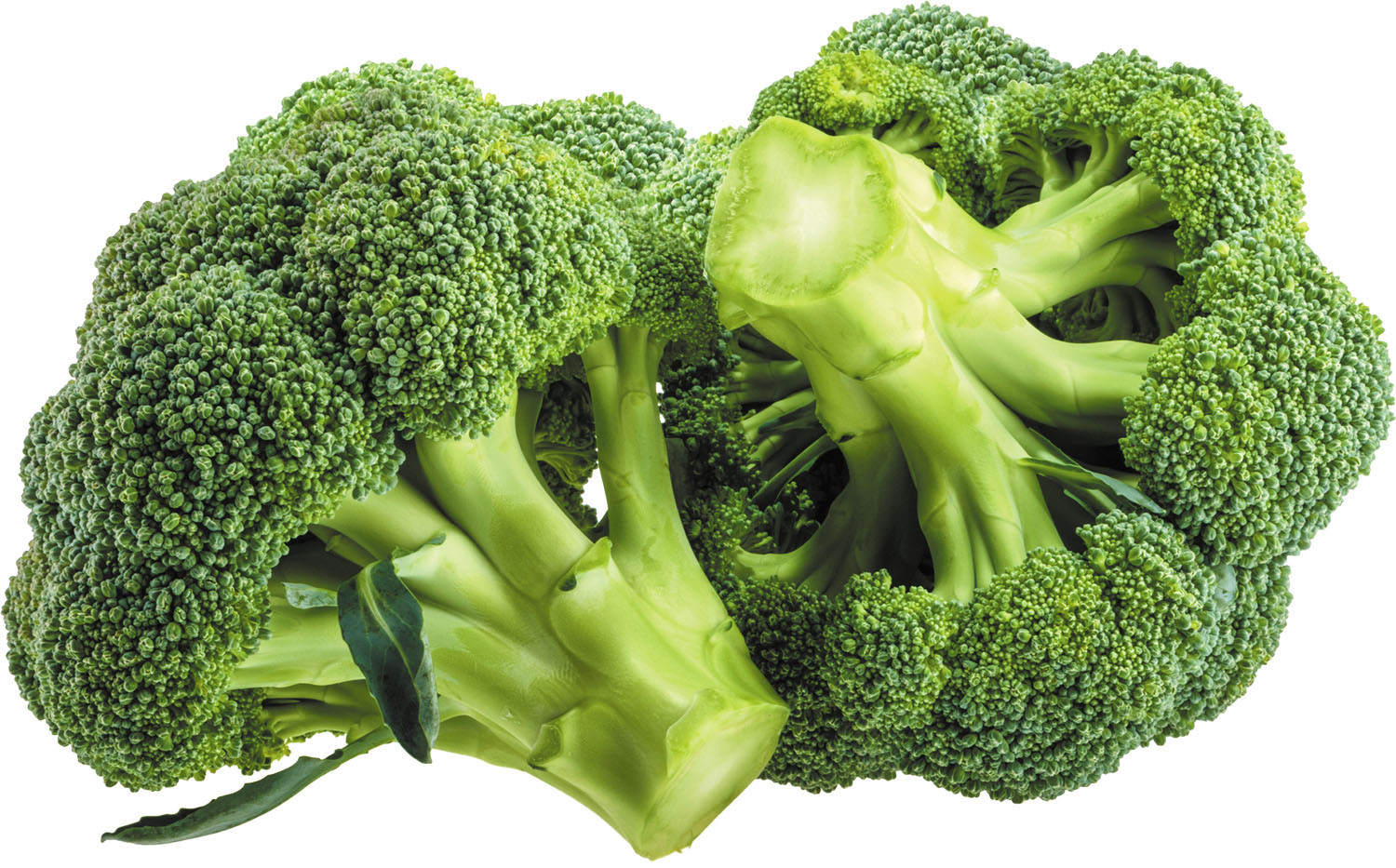
In India, broccoli farming is a boom for the rural economy. It is a cool season crop and can be grown in spring season. It is a rich source of nutrition such as iron, calcium and vitamins. The crop contains 3.3% of protein content and high content of Vitamin A and C. It also contains substantial amount of riboflavin, niacin and thiamine and also contains high concentration of carotenoids. It is mainly used for salad purpose and can be eaten by lightly steaming it. It is mainly marketed fresh, frozen or as a salad.
Broccoli plant anatomy-

SOIL
For vigorous and proper growth, broccoli requires moist soil. Well drained soil which contains good fertilizer content is ideal for broccoli farming. pH having 5.0-6.5 is optimum for broccoli cultivation. The pH can control the availability of nutrients, biological functions, microbial activity, and the behavior of chemicals. Because of this, monitoring or controlling the pH of soil, water, and food or beverage products is important for a wide variety of applications.
Loam soil-

Loam soil is a mixture of sand, silt and clay that are combined to avoid the negative effects of each type.
These soils are fertile, easy to work with and provide good drainage. Depending on their predominant composition they can be either sandy or clay loam.
As the soils are a perfect balance of soil particles, they are considered to be a gardeners best friend, but still benefit from topping up with additional organic matter.
Sandy soil-

Sandy Soil is light, warm, dry and tends to be acidic and low in nutrients. Sandy soils are often known as light soils due to their high proportion of sand and little clay (clay weighs more than sand).
These soils have quick water drainage and are easy to work with. They are quicker to warm up in spring than clay soils but tend to dry out in summer and suffer from low nutrients that are washed away by rain.
The addition of organic matter can help give plants an additional boost of nutrients by improving the nutrient and water holding capacity of the soil.
In the pH scale, pH 7.0 is neutral. Below 7.0 is acidic and above 7.0 is basic or alkaline. Soil pH affects nutrients available for plant growth. In highly acidic soil, aluminum and manganese can become more available and more toxic to plant while calcium, phosphorus, and magnesium are less available to the plant.

Application of liming or acidifying materials will ensure that soil pH is near the agronomic target pH. Yet, it is also important to consider the critical pH before making soil pH management decisions. The critical pH is defined as “the maximum soil pH value at which liming increases crop yield”. The critical pH reflects the practical and economic considerations of changing soil pH to the value most suited for plant growth.
POPULAR VARIETIES WITH THEIR YIELD
Palam Samridhi: Released in 2015. Plant has semi-spreading growth habitat which bears smooth leaves which are large and dark green in color. It has round head, which is compact and green in color. The heads have an average weight of 300gm. The variety matures in 70-75 days after transplanting and it gives an average yield of 72qtl/acre.
Punjab Broccoli-1: Released in 1996. It has smooth leaves which are wavy and dark green in color. The heads are compact and attractive. The variety matures in about 65 days and gives an average yield of 70tl/acre. The variety is suitable both for salad as well as cooking purposes.
SOWING
Time of sowing:
The optimum for seed sowing is mid-August to mid-September.
Spacing:

Use line to line spacing of 45 X 45cm.
Sowing depth:

Seeds are sown 1-1.5cm deep.
Method of sowing:
Sowing can be done by-
Line sowing and broadcasting method.


SEED

Seed rate:
Use 250gm of seeds for sowing in one acre land.
Seed treatment:

Before sowing seeds are treated with hot water (58oC) for 30 minutes to protect seeds from soil borne diseases.
SEED PRODUCTION
Keep isolation distance of 1600 m from Cole crops and other different varieties of broccoli. Skip one row after every five rows; it is essential for field inspection. Remove disease plant; also remove plant showing variation in leaf characteristic. Harvest crop when pods turn brown. Harvesting should be done 2-3 times. After harvesting keep plant in field for curing and drying purpose for a week. After proper drying, for seed purpose, threshing of crop is to be done.
FERTILIZER
Fertilizer Requriement (kg/acre)
| UREA | SSP | MOP |
| 110 | 155 | 40 |
Apply FYM@40tonnes. Along with FYM apply fertilizer dose of nitrogen@50kg/acre in the form of urea@110kg/acre, phosphorus@25kg/acre in the form of SSP@155kg/acre and Potassium@25kg/acre in the form of MOP@40kg/acre. Full dose of FYM, phosphorus and potassium and half dose of Nitrogen is added before transplanting. Rest of the nitrogen dose is added after one month of transplanting.
WEED CONTROL

To check weed control, apply Fluchloralin (Basalin) 1-2 litre/600-700 litre water before transplantation followed by hand weeding 30 to 40 days after transplanting. Apply Pendimethalin@1 litre/acre one day before transplanting of seedlings.
IRRIGATION

Immediately after transplanting, give first irrigation. Depending upon soil, climatic condition, apply irrigation at interval of 7-8 days in summer season and 10-15 days during winter season.
PLANT PROTECTION
Pest and their control:
Thrips:

These are the small insects which pale yellow to light brown in color and the symptoms are distorted leaves, and silvery leaves are seen.
Treatment: If aphids and jassids harms more, then spraying of Imidachloprid 17.8 SL 60ml per acre in 150ltr water should be done.
Nematodes:

The symptoms are reduction in plant growth and yellowing of plant.
Treatment: if infestation is seen then broadcasting of Forate@5kg or Carbofuran@10kg for per acre land should be done.
Diamond back moth:

The larva feeds on upper and lower surface of the leaves and as a result it damages the whole plant.
Treatment: if infestation is seen then spraying of Spinosad 25% SC 80ml/150ltr water for per acre land should be done.
Disease and their control:
White mold:

It is caused by Sclerotinia sclerotiorum. The symptoms are irregular and grey color lesions are seen on the leaves and stem.
Treatment: If infestation is seen in the field then spraying of Metalaxyl + Mancozeb @2gm/ltr water should be done at the interval of 10 days.
Damping off:

It is caused by Rhizoctonia solani. The symptoms are immediate death of seedlings after germination and brown-red or black color rot is seen on the stem.
Treatment: Add Ridomil gold@2.5gm/ltr in roots should be done and after that irrigation is given when required. Don’t let the water stand in the field.
Downy mildew:

The symptoms are small angular lesions which are orange or yellow in color are seen on the lower surface of the leaves.
Treatment: If infestation is seen then spraying with Metalaxyl 8% + Mancozeb 64% WP @ 250gm/150 ltr should be done.
Ring spots:

Small and purple color spots are seen on leaves which turns brown at maturity.
Treatment: If infestation is seen then spraying with Metalaxyl 8% + Mancozeb 64% WP @ 250gm/150 ltr should be done.
HARVEST/STORAGE OF BROCCOLI

Broccoli harvesting is mainly done when heads reaches the marketable size. After harvesting they should be marketed as soon as possible because they can’t be stored for a longer time. After harvesting, sprouts again get ready for harvesting after 10-12 days.
- Harvest broccoli in the morning time
- Harvest broccoli before it heats up when the buds of the head are firm and tight, just before the heads flower.
- If you find yellow petals, harvest broccoli immediately because it will decrease quality rapidly.
- The perfect way to harvest is to cut heads from the plant, taking at least 6 inches of stem. Make sure you make a slanted cut on the stalk to allow water to slide away.
- Most of the varieties have side-shoots that will continue to develop after the main head is harvested.
STORAGE OF BROCCOLI
- You can store broccoli in the refrigerator for up to 5 days.
- Do not wash before storing. If you wash before storing, make sure to dry it thoroughly.
- Broccoli can be frozen for up to one year.
- You can store broccoli in the refrigerator for up to 5 days.
- Do not wash before storing. If you wash before storing, make sure to dry it thoroughly.
- Broccoli can be frozen for up to one year.
Leave a Reply