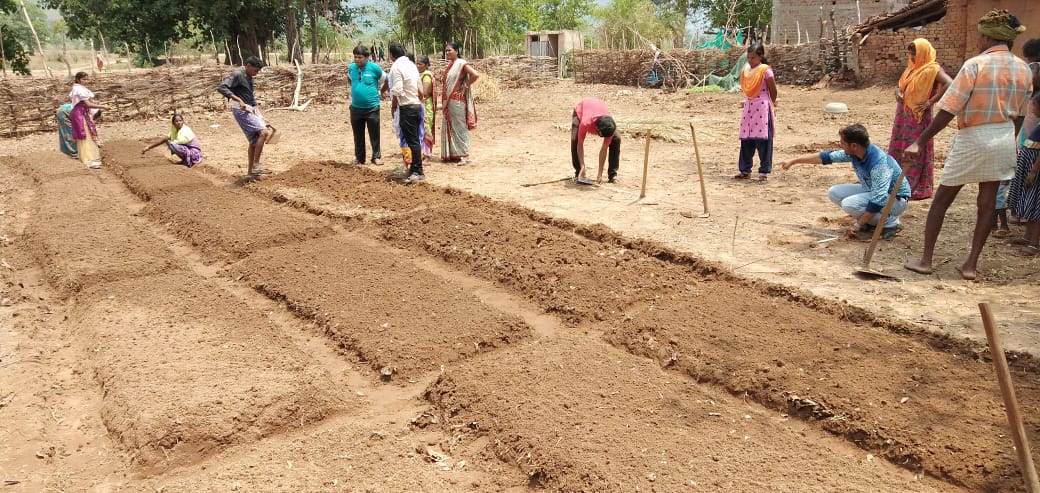
4 Weeks before seedling-
Here is some information on the best climate for eggplant in terms of optimal temperatures, relative humidity and rainfall.
| Temperature | 15-32°C |
| Sowing Temperature | 15-20°C28-32°C |
| Harvesting Temperature | 30-32°C25-30°C |
| Annual Rainfall | 600 |
Brinjal or eggplant is a versatile crop that is adapted to many areas, where it is grown throughout the year. It can be grown in any type of soil, but good growth and higher yields can only be reached if optimal conditions prevail. Here are some recommendations for choosing the best planting site for eggplants in terms of characteristics of soil.
SOIL
Brinjal is a hardy crop so it can be grown on different types of soils. As it is a long duration crop, it requires well drained fertile sandy loam soil which is best suited for its cultivation and gives good yield. For early crop light soil are good and for high yield clay loam, silt loam are suitable. For good growth pH of soil should be 5.5 to 6.6.
Sandy soil-

Sandy Soil is light, warm, dry and tends to be acidic and low in nutrients. Sandy soils are often known as light soils due to their high proportion of sand and little clay (clay weighs more than sand).
These soils have quick water drainage and are easy to work with. They are quicker to warm up in spring than clay soils but tend to dry out in summer and suffer from low nutrients that are washed away by rain.
The addition of organic matter can help give plants an additional boost of nutrients by improving the nutrient and water holding capacity of the soil.
Loam soil-

Loam soil is a mixture of sand, silt and clay that are combined to avoid the negative effects of each type.
These soils are fertile, easy to work with and provide good drainage. Depending on their predominant composition they can be either sandy or clay loam.
As the soils are a perfect balance of soil particles, they are considered to be a gardener’s best friend, but still benefit from topping up with additional organic matter.
3 weeks before seedling-
Different eggplant varieties that are best suited for your purposes-
Popular varieties with their yield
Punjab Bahar: Plant height is about 93 cm. Fruits are of round, dark purple shinning color having less seeds. It gives an average yield of 190 qtl/acre.
Punjab No 8: Plants are of medium height. Fruits are of medium size, round shape having light purple color. It gives average yield of 130 qtl/acre.
Jamuni GOI (S 16): Variety developed by Punjab Agriculture University. Fruits are long plumy and shining purple color.
Punjab Barsati: Variety developed by Punjab Agriculture University. These are tolerant to fruit borers. Fruits are of Medium size, long and purple color. It gives an average yield of 140 qtl/acre.
Punjab Neelam: Variety developed by Punjab Agriculture University. Fruits are of long purple color.It gives average yield of 140 qtl/acre.
Punjab Sadabahar: Variety developed by Punjab Agriculture University. Fruits are of long black color. It gives an average yield of 130 qtl/acre.
PH 4: Variety developed by Punjab Agriculture University. Fruits are medium size and long. Fruits are of dark purple color. It gives an average yield of 270 qtl/acre.
PBH-5: Released in 2017. It gives an average yield of 225qtl/acre. It has long, shining and black-purple color fruit.
PBHR-41: Released in 2016. It gives an average yield of 269qtl/acre. It has round, moderate to large, shining and is greenish purple color fruits.
PBHR-42: Released in 2016. It gives an average yield of 261qtl/acre. It has egg-round shape, moderate, shining, and black-purple color fruits.
PBH-4: Released in 2016. It gives an average yield of 270qtl/acre. It has moderately long, shining and black-purple color fruits.
Punjab Nagina: Released in 2007. It gives an average yield of 145qtl/acre. It has black-purple color and shining fruits. The variety is ready for harvesting after 55 days of sowing.
BH 2: Released in 1994. It gives an average yield of 235qtl/acre. The average weight of fruit is 300gm.
Punjab Barsati: Released in 1987. It gives an average yield of 140qtl/acre. It has moderately long and shining purple fruit.
Pusa Purple Long: Early maturing variety. It’s ready to harvest in 70-80 days after sowing in the winter season and 100-110 days during the summer season. Plants having medium height, fruits are of long, purple color. It gives an average yield of 130 qtl/acre.
Pusa Purple Cluster: Developed by ICAR, New Delhi. Medium duration variety. Fruits are of deep purple color and borne in clusters. It is moderately resistant to bacterial wilt.
Pusa Hybrid 5: Fruits are long with dark purple color. Ready to harvest in 80-85 days. Gives average yield of 204 qtl/acre.
Pusa Purple Round: It is tolerant to little leaf and shoot and fruit borer.
Pant Rituraj: Fruits are round with attractive purple color with less seed. Gives average yield of 160 q/acre.
2 weeks before seedling-
Sterilize the seedbeds using solar radiation

Solarization is an easy, safe and cost effective way to sterilize the soil and produce healthy seedlings. It consists of utilizing the radiation from the sun to create unfavourable conditions for pathogens and weeds in the seedbed soil. This process will reduce soil-borne diseases and break the life cycle of insects, pests and seeds of weeds. The best time for solarization is during the dry season with high temperatures. To solarize soil, follow these steps:
- Apply water to moisten seedbed soil.
- Cover the soil with transparent plastic sheets for 3-4 weeks.
- Bury the edges of the sheets in the soil.
- After 3-4 weeks, remove the plastic sheets and plough the soil lightly.
- About 2-3 days later, level the soil and sow the seeds.
How to prepare raised seedbeds for plant nurseries-

- Choose an open, protected, sunny and well drained area of the field. If you have a short growing season, you should consider to make your seedbed inside a greenhouse.
- Mark the seedbed plots (2-3m x 1m) and mix the soil in the selected area thoroughly with a rake to soften its structure. Remove any weed and debris that you may see. Wooden planks may be used.
- Incorporate well-decomposed farmyard manure at a rate of 4-5 kg/m2 into soils.
- Form raised seedbeds 15cm or higher, 2-3 m in length and 80-100 cm wide to improve drainage. Water reasonably to ensure good seed-to-soil contact.
- Cover the soil with a plastic sheet and leave it for 10 days (solarization). This sterilizes the soil partly and warms it up for a better germination.
- Set up a net-tunnels structure above the seedbeds with 32-60 mesh nylon netting to protect seedlings against rain, sun and insect pests. The seedbeds are now ready for sowing.
Seed rate-
Use seed rate of 500-600 gm for preparing seedling for one acre land sowing.
How to sow seeds in nursery-


- Soak good quality seeds in warm water overnight to soften them and speed up germination.
- While the seeds are drying, use a wooden teeth bar to mark the seedbed soil at the place where you want to sow them (usually, 5 cm apart and 0.5 cm deep). Alternatively create a continuous narrow and shallow drill with a hoe.
- Dry the seeds thoroughly and put 2-3 seeds per hole in the seedbed soil. If using the continuous drill on the soil, sow the seeds evenly at about the recommended distance.
- Cove the seeds lightly with soil from the bed or finely sieved compost that you have prepared separately.
- Water reasonably, add organic mulch if at hand to keep soil moist and the temperature constant. Once the seeds have emerged, remove the mulch cautiously.
Seed Treatment-

For sowing use only trusted and good seeds. Before sowing do seed treatment with Thiram @3gm or Carbendazim @3gm/kg of seeds. After chemical treatment, treat seeds with Trichoderma viride@4gm/kg of seed, dry in shed and sow immediately.
| Fungicide name | Quantity (Dosage per kg seed) |
| Carbendazim | 3 gm |
| Thiram | 3 gm |
Leave a Reply