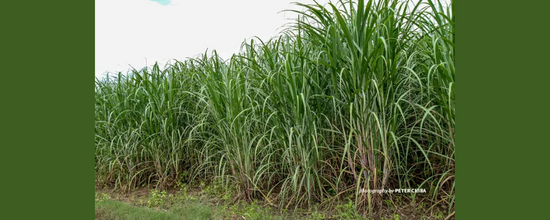

Grand growth phase starts from 120 days after planting and lasts up to 270 days in a 12-month crop. During the early period of this phase tiller stabilization takes place. Out of the total tillers produced only 40-50% survives by 150 days to form millable cane. Most important phase of the crop wherein the actual cane formation and elongation and thus yield build up takes place. Leaf production is frequent and rapid during this phase with LAI reaching around 6-7. Under favorable conditions stalks grow rapidly almost 4-5 internodes per month.
Irrigation Management:


Apply irrigation in your cane crop at an interval of 7-10 days during this phase/stage, for better growth, development and for higher yield of crop.
Monitoring of field-
Monitor the growth of your crop often. Walk through your field in a random manner or zigzag and check for signs of diseases, pests and deficiencies. Deficiencies are characterized by the discoloration of leaves and poor vigor of the plants. Diseases are often visible as discoloration and spots or streaks on leaves. Finally, remember that most of the insects present in the field are beneficial for your crop. Those that attack your crop will leave behind damage on leaves and buds in the form of holes.
Red Rot:

Symptoms:
- The first external symptom appears mostly on the third or fourth leaf which withers away at the tips along the margins. The reddening of the internal tissues which are usually elongated at right angles to the long axis of the stalk. The presence of cross-wise white patches are the important diagnostic character of red rot.
Management:
Cultural Control:
- Use crop rotation for at least three years. Adopt crop rotation by including rice and green manure crops.
- Use disease free sets for planting.
- Grow resistant varieties like CO 6907, CO 7219, CO 8013, CO 8021, CO 7706, CO A 7602, COA 89082, CO A 89085, 87 A 397, CO T 8201, etc.
- Deep tillage to incorporate the left over debris.
Physical Control:
- Hot water treatment of sets at 520C for 30 min.
- Seed soaking in Carbendazim 50% WP @2g/lit. of water for 1 kg seed .
- Setts can be treated with aerated steam at 52 0C for 4 to 5 hours.
Chemical Control:
- Sett treatment with Carbendazim 50% WP @ 2.5 g/lit. of water for 30 Minutes.
- Dip fresh sets in 0.25% solution of Agallol or Aretan @ 200 g/50 liters of water for 2-3 minutes.
Sugarcane Trash Mulching-
The alternative to burning sugarcane trash is to conserve it and transform it into high-quality mulch for your ratoon crop. This mulch is an excellent material for suppressing weeds and a source of organic matter and nutrients to improve your soil.
Here are some recommendations to follow-
- Irrigate your field to completely soak the cane trash. This will soften trash and help for easy handling.
- Place sugarcane trash in alternative rows for the following ratoon as mulch, in un-mulched rows.
- Broadcast of 30 kg/acre urea over the sugarcane trash or use cow urine which contains ammonia. This will help the trash decompose faster.
- In addition, apply 200 kg/acre of FYM manure enriched with 12 kg/acre of microbial culture (Trichoderma viridae) on sugarcane trash; this will also help to enhance decomposition rate.
- Do not use trash that could be contaminated with diseases.
Smut:

Symptoms:
- The affected plants are stunted and the central shoot is converted into a long whip-like, dusty black structure. The length of the whip varies from a few inches to several feet. In early stages, this structure is covered by a thin, white papery membrane. The whip may be straight or slightly curved.
Management:
Cultural Control:
- Grow resistant varieties like Co 6806 and Co 62175.
- Grow red gram as a companion crop between 2 rows of sugarcane.
- Follow crop rotation with green manure crops or dry fallowing.
Mechanical Control:
- Remove the whip with thick cloth without allowing the spore to shed and destroy.
Physical Control:
- Treat the sets in hot water at 52oC for 2 hours.
Chemical Control:
Seed treatment with Thiram 75% WP or Captan 75%WP @3g/kg seed.
- Sett’s treatment with fungicides vizTriadimefon 25% WP @ 200g dissolve in 250-300 liter of water or Carbendazim 50% WP @ 2.5 g/lit. of water for 10 minutes.
Pokkah Boeng:

Symptoms:
Chlorotic Phase:
- Frequently, a pronounced wrinkling, twisting and shortening of the leaves accompanied the malformation or distortion of the young leaves. The base of the affected leaves is often narrower than that of the normal leaves.
Acute Phase or Top-Rot Phase:
- The young spindles are killed and the entire top dies. Leaf infection sometimes continues downward and penetrates in the stalk by way of a growing point.
Knife-cut Phase (associate with top rot phase):
One or two or even more transverse cuts in the rind of the stalk /stem in such a uniform manner as if the tissues are removed with a sharp knife, this is an exaggerated stage of a typical ladder lesion of a pokkah boeng disease.
Management:
Cultural Control:
- Crop rotation should be followed in affected fields.
- Paired row or wider spacing planting of sugarcane should be adopted.
- Raise and destroy diseased plants.
Chemical Control:
- Spraying of Bavistin 50% WP @1 gm/ lit. of water OR Blitox- 50% WP @2gm/ lit of water OR Dithane M-45 @3 gm/ lit of water are the most effective fungicides for reducing the pokkah boeng disease. Two to three sprayings with an interval of 15 days reduces the multiplication of a pathogen. Sprinkle on the crop with sour whey.
Wooly Aphid:

Symptoms:
- Nymphs produced by late females are relatively active, have long, elliptical bodies and are pale greenish white in color. The apterous adult female is 1.78 mm long and 1.07mm wide with a very soft, broad, laterally depressed body which is densely covered by white, cotton-like secretions.
- The attack generally begins in the middle leaves and extends to upper leaves. As the aphids grow and reach later instars, their body is covered with white waxy filaments giving the appearance of a white waxy coating to the infested leaves. Leaves turn yellow because of sucking sap by these aphids. Sooty mold growth on lower leaves of wooly aphids infested plants.
Management:
Cultural control:
- Grow resistant varieties like- COVC 2003 & 165.
- Adopt paired row system of planting.
- Avoid excessive use of nitrogenous fertilizers.
Mechanical Control:
- De-trashing of canes if infestation exceeds low intensity.
- Installation of yellow sticky traps @6-8/acre for wooly aphids.
Biological Control:
- Release of predator Dipha aphidivora @400 cocoons/acre.
- Foliar spray of entomo pathogens such as Metarhizium anisopliae, Verticillium lecanii and Beauveria bassian @1kg / acre dissolve in 250-300 lit of water.
Chemical Control:
- Soil application of Carbofuran 3G @ 12 kg /acre in infested crops not more than six months old.
- First colonies should be destroyed by spraying insecticides such as Acephate 75% SP @ 300-400g/acre dissolved in 250-300 lit. of water. Or Dimethoate 30% EC @2ml per liter of water as spot application.
Top Borer:


Symptoms:
- Larvae are Smooth, white or cream colored with a red colored mid – dorsal line and yellow head. White colored moth (with a buff orange colored anal tuft of hairs in female).
- Parallel rows of short holes in the emerging leaves causes a white streak which later turns reddish brown. Dead hearts in grown up canes are reddish brown in color which cannot be easily pulled. In the tillering phase of the crop, the attacked shoots die, side shoots (tillers) develop producing a bunchy top appearance.
Management:
Cultural control:
- Grow resistant varieties like-CO 419, CO 745, CO 6516, CO 859, CO 1158 and CO 7224.
- Autumn planted crops suffer less than spring planted and ratoon crops.
Mechanical Control:
- Collection and destruction of adult moths egg masses and dead hearts of top borer.
- Use of pheromone traps @ 4-5m in No/acre for monitoring coinciding with brood emergence.
- Installation of light trap @ 1 in (Nos.) / acre.
Biological Control:
- Release of Trichogramma spp. @ 20,000/acre 2-3 times at 10 days interval.
Chemical Control:
- Chlorantraniliprole 18.5% SC @150 ml dissolve in 250-300 lit. of water/acre. Carbofuran 3% CG @ 8-10 kg/acre or Chlorantraniliprole 0.4% GR @ 7.5 Kg/acre.
Root Borer:

Symptoms:
- Fully grown caterpillars are white in color, relatively active and measure 2-5 cm in length. The full grown larvae are white color.
- In grownup canes the damage symptom is visible in the form of yellowing of leaves. The canes need to be uprooted to detect the damage and the presence of larva. While attack by the first brood affects tiller production, second to fourth broods reduce cane length and weight in the decreasing order of magnitude with the brood number. Yield loss and sucrose reduction have been observed due to borer attack.
Management:
Cultural control:
- Deep summer plowing. Inter culture and hand weeding.
- Timely irrigation.
- Light earthing up of crops three months after planting.
- Grow onion/garlic/coriander as intercrop.
Mechanical Control:
- Destruction of affected shoots along with borer larvae in the pre-monsoon period reduces pest inoculum.
- Use of pheromone traps @ 2 in Nos/acre for monitoring.
- Installation of light trap @ 1 in Nos. per acre.
Biological Control:
- Release of 125 gravid females of Sturmiopsis inferens a tachinid parasitoid per acre.
- Release Trichogramma chilonis @ 20,000/acre @ 10 days interval at the time of incidence.
Chemical Control:
- Spray of Fipronil 5% SC @ 600-800 ml OR Chlorpyrifos 20% EC @ 500-600 ml OR Quinalphos 5% granule @ 2 kg/acre. OR Monocrotophos 36% SL @ 600-900 ml dissolve in 250-300 lit of water/acre.
Early Shoot Borer:


Symptoms:
- Larva is dirty white with five dark violet longitudinal stripes and dark brown head. Pale grayish brown moth with black dots near the coastal margin of the forewings and with white hind wings.
- Dead heart in 1-3 month old crop, which can be easily pulled out, rotten portion of the straw coloured dead – heart emits an offensive odor. A number of bore holes at the base of the shoot just above the ground level.
Management:
Cultural Control:
- Deep summer plowing. Inter culture and hand weeding.
- Timely irrigation.
- Light earthing up of crops three months after planting.
- In ratoon crop mulching with trash reduces shoot borer attack.
- Grow resistant varieties like CO 312, CO 421, CO 661, CO 917 and CO 853.
- Inter crop: Onion or Garlic or Coriander for early shoot borer.
Mechanical Control:
- Collection and destruction of adult moths, egg masses and dead hearts.
- Remove the first leaf sheath to kill the larvae.
- Use of pheromone traps@4 in Nos/acre two weeks after planting.
- Trash mulching minimizes the pest incidence.
Biological Control:
- Release egg parasitoid Trichogramma chilonis @20,000/acre.
- Parasitized eggs of Corcyra cephalonica @ 20,000/acre at 10 days interval beginning 30 days after planting during April-June would be useful.
Chemical Control:
- Spray of Fipronil 5% SC @ 600-800 ml dissolved in 250-300 lit. of water/acre OR Chlorantraniliprole 0.4% GR @ 7.5 kg/acre. OR Chlorpyrifos 20% EC @ 500-600ml /acre OR Quinalphos 25 % EC @ 800 ml dissolve in 250-300 lit of water/acre .
Termite-

Symptoms of termites include wilting of young or older plants and often lodging and presence of termites and tunnels around and in the roots. Roots and the base of the stem are also hollowed out.
To prevent crop from termites be sure to follow these recommendations-
- Inspect plants regularly, early in the morning or late in the afternoon.
- Remove and destroy affected plants or plant parts.
- Avoid water stress and unnecessary injury to the plants.
- Remove plant residues and other debris after harvest.
- Chlorantraniliprole 18.5% SC @ 200-250 ml in 400 l of water/acre or clothianidin 50%WDG @100 g in 400 l of water/acre or imidacloprid 70% WS @28-42 g in 40-60 l of water/acre or imidacloprid 17.8% SL @ 140 ml in 750 l of water/acre or chlorpyrifos 20% EC @ 2.5 l/acre
Pyrilla:


Symptoms:
- Adult is a pale Brown in color soft bodied insect that has a long snout or beak in front of its head. Nymphs are brown in color with two feathery filaments at the end of the abdomen.
- Adults and nymphs suck phloem sap from leaves and excrete honeydew on the foliage leading to sooty mold development.
Management:
Cultural control:
- Avoid late application of nitrogenous fertilizers.
Mechanical Control:
- De- trashing of dry leaves during August – September.
- Remove lower leaves having pyrilla eggs during summer months.
- The burning of trash helps in destroying unhatched eggs and over wintering nymphs.
Biological Control:
- Release of nymph and adult Ecto-parasitiod parasite Epiricania melanoleuca @ 3200-4000 nos./acre.
Chemical Control:
- Spray of Chlorpyrifos 20% EC @ 600 ml OR Monocrotophos 36% SL @ 200 ml dissolve in 250-300 lit. of water/acre.
Whitefly:


Symptoms:
- Neonate nymphs are pale yellow in color, flat and oval in shape, and later turn shiny black. There is a “T‟ shaped white marking on the thorax, which splits at the time of adult emergence. Adult Pale yellow body with hyaline wings dusted with waxy bloom, exhibit brisk fluttering movements.
- Whiteflies damage sugarcane by extracting large quantities of phloem sap from leaves. Large colonies of Aleurolobus barodensis nymphs suck the sap from the under surface of the leaves which turn yellow; in severe cases of infestation the leaves show pinkish discoloration.
Management:
Cultural control:
- Clipping of infested leaves.
- Avoid water stress and waterlogged conditions.
- Avoid planting in low land areas.
- Synchronization of sugarcane planting and harvesting may be adopted zone wise.
Mechanical Control:
- Detrashing the puparia bearing leaves and immediately disposing by burning or burying to prevent emergence of adult white flies.
- Installation of yellow sticky traps@6-8 in Nos. for white fly.
Biological Control:
- Release of natural enemies such as Encarsia sp, Eretmocerus spp @4-5 cards/acre.
Chemical Control:
- Foliar sprays with Quinalphos 2 ml/lit. of water. Thiamethoxan 25% WG @ 50g/acre, 250-300 liter of water.
Leave a Reply