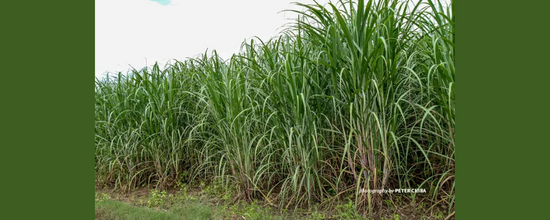

This phase lasts for about three months.
Its maturation is determined by a definite sucrose level in the stems (up to 14-16% stem mass) and a low level of reducing sugars. The commercial ripening of stems can be identified quite reliably by the ratio of refractometry indices of juice taken from the seventh-eighth internodes and lower (0.95-0.98). In tropics, by harvesting time the sugarcane stems accumulate on the average up to 14-16% sugar; in subtropics 8-12% sugar.
Irrigation Management:


Apply irrigation in your cane crop at an interval of 15-16 days during this phase/stage, because if irrigation is not applied properly at this time the cane sett gets dried and light in weight which will result in lower yield, to over-come this problem farmer have to apply proper irrigation for better yield of sugarcane crop.
Wilt:

Symptoms:
- The first symptom of the disease is visible in the canes of 4-5 month age. The canes may wither in groups. The affected plants are stunted with yellowing and withering of crown leaves. The midribs of all leaves in a crown generally turn yellow, while the leaf lamina may remain green.
Management:
Cultural Control:
- Select the seed material from the disease free plots.
- Burn the trash and stubbles in the field.
- Grow coriander or mustard as a companion crop in the early stages of crop.
- Avoid alkaline soils for growing the crop.
Physical Control:
- Treat the sets in hot water at 500C for 2 hours followed by dipping in Carbendazim 75%WP @ 2g/lit. of water for 1kg of seed for 15 minutes. Dip the sets in @40 ppm Boron or Manganese for 10 minutes.
Biological Control:
- Multiply Trichoderma viride @1kg/acre mix with 25 kg of Farm yard manure for 15 days and then apply to the soil.
Chemical Control:
- Treatment of setts with fungi-toxicants before planting Bavistin 50% WP. Apply Carbendazim 50% WP @ 2gm/lit of water.
Pokkah Boeng:

Symptoms:
Chlorotic Phase:
- Frequently, a pronounced wrinkling, twisting and shortening of the leaves accompanied the malformation or distortion of the young leaves. The base of the affected leaves is often narrower than that of the normal leaves.
Acute Phase or Top-Rot Phase:
- The young spindles are killed and the entire top dies. Leaf infection sometimes continues downward and penetrates in the stalk by way of a growing point.
Knife-cut Phase (associate with top rot phase):
One or two or even more transverse cuts in the rind of the stalk /stem in such a uniform manner as if the tissues are removed with a sharp knife, This is an exaggerated stage of a typical ladder lesion of a pokkah boeng disease.
Management:
- Cultural Control:
- Crop rotation should be followed in affected fields.
- Paired row or wider spacing planting of sugarcane.
- Raise and destroy diseased plants.
Chemical Control:
- Spraying of Bavistin 50% WP @1 gm/ lit. of water OR Blitox- 50% WP @2gm/ lit. of water OR Dithane M-45 @3 gm/ lit. of water are the most effective fungicides for reducing the pokkah boeng disease. Two to three sprayings with an interval of 15 days reduces the multiplication of a pathogen. Sprinkle on the crop with sour whey.
Leave a Reply