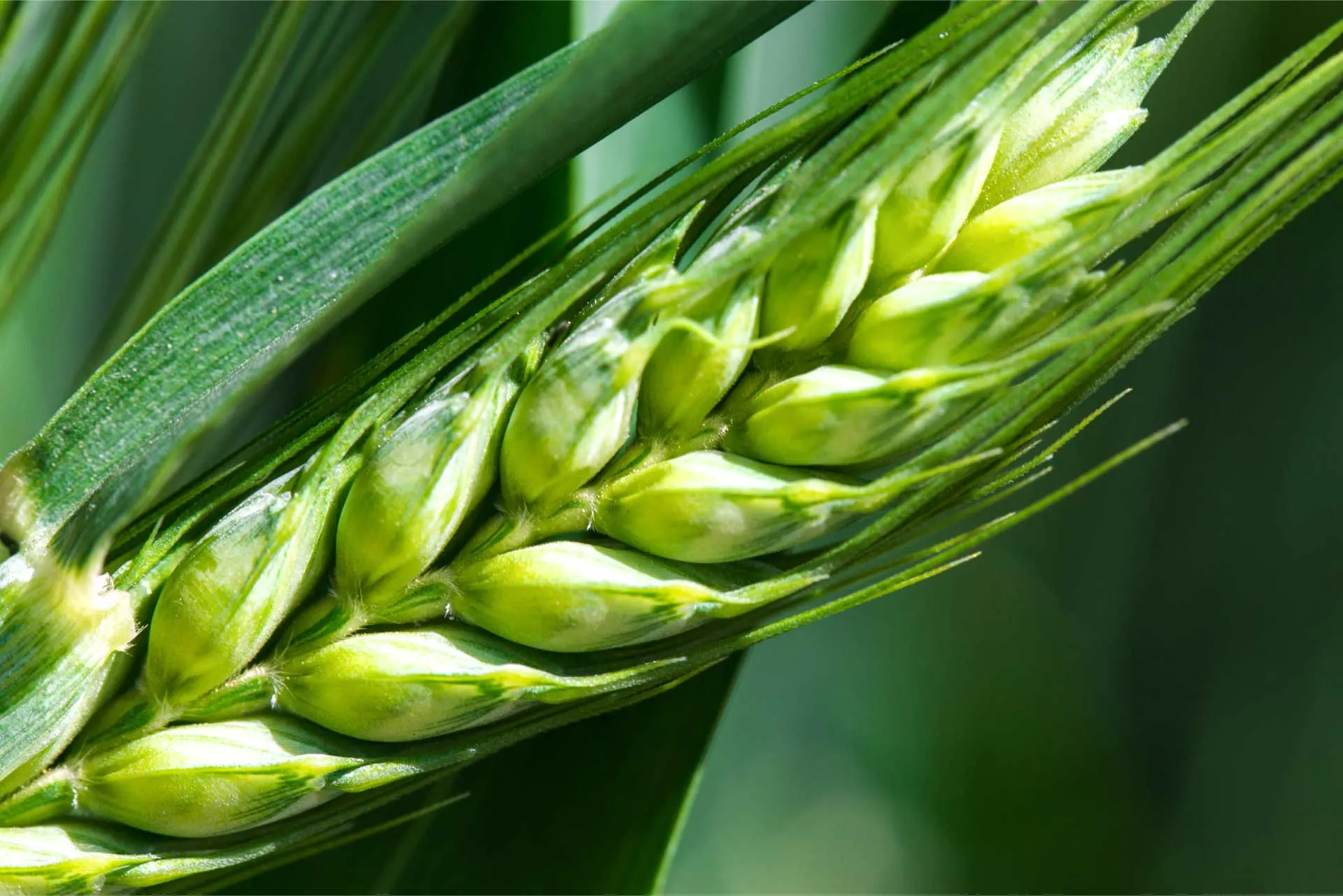
Monitor your field frequently for some disease infestation and crop inspection-
Loose Smut of Wheat
Symptoms:
It is very difficult to detect infected plants in the field until heading. At this time, infected heads emerge earlier than normal heads. The entire inflorescence is commonly affected and appears as a mass of olive-black spores, initially covered by a thin grey membrane. Once the membrane ruptures, the head appears powdery. The disease is internally seed borne, where pathogen infects the embryo in the seed.


Management of Loose Smut of Wheat
Physical Control:
Sun Heating:
The sun in the months of May and June is very hot. The suspected grains are soaked in water in flat, shallow bottomed basins with water level about two inches above the level of grain. The basins are placed in the direct rays of the summer sun for about 4 to 6 hours, say from 8 a.m. to 12 noon. During this period the dormant fungus mycelium becomes active. The water is then drained off. The softened grains are spread in thin layers on the brick floor in the midday sun to dry.
Chemical Control-
- Seed treatment with fungicides like Vitavax 75 WP or Benlate 50 WP @ 2 g/kg seed reduce the pathogen infection.
- Foliar Spray with Propiconazole 25 EC OR Tebuconazole 25 EC @ 1 ml/lit of water if infection is seen in crop
Karnal Bunt of Wheat
Symptoms:
The infection is usually confined to a few grains in the spike with irregular arrangement. In severe cases, the grain is reduced to black shiny sac of teliospores. The bunt affected plants emits a foul smell which is mainly due to the presence of Trimethyl amine.


Management of Karnal Bunt of Wheat
Cultural Control:
Use disease free seed for sowing. Intercropping with Gram or Lentil. Judicious application of nitrogenous fertilizers. Avoid excessive irrigation at the time of flowering.
Biological Control-
Seed treatment with (Trichoderma harzianum and T. viride) @ 6-10g/kg seed and foliar spray of neem (Azadirachta indica) and amaltas (Cassia fistula) extracts @5ml/lit of water.
Chemical Control:
- Seed treatment with Thiram @ 3 g/kg of seed.
- Foliar spray with Propiconazole 25 EC @ 1 ml/lit of water OR Bitertanol 25 WP @ 1 g/lit of water
- Farmer has to done inspection of his crop and if needed give last irrigation.
Leave a Reply