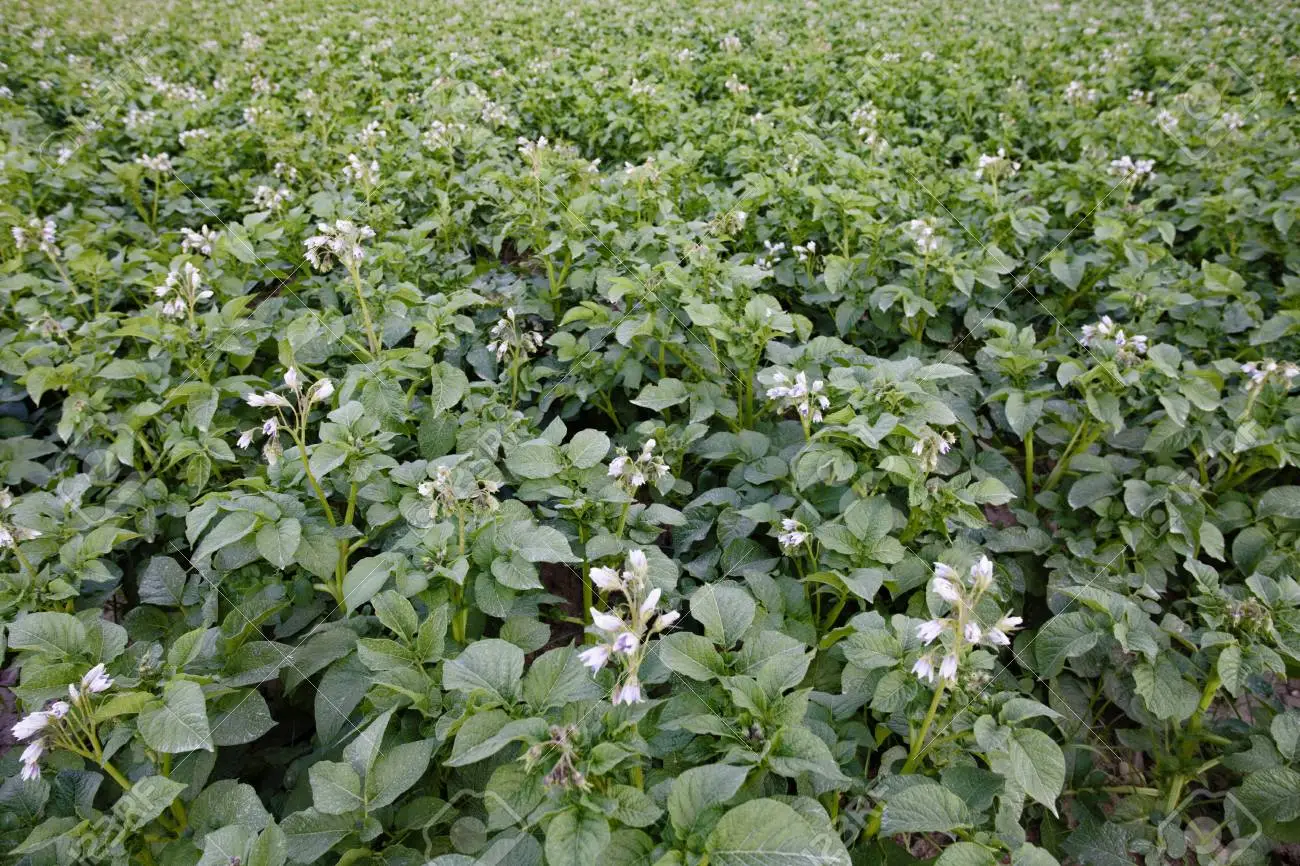
Monitoring of field-
Monitor the growth of your crop often. Walk through your field in a random manner or zigzag and check for signs of diseases, pests and deficiencies. Deficiencies are characterized by the discoloration of leaves and poor vigor of the plants. Diseases are often visible as discoloration and spots or streaks on leaves. Finally, remember that most of the insects present in the field are beneficial for your crop. Those that attack your crop will leave behind damage on leaves and buds in the form of holes. Make sure to talk to your neighbors and exchange information about current diseases with your local community. Also, seek support with public extension services in your area.
Spray 0:0:50 (N:P:K) to increase size of tubers because potassium play important role in increasing thickness of tubers. Apply irrigation again in this week.
Monitor field for late blight disease infestation-
Late Blight (Phytophthora infestans)

The infection appears at the tips or edges of the lower leaves with circular or irregular water soaked spots. White downy fungus growth appears on the underside of the leaves around the spots. Cloudy weather is conducive for very fast spread of the disease. In case of sever incidence all above ground parts may show rotting. Later the disease may spread to tubers and initiate rotting.
Control Measures–
- Plant only healthy disease free certified seed tubers.
- Spray the crop thoroughly with diathane M-45 (2.0 kg/ha) or diathane Z- 78 (2.5 kg/ha) or difolatan (2.5 kg/ha) well in advance to general appearance of disease. The spraying operations should remain continue at narrow interval of 5 to 6 days during cloudy weather.
- Dig out tubers when foliage is completely dry or cleaned.
- Grow late blight resistance varieties like Kufri Navaharl.
Avoid applying in excess nitrogen and irrigation
Leave a Reply