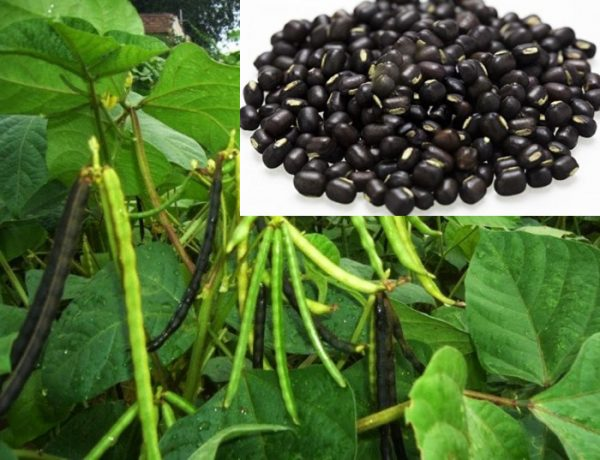
Black gram (Vigna Mungo L.) is one of the important pulses crop, grown throughout the country. The crop is resistant to adverse climatic conditions and improves soil fertility by fixing atmospheric nitrogen in the soil. It has been reported that the crop produces equivalent to 22.10 kg of N/ha., which has been estimated to be a supplement of 59 thousand tonnes of urea annually. The pulse ‘Black gram’ plays an important role in Indian diet, as it contains vegetable protein and supplement to cereal based diet. It contains about 26% protein, which is almost three times that of cereals and other minerals and vitamins. Besides, it is also used as nutritive fodder, specially for milch animals.

Madhya Pradesh, Uttar Pradesh and Andhra Pradesh are major black-gram growing states area-wise. The highest yield was recorded by the state of Bihar (898 kg/ha) followed by Sikkim (895 kg/ha) and Jharkhand (890 kg/ha). The National yield average is 585 kg/ha. The lowest yield was recorded in the state of Chattisgarh (309 kg/ha) followed by Odisha (326 kg/ha) and J&K (385 kg/ha).
Nutritive value
Protein – 24%
Fat – 1.4%
Minerals – 3.2%
Fiber – 0.9%
Carbohydrate – 59.6%
Calcium – 154 mg/100 g
Phosphorus – 385 mg/100 g
Iron – 9.1 mg/100 g
Calorific value – 347 Kcal/100 g
Moisture – 10.9%
Climate
During kharif, it is cultivated throughout the country. It is best suited to rice fallows during rabi in southern and south-eastern parts of India. Blackgram needs relatively heavier soils than greengram.
Soil
Black gram can be grown on a variety of soils ranging from sandy soils to heavy cotton soils. The most ideal soil is a well drained loam with pH of 6.5 to 7.8. Black gram cannot be grown on alkaline and saline soils. Land is prepared like any other kharif season pulse crop. However during summer it requires a thorough preparation to get a pulverized free from stubbles and weeds completely.
Sandy Soil-

It consists of small particles of weathered rock. Sandy soils are one of the poorest types of soil for growing plants because it has very low nutrients and poor water holding capacity, which makes it hard for the plant’s roots to absorb water. This type of soil is very good for the drainage system. Sandy soil is usually formed by the breakdown or fragmentation of rocks like granite, limestone and quartz.
Loam soil-

Loam soil is a mixture of sand, silt and clay that are combined to avoid the negative effects of each type.
These soils are fertile, easy to work with and provide good drainage. Depending on their predominant composition they can be either sandy or clay loam.
As the soils are a perfect balance of soil particles, they are considered to be a gardener’s best friend, but still benefit from topping up with additional organic matter.
Varieties-

![Understanding genetic diversity in blackgram [Vigna mungo (L.) Hepper] collections of Indian National Genebank | SpringerLink](https://lh3.googleusercontent.com/ALANpp_WZKjjJkK8mnOdHGlZM-K0akVyR4Gpzmp5-q5mRs4yGqSRXwJwZUJhU2JCXD33PzboK8-eVjM8K8pJopYnZfRS37HpyR_slIzTOejwNUiAc5u6hl2o6fzJLINCLpauPUXMe3Z9uGhRfyiqkQ)
The powdery mildew – resistant variety LBG 17 is suitable for rabi in southern zone, and varieties PDU 1 and Mash 414 are suitable for spring season.
Use of resistant varieties is recommended as follows.
Yellow Mosaic Virus (YMV) resistant varieties: Pant U – 19, Pant U – 30 Sarala, Jawahar urd – 2, Teja (LBG – 20), ADT – 4
Powdery Mildew (PM) resistant varieties: TAU – 2 , IPU 02 – 43
Stem fly resistant varieties: KBG – 512
Cercospora leaf spot resistant varieties: Jawa har urd – 2, Jawahar urd – 3 .
Seed treatment


Rhizobium 200 gm + PSB 250 gm /10kg of seed. Seed treatment with (Carbendazim 1 gm+ Thiram 1.5 gm) per kg of seed. Greengram blackgram under intensive cropping should be treated with Carbofuran @ 0.2% one week before Rhizobium treatment against Root knot and Reniform nematode.
Seed rate and Sowing

Optimum sowing time mid June subject to availability of moisture/rainfall. Seed rate is 15-20 kg/ha for kharif and 25-30 kg/ha for spring or rabi. Row-to-row distance is 30-35 cm for kharif and 25 cm for rabi or spring.
Fertilizer dose

20:40:20 NPK kg/ha along with 20 kg S/ha greatly increases yield of pulses and also benefit the succeeding crop. Among the micro nutrients Zn is the most deficient nutrient. So the application of Zn @ 25 kg/ha as basal gives very promising results. Boron and Molybdenum gives better results in acid soil.
Foliar spray of 2% DAP and 2% KCl at Pre flowering stage enhances the yield.
Inter-culture
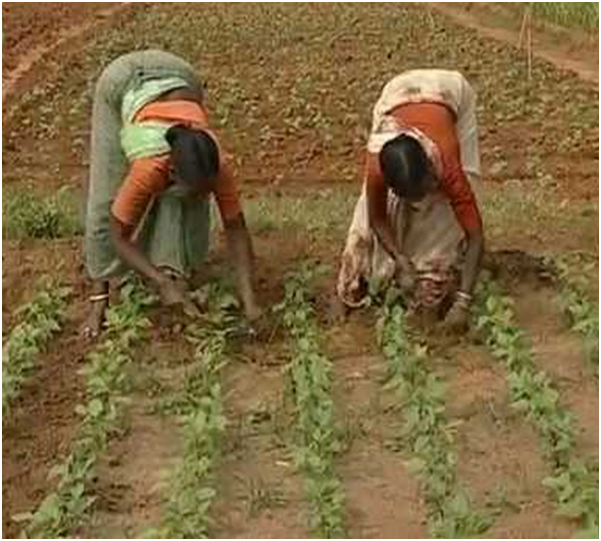
Control of weeds within 2 to 3 weeks not only prevents drawn of nutrients from the soil by weeds but also conserves moisture and helps in quick growth and development of crops. Line sowing will facilitate hoeing and weeding operation between the lines.
Weeding and hoeing is to be done between 25-30 days after sowing and if the weeds are still present in the field the 2nd weeding should be done at 45 days after sowing. Chemical herbicides like Pendimethalin or Metalachlor @ 1.0-1.5 kg/ha are found very effective as post emergence.
Irrigation

The pulse crops in Rabi and Pre rabi seasons are mostly grown on residual soil moisture condition. However irrigation should be provided at critical growth stage i.e flowering and pod development stage.
Plant protection
Borers

Identification of the pest
- Eggs – are spherical in shape and creamy white in colour, laid singly
- Larva – shows colour variation from greenish to brown. Green with dark brown grey lines laterally on the body with lateral white lines and also has dark and pale bands.
- Pupa – brown in colour, occurs in soil, leaf, pod and crop debris
- Adult – light pale brownish yellow stout moth. Fore wing grey to pale brown with V shaped speck.Hind wings are pale smoky white with a broad blackish outer margin.
Symptoms of damage-
- Defoliation in early stages
- Larva’s head alone thrust inside the pods and the rest of the body hanging out.
- Pods with round holes
Management
- ETL: 10% of affected pods
Spotted pod borer: Maruca testulalis

| Symptoms of damage– Defoliation in early stages, Larva’s head alone thrust inside the pods and the rest of the body hanging out. Pods with round holes. Identification of the pest Larva – Greenish white with brown head. It has two pairs of dark spots on the back of each segment. Adult – Forewings– light brown colour with white markings; Hindwings – white colour with brown markings at the lateral edge |
| ManagementETL: 3/plantPhosalone 0.07% (Spray fluid 625 ml/ha): When the activity of coccinellid predator (both grubs and adults) is seen, insecticide application should be avoided. |
Blue butterfly: Lampides boeticus

| Symptoms of damag- Buds, flowers and young pods with boreholes. Presence of slug like caterpillar. Honey dew secretion with black ant movements. Identification of the pest Larva – It is flat and slightly rounded; Pale green with a rough skin. Adult – moth is greyish blue with prominent black spots in the hind wings and a long tail; Ventral side of wings with numerous stripes and brown spots |
| ManagementSpray any one of the following insectcides (Spray fluid 500 l/ha)-Emamectin benzoate 5%SG 220 g/haIndoxacarb 15.8%SC 333 ml/haNSKE 5% twice followed by triazophos 0.05%Neem oil 2% |
Grass blue butterfly: Euchrysops cnejus

| Symptoms of damage– Buds, flowers and young pods with boreholes and presence of slug like caterpillar. Larval entry hole on the pod is plugged with excreta. Identification of the pest Larva – pale green or yellow with a red line and short black hairs on the body. Adult – butterfly is blue, medium sized with 5 black spots in the hind wings and two black spots in the inner margin. |
| Management of pod borer complexETL 10% affected partsDeep summer ploughing in 2-3 years to eliminate quiescent pupa.Early sowing, short duration varieties.Avoid closer plant spacing.Grow tall sorghum as comparison crop to serve as biological bird perchesCollect and destroy larvae and adults to the extent possibleInstall pheromone traps at a distance of 50 m @ 5 traps/ha for each insect pest.Install Bird perches @ 50/ha.Setting of light traps (1 light trap/5 acre) to kill moth population.Control is achieved by releasing of Trichogramma chlionis at weekly intervals @1.5 lakh/ha/ week for four times.Conserve green lacewing, predatory stink bugs, spider, antsApplication of NPV 250 LE /ha with teepol 0.1% and Jaggery 0.5% thrice at 10 – 15 days interval commencing from flowering stage. (Note: Insecticide / Ha NPV spray should be applied when the larvae are in early stage).Bt @ 600 g, neem oil/ pungum oil 80 EC @ 2ml/litSpray NSKE 5% twice followed by triazophos 0.05%.Apply any one of insecticides at 25 kg/ha. quinalphos 4D, carbaryl 5DSpray insecticides like Quinalphos 25 EC @ 1000 ml/ha. |
Sucking pests
Bean Aphids: Aphis craccivora

Symptoms of damage
- Leaves, inflorescence stalk and young pods covered with dark coloured aphids
- Honey dew secretion with black ant movements
Identification of the pest
- Nymphs and Adult – dark coloured with cornicles in the abdomen
Management
Spray any one of the following insectcides (Spray fluid 500 l/ha)
- Emamectin benzoate 5%SG 220 g/ha
- Indoxacarb 15.8%SC 333 ml/ha
- NSKE 5% twice followed by triazophos 0.05%
- Neem oil 2%
Leaf hopper – Empoasca kerri

Symptoms of damage
- Leave mottled and yellowish in colour
- Green colour insects found under surface of leaves
Identification of the pest
- Adult – elongate, active, wedge shape, green insects
Management:
- Spray the infested crop with methyl-o- demeton 750 ml in 700 – 1000 L water per hectare
Pod bugs: Riptortus pedestris

Symptoms of damage
- Pods with black spots
- Shedding of green pods
- Poorly filled pods with shriveled grains inside
Identification of the pest–
- Brownish black and hemispherical
- Nymphs – resemble dark brown ants
Management:
- Dimethoate 30% EC 500ml/ha
- Methyl demeton 25%EC 500ml/ha
- Imidacloprid 17.8 SL 100-125 ml/ha
- Thiamethoxam 25% WG 100 g/ha
Whitefly – Bemisia tabaci

| Symptoms of damage Leave mottled and yellowish in colour vector of yellow mosaic virus Identification of the pest Adults -They are small, yellow bodied insects with white wings which are densely covered with a waxy powder. Nymphs and pupae -are black and round or oval. Pupae have marginal bristles |
| Management of sucking pests Spray any one of the following (Spray fluid 250 l /ha)Methyl demeton 25 EC 500 ml/haDimethoate 30 EC 500 ml/ha |
Flower feeder/Blister beetle: Mylabris phalerata

Symptoms of damage
- The adult feeds voraciously on buds and flowers.
Identification of the pest
- Eggs – are light yellowish in colour and cylindrical in shape.
- Larvae – Young grubs are white in colour.
- Adult – Elytra are black in colour with a round orange spot and two transverse wavy orange bands across the wings.
Management
- Manual collection or collection with insect net and killing of adults in kerosenized water appears to be the only possible solution.
Diseases of black-gram-
Anthracnose: Colletotrichum lindemuthianum


Symptom
- The fungus attacks all aerial part parts and at any stage of plant growth.
- Symptoms are circular, black, sunken spots with dark center and bright red orange margins on leaves and pods.
- In severe infections, the affected parts wither off.
- Seedlings get blighted due to infection soon after seed germination.
- The pathogen survives on seed and plant debris
- Disease spreads in the field through air-borne conidia.
- The disease is more sever in cool and wet seasons.
Management
- Seed treatment with Carbendazim 2g/kg
- Remove and destruct plant debris
- Spray Mancozeb 2g/lit or Carbendazim 0.5g/lit.
Rust: Uromyces phaseoli

Symptom
- Spots produced are small, numerous in number with pale brown centre and reddish brown margin. Similar spots also occur on branches and pods.
- Under favourable environmental conditions, severe leaf spotting and defoliation occurs at the time of flowering and pod formation.
- The fungus is seed-borne and also survives on plant debris in the soil.
- High humidity favours disease development.
Management
- Spray Mancozeb 1000g or wettable sulphur 1500g /ha at initiation of the disease and 10 days later.
Cercospora leaf spot: Cercospora canescens

Symptom
- Spots produced are small, numerous in number with pale brown centre and reddish brown margin. Similar spots also occur on branches and pods.
- Under favourable environmental conditions, severe leaf spotting and defoliation occurs at the time of flowering and pod formation.
- The fungus is seed-borne and also survives on plant debris in the soil.
- High humidity favours disease development.
Management
- Spray Carbendazim 500 g/ha or Mancozeb 1000g /ha at initiation of the disease and 10 days later.
Powdery Mildew: Erysiphe polygoni

Symptom
- White powdery patches appear on leaves and other green parts which later become dull coloured. These patches gradually increase in size and become circular covering the lower
surface also. - When the infection is severe, both the surfaces of the leaves are completely covered by whitish powdery growth. Severely affected parts get shriveled and distorted.
- In severe infections, foliage becomes yellow causing premature defoliation. The disease also creates forced maturity of the infected plants which results in heavy yield losses.
- The pathogen has a wide host range and survives in oidial form on various hosts in off-season.
- Secondary spread is through air-borne oidia produced in the season.
Management
- Spray NSKE 5% or Neem oil 3% twice at 10 days interval from initial disease appearance.
- Spray Eucalyptus leaf extract 10% at initiation of the disease and 10 days later.
- Spray Carbendazim 500 g or wettable sulphur 1500g/ha or Propiconazole 500 ml/ha at initiation of the disease and 10 days later
Root Rot and Leaf Blight: Rhizoctonia solani


Symptom
- The pathogens cause seed decay, root rot, damping-off, seedling blight, stem canker and leaf blight in green gram.
- The disease occurs commonly at podding stage.
- In the initial stages, the fungus causes seed rot, seedling blight and root rot symptoms.
- The affected leaves turn yellow in colour and brown irregular lesions appear on leaves.
- On coalescence of such lesions, big blotches are formed and the affected leaves start drying prematurely.
- Roots and basal portion of the stem become black in colour and the bark peels off easily.
- The affected plants dry up gradually. When the tap root of the affected plant is split open, reddening of internal tissues is visible. The pathogen is soil-borne.
Management
- Seed treatment with Trichoderma viride 4 g/kg or Pseudomonas fluorescens 10 g/kg
- Basal application of zinc sulphate 25 kg/ha
- Basal application of neem cake @ 150 kg/ha
- Soil application P. fluorescens or T. viride – 2.5 kg / ha + 50 kg of well decomposed FYM or sand at 30 days after sowing.
- Spot drenching of Carbendazim @ 1 gm/ lit
Stem canker: Macrophomina phaseolina


Symptom
- In rice fallows, symptoms appear on 4 weeks old black gram crop as raised white cankers at the base of the stem.
- These enlarge gradually and turn as raised brown streaks spreading upwards.
- Plants are stunted and leaves dark green, mottled and reduced in size.
- Normal leaves on the affected plants drop suddenly and dry.
- Flowering and podding is greatly reduced.
Management
- Deep ploughing in summer.
- Follow crop rotation
- Soil amendment with farm yard manure @ 12.5 tonnes/ha is helpful in reducing the incidence of the disease
- Destroy the diseased plant debris by burning of burying in the soil.
- Seed treatment with T. viride @4g/kg or P. fluorescens @ 10g/ kg of seed or Carbendazim or Thiram 2g/kg of seed.
- Spot drenching with Carbendazim 1g/lit or P. fluorescens / T. viride 2.5 kg/ha with 50 kg FYM.
Yellow Mosaic: Mungbean Yellow Mosaic Virus
![Genetic Variability Studies of Yellow Mosaic Virus Infecting Blackgram [Vigna mungo (L.) Hepper] from Andhra Pradesh, India](https://lh6.googleusercontent.com/9Dr-c2JCOHykx4gOJjMkLQaeooXE-rWreb10Qwg7Ou_5qf7AAq5k-eCU6Ks_wcMTKS6iB7K8xG_qxLUj1-DG918hcCFBuxvZHNK477LozYXthB7W6n7hZFOR7QVUeqQ0bc_ToMKwMVqDEkYyIYmoUg)
Symptom
- The disease is more prevalent on black gram than green gram
- Initially mild scattered yellow spots appear on young leaves.
- The next trifoliate leaves emerging from the growing apex show irregular yellow and green patches alternating with each other.
- Spots gradually increase in size and ultimately some leaves turn completely yellow.
- Infected leaves also show necrotic symptoms.
- Diseased plants are stunted, mature late and produce very few flowers and pods.
- Pods of infected plants are reduced in size and turn yellow in colour.
Management
- Growing resistant varieties such as VBN 4, VBN 6 and VBN 7
- Seed treatment with Dimethoate (or) Imidacloprid @ 5 ml /kg
- Installation of yellow sticky traps 12 nos/ha
- Rogue out the infected plants up to 45 days
- Foliar spray of notchi leaf extract 10% at 30 DAS or neem formulation 3 ml/lit
- Spray methyl demeton 25 EC 500 ml/ha or dimethoate 30 EC 500 ml/ha or thiamethoxam 75 WS 1g /3 lit and repeat after 15 days, if necessary.
Leaf Crinkle: Leaf Crinkle Virus

Symptom
- The earliest symptoms appear on youngest leaves as chlorosis around some lateral veins and its branches near the margin.
- The leaves show curling of margin downwards.
- Some of the leaves show twisting.
- The veins show reddish brown discolouration on the under surface which also extends to the petiole.
- Plants showing symptoms within 5 weeks after sowing invariably remain stunted and majority of these die due to top necrosis within a week or two.
- Plants infected in late stages of growth do not show severe curling and twisting of the leaves but show conspicuous venial chlorosis anywhere on the leaf lamina.
- The disease develops in the fields mainly through seed or rubbing of diseased leaves with the healthy ones.
Management
- Growing resistant varieties such as VBN 4, VBN 6 and VBN 7
- Seed treatment with Dimethoate (or) Imidacloprid @ 5 ml /kg
- Installation of yellow sticky traps 12 nos/ha
- Rogue out the infected plants up to 45 days
- Foliar spray of notchi leaf extract 10% at 30 DAS or neem formulation 3 ml/lit
- Spray methyl demeton 25 EC 500 ml/ha or dimethoate 30 EC 500 ml/ha or thiamethoxam 75 WS 1g /3 lit and repeat after 15 days, if necessary.
Harvesting, Threshing & Storage

Urd should be harvested when 70-80 % pods matured and most of the pods turn black. Over maturity may result in shattering. Harvested crop should be dried on threshing floor for few days and then threshed. Threshing can be done either manually or by trampling under the feet of bullocks. The clean seeds should be sun dried for 3 – 4 days to bring their moisture content at 8-10% to safely store in appropriate bins.
A well managed crop of Urd may produce 12 – 1 5 quintals grains/ha.
Recommendation to achieved higher production:-
- Deep summer ploughing once in 3 years.
- Seed treatment should be done before sowing.
- Application of fertilizer should be based on soil test value.
- In kharif season sowing should be done by ridge & furrow method.
- Yellow mosaic resistant/ tolerant varieties IPU 94 – 1 (Uttara), shekhar 3(KU 309), Ujala (OBJ 17), VBN (Bg) 7, Pratap urd 1 etc choosen as per suitability to a region.
- Weed control should be done at right time.
- Adopt integrated approach for plant protection.
Leave a Reply