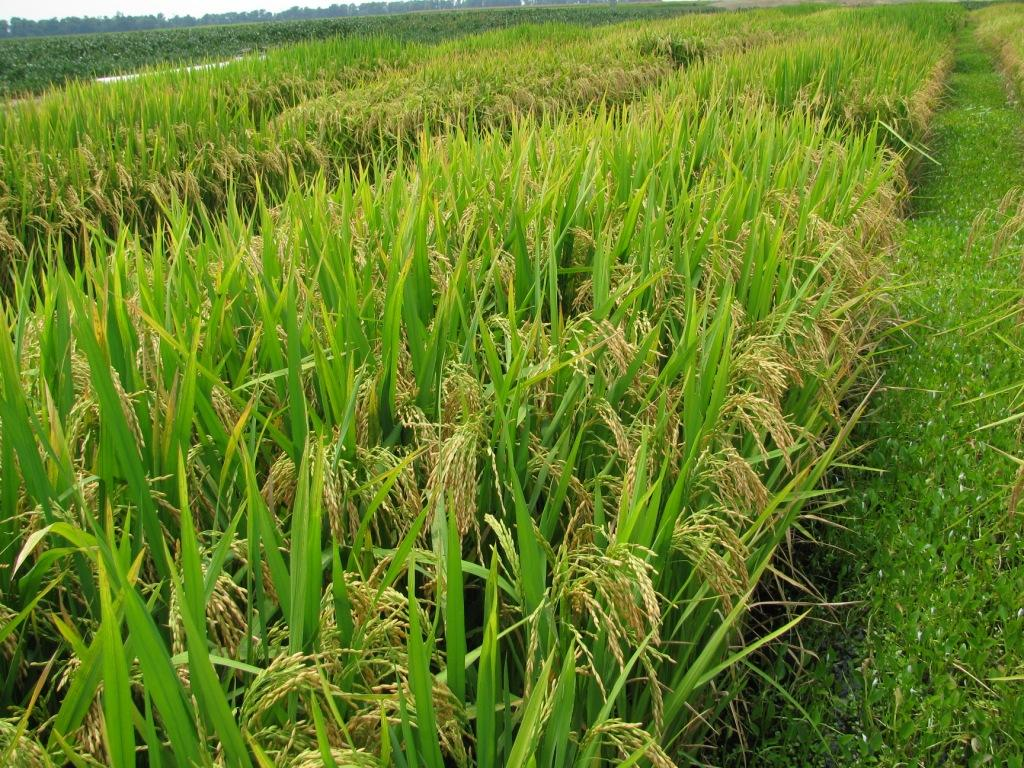
Monitor the field/ self field inspection-
Monitor the growth of your crop often. Walk through your field in a random manner or zigzag and check for signs of diseases, pests and deficiencies. Deficiencies are characterized by the discoloration of leaves and poor vigor of the plants. Diseases are often visible as discoloration and spots or streaks on leaves. Finally, remember that most of the insects present in the field are beneficial for your crop. Those that attack your crop will leave behind damage on leaves and buds in the form of holes.
- Apply the rest of the nitrogen dose a week before panicle initiation.
- If you are using urea, apply 25 kg per acre.
Panicle initiation stage starts, farmers need to be very careful during this week.
Monitor your field for some disease and insect-pest incidence-
Sheath Rot: Sarocladium oryzae
Symptom of Damage


- Irregular spots or lesions, with dark reddish brown margins and gray center
- Discoloration in the flag leaf sheath
- Lesions enlarge and often coalesce and may cover the entire leaf sheath
- Severe infection causes entire or parts of young panicles to remain within the sheath
- Un-emerged panicles rot and florets turn red-brown to dark brown
- Whitish powdery growth inside the affected sheaths and young panicles
- Infected panicles sterile, shrivelled, or with partially filled grain.
Management-
Cultural Method-
- Apply Gypsum @ 500 kg/ha at two equal splits once basally and another at active tillering stage.
- Botanicals
- Neem oil 3%
- Ipomoea leaf powder extract (25 kg/ha)
- Prosopis leaf powder extract (25 kg/ha). First spray at boot leaf stage and second 15 days later
Chemical Method-
- Spray any one of the following:
- Carbendazim @ 500g/ha
- Metominostrobin @ 500 ml/ha
- Hexaconazole 75% WG @ 100 mg/ lit 1st spray at the time of disease appearance and 2nd spray 15 days later
Brown Spot: Helminthosporium oryzae

- Occur in nursery as well as main field
- Causes blight of seedlings
- Leaf spotting is very common
- Isolated brown, round to oval (resemble sesame seed)
- Spots measure 0.5 to 2.0mm in breadth – coalesce to form large patches.
- Seed also infected (black or brown spots on glumes spots are covered by olivaceous velvety growth)
- Infection also occurs on panicle neck with brown colour appearance
- 50% yield reduction in severe cases.
| Management- |
| Metominostrobin @ 500ml/ha. Sheath Blight:  Sheath Blight is a fungal disease caused by Rhizoctonia solani. The disease is more prominent at tillering to heading stage. Symptoms: Initially the symptoms can be seen on the sheaths nearer to the water level. Oval or irregular greenish to greyish spots are developed, later developing to bigger sized whitish grey spots surrounded by blackish brown or purple brown border. Heavily infected plants in the early heading and grain filling stages produce sterile or partially filled grains. Management- The most effective way of controlling brown spot is to grow plants in good soil and provide adequate fertilizer. Planting a resistant variety is the most practical way of controlling. Treating the seeds with fungicide or hot water help control the disease. |
Leave a Reply