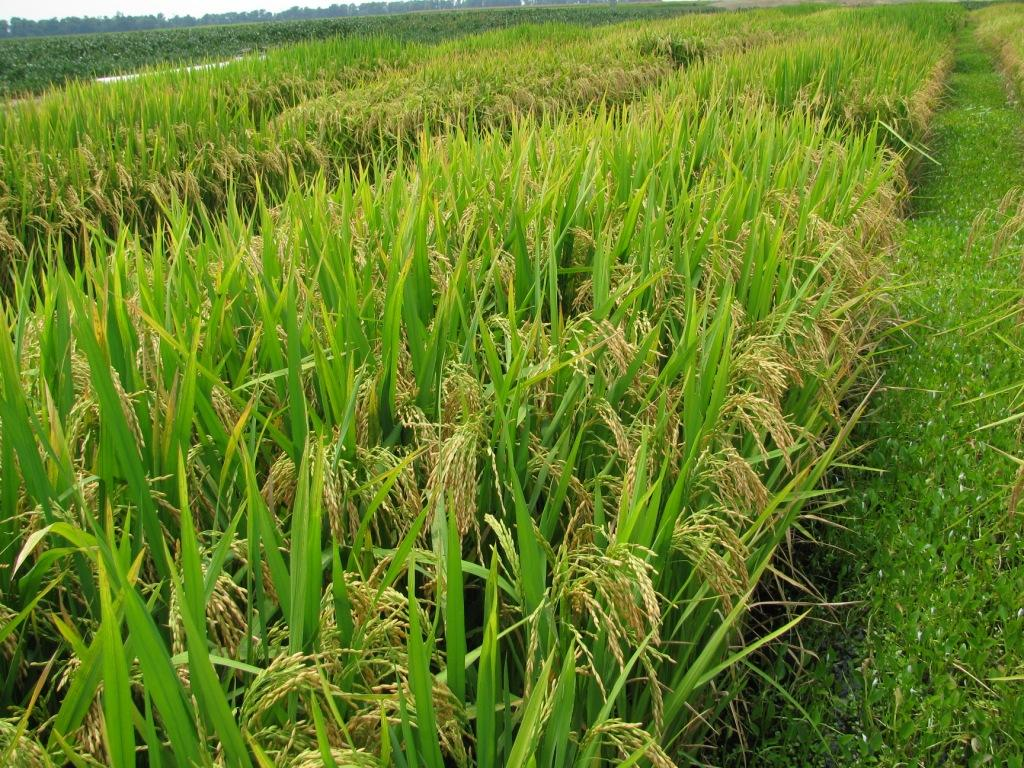
Maintain water in the rice field for better growth and production. To maximize water use efficiency:-
- Maintain the bunds.
- Level the fields.
- Puddle the fields, where possible.
- Use short duration crops.
- Maintain optimum water during the crop critical stages.
Monitor your field during this week for insect-pest and disease incidences. Visit the field monitor the crop closely from inside.
Brown plant leafhopper: Nilaparvata lugens


Symptoms of damage:
- Nymphs and adults congregate at the base of the plant above the water level
- Affected plant dries up and gives a scorched appearance called “hopper burn”.
- Circular patches of drying and lodging of matured plant
- It is vector of grassy stunt, ragged stunt and wilted stunt diseases
- Ovipositional marks exposing the plant to fungal and bacterial infections
- Ragged stunt or grassy stunt virus disease plant may be observed
Identification of insect pest:
- Egg: Eggs are laid in a group of 2 to 12 in leaf sheath (near the plant base or in the ventral midribs of leaf blades). White, transparent, slender cylindrical and curved eggs are thrust in straight-line in two rows. (They are covered with a dome-shaped egg plug secreted by the female. Only the tips protrude from the plant surface.)
- Nymph: Freshly hatched nymph is cottony white, 0.6 mm long and it turns purple-brown, 3.0 mm long in the fifth instar.
- Adult: Adult hopper is 4.5-5.0 mm long and has a yellowish brown to dark brown body. The adults exist in two forms, macropterous and brachypterous. Macropterous adults or long-winged have normal front and hind wings, whereas brachypterous forms or the short-winged have reduced hind wings. A prominent tibial spur is present on the third leg.
Management:
ETL: 1 hopper/ tiller in the absence of predatory spider and 2 hoppers /tiller when spider is present at 1/hill.
- Avoid excessive use of nitrogen
- Control irrigation by intermittent draining
- Set up light traps during night or yellow pan traps during day time
- Drain the water before use of insecticides and direct the spray towards the base of the plants.
- Apply Neem oil 3% 15 lit/ha
- Apply any one of the following insecticides
- Phosalone 35 EC 1500 ml/ha
- Carbaryl 10 D 25 kg/ha
- Methyl demeton 25 EC 1000 ml/ha
- Chlorpyriphos 20 EC 1250 ml/ha
- Acephate 75 % SP 666-1000 g/ha
- Azadirachtin 0.03% 1000 ml/ha
- Buprofezin 25% SC 800 ml/ha
- Carbosulfan 25 EC 800-1000 ml/ha
- Chlorantraniliprole 18.5% SC 150 g/ha
- Chlorantraniliprole 0.4% G 10 kg/ha
- Dichlorvos 76%SC 470 ml/ha
- Fenoucarb (BPMC) 50% EC 500-1500 ml/ha
- Fipronil 5% SC 1000-1500 ml/ha
- Fipronil 0.3% GR 16670-25000 g/ha
- Imidacloprid 70% WG 30-35 kg/ha
- Imidacloprid 17.8 SL 100-125 ml/ha
- Phosphamidon 875 ml/ha
- Triazophos 40% EC 625-1250 ml/ha
Rice earhead bug: Leptocorisa acuta


Symptoms of damage:
- Sucking the sap from individual grains, which are in milky stage.
- Individual grains become chaffy
- Black spots on the grains at the site of feeding puncture.
- Buggy odour in rice field during milky stage
Identification of insect pest:
- Egg: Are circular, brownish seed like 2mm long laid in clusters in two rows along the midrib on the upper surface of the leaf blade
- Nymph: First instar is small, 2mm long, pale green in colour which grows to deepen green through different instars
- Adult: Adults are greenish yellow, long and slender, above ½ inch in length with a characteristics buggy odour
Management:
ETL: 5 bugs/100 earheads at flowering and 16 bugs/100 earheads from milky stage to grain maturity
- Dust any one of the following at 25 kg/ha twice, the first during flowering and second a week later:
- Quinalphos 1.5 D
- Methyl parathion 2% DP
- KKM 10 D (The new KKM dust formulation consists of 10% of Acorus calamus rhizome powder and 90% of flash which is a waste product from Thermal Power Station)
- Spray any one of the following twice as above
- Malathion 50 EC 500 ml/ha
- Neem seed kernel extract 5% 25 kg/ha
- Notchi or Ipomoea or Prosopis leaf extract 10%.
Eleventh to Twelfth week-
Maintain water in the rice field for better growth and production. To maximize water use efficiency:-
- Maintain the bunds.
- Level the fields.
- Puddle the fields, where possible.
- Use short duration crops.
- Maintain optimum water during the crop critical stages.
Monitor your field during this week for insect-pest and disease incidences. Visit the field monitor the crop closely from inside.
Brown plant leafhopper: Nilaparvata lugens
Symptoms of damage:
- Nymphs and adults congregate at the base of the plant above the water level
- Affected plant dries up and gives a scorched appearance called “hopper burn”.
- Circular patches of drying and lodging of matured plant
- It is vector of grassy stunt, ragged stunt and wilted stunt diseases
- Ovipositional marks exposing the plant to fungal and bacterial infections
- Ragged stunt or grassy stunt virus disease plant may be observed
Identification of insect pest:
- Egg: Eggs are laid in a group of 2 to 12 in leaf sheath (near the plant base or in the ventral midribs of leaf blades). White, transparent, slender cylindrical and curved eggs are thrust in straight-line in two rows. (They are covered with a dome-shaped egg plug secreted by the female. Only the tips protrude from the plant surface.)
- Nymph: Freshly hatched nymph is cottony white, 0.6 mm long and it turns purple-brown, 3.0 mm long in the fifth instar.
- Adult: Adult hopper is 4.5-5.0 mm long and has a yellowish brown to dark brown body. The adults exist in two forms, macropterous and brachypterous. Macropterous adults or long-winged have normal front and hind wings, whereas brachypterous forms or the short-winged have reduced hind wings. A prominent tibial spur is present on the third leg.
Management:
ETL: 1 hopper/ tiller in the absence of predatory spider and 2 hoppers /tiller when spider is present at 1/hill.
- Avoid excessive use of nitrogen
- Control irrigation by intermittent draining
- Set up light traps during night or yellow pan traps during day time
- Drain the water before use of insecticides and direct the spray towards the base of the plants.
- Apply Neem oil 3% 15 lit/ha
- Apply any one of the following insecticides
- Phosalone 35 EC 1500 ml/ha
- Carbaryl 10 D 25 kg/ha
- Methyl demeton 25 EC 1000 ml/ha
- Chlorpyriphos 20 EC 1250 ml/ha
- Acephate 75 % SP 666-1000 g/ha
- Azadirachtin 0.03% 1000 ml/ha
- Buprofezin 25% SC 800 ml/ha
- Carbosulfan 25 EC 800-1000 ml/ha
- Chlorantraniliprole 18.5% SC 150 g/ha
- Chlorantraniliprole 0.4% G 10 kg/ha
- Dichlorvos 76%SC 470 ml/ha
- Fenoucarb (BPMC) 50% EC 500-1500 ml/ha
- Fipronil 5% SC 1000-1500 ml/ha
- Fipronil 0.3% GR 16670-25000 g/ha
- Imidacloprid 70% WG 30-35 kg/ha
- Imidacloprid 17.8 SL 100-125 ml/ha
- Phosphamidon 875 ml/ha
- Triazophos 40% EC 625-1250 ml/ha
Rice earhead bug: Leptocorisa acuta
Symptoms of damage:
- Sucking the sap from individual grains, which are in milky stage.
- Individual grains become chaffy
- Black spots on the grains at the site of feeding puncture.
- Buggy odour in rice field during milky stage
Identification of insect pest:
- Egg: Are circular, brownish seed like 2mm long laid in clusters in two rows along the midrib on the upper surface of the leaf blade
- Nymph: First instar is small, 2mm long, pale green in colour which grows to deepen green through different instars
- Adult: Adults are greenish yellow, long and slender, above ½ inch in length with a characteristics buggy odour
Management:
ETL: 5 bugs/100 earheads at flowering and 16 bugs/100 earheads from milky stage to grain maturity
- Dust any one of the following at 25 kg/ha twice, the first during flowering and second a week later:
- Quinalphos 1.5 D
- Methyl parathion 2% DP
- KKM 10 D (The new KKM dust formulation consists of 10% of Acorus calamus rhizome powder and 90% of flash which is a waste product from Thermal Power Station)
- Spray any one of the following twice as above
- Malathion 50 EC 500 ml/ha
- Neem seed kernel extract 5% 25 kg/ha
- Notchi or Ipomoea or Prosopis leaf extract 10%.
Leave a Reply