Apply the second split application of nitrogen-
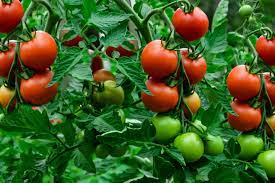
Tomato plants are now in the fruit-bearing stage. This means that the plants require significant amounts of nitrogen and micronutrients to develop fruits properly. If using flood irrigation, the best way to fertilize your plants is by side-dressing:
- Apply fertilizer pellets in the furrow and work them into the soil.
- At this stage, the last quarter of N is added to the plants, amounting to 20 kg of urea per acre.
- If no rain is expected, do not forget to irrigate so that the nutrients can reach the roots.
- If using drip irrigation, the fertilizers can be mixed with the irrigation water.
Monitor your field for some insect/pest incidence-
Tomato spotted wilt disease

Symptoms vary among hosts and in a single host species-
- Stunting is a common symptom of TSWV infection
- Chlorotic or necrotic rings form on the leaves of many infected hosts
- Thickening of veins and bronzing of young leaves
- Growing tips may die-back and terminal branches may be streaked
- Affected plants may have a one sided growth habit or may be entirely stunted and have drooping leaves, suggesting a wilt
- Pale red or yellow areas with concentric circular marking in the normal red skin of ripe tomato are formed
- Discoloration of seed.
Survival and spread-
Primary:
Virus particles in infected plants of many hosts like Acanthospermum hispidum, Aster sp., Boerhaavia diffusa, Chrysanthemum sp., Cleome gynandra, cowpea, Dahlia variabilis, egg plant, French bean, Gerbera sp., groundnut, Lagasca mollis, lettuce, marigold, pea, chilli, pineapple, potato, Trianthema portulacastrum, water melon and Zinnia elegans
Secondary:
Virus particles transmitted by thrips, Frankliniella schultzii, Scirtothrips dorsalis.
Leaf eating caterpillar: Spodoptera litura


Symptoms of damage:
- Young larva scrap leaves on ventral surface
- Grownups defoliate crops
Identification of pest:
- Egg: Masses appear golden brown
- Larva: Pale greenish with dark markings, gregarious in the early stages
- Adult: Brownish in colour, Forewings are brown colour with wavy white marking, Hind wings are white colour with a brown patch along the margin
Management:
- Grow castor as trap crop. Collect and destroy egg masses and early instar larvae
- Set up pheromone traps @ 12/ha.
- Spray SlNPV 1.5 x 10¹² POBs/ha
- Spray Azadirachtin 1.0 % EC (10000 ppm) 2.0 ml/ lit. or apply Bacillus thuringiensis 2g/lit. during evening hours.
- Plough the soil to expose and kill the pupae
- Grow castor along border and irrigation channel as trap crop
- Set up light trap @1/ha
- Pheromone traps (Pherodin SL) @15/ ha to attract male moths
- Collect and destroy egg masses in castor and tomato
- Hand pick grown up larvae and kill them
- Spray Sl NPV @ 1.5 X 10¹² POBs / ha+2.5 Kg crude sugar+0.1 % teepol
- Poison bait: Rice bran 5 Kg + Molasses or Brown sugar 500g + Carbaryl 50 WP 500g+ 3lit of water/ha. Mix the ingredients well and are kept around the field in the evening hours
- Spray chlorpyriphos 20 EC 2 lit/ha or dichlorovos 76 WSC 1 lit/ha.
Leave a Reply