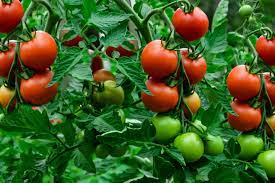
Monitoring of field-
Monitor the growth of your crop often. Walk through your field in a random manner or zigzag and check for signs of diseases, pests and deficiencies. Deficiencies are characterized by the discoloration of leaves and poor vigor of the plants. Diseases are often visible as discoloration and spots or streaks on leaves. Finally, remember that most of the insects present in the field are beneficial for your crop. Those that attack your crop will leave behind damage on leaves and buds in the form of holes.
Fruit Rot:

Major disease of tomato and observed due to changing weather. Water soaked lesions are appeared on fruits. Afterwards they turn into black or brown color and causing rotting of fruits. Before sowing, do seed treatment with Tricoderma@5-10gm or Carbendazim@2gm or Thiram@3 gm/Kg of seeds. If infection observed in field collect and destroy infected fruit and leaves which lies on ground. Fruit rot and anthracnose attacked mostly observed in cloudy weather, to control take spray of Mancozeb@400gm or Copper Oxychloride@300gm or Chlorothalonil@250gm/200Ltr water. Repeat spray with 15 days interval.
Anthracnose:

Warm temperatures, high moisture are ideal condition for spread of this disease. It is characterized by black spots that are formed on infected parts. Spots are usually circular, water-soaked and sunken with black margins. The fruits with many spots drop off prematurely resulting in heavy loss of yield. If infestation of anthracnose is observed then to control this disease, spraying of propiconazole or Hexaconazole@200ml/200Ltr of water should be done.
Fifteenth to Sixteenth week-
HARVESTING

Plant starts yielding by 70days after transplantation. Harvesting is done depending upon purpose like for fresh market, long distance transport etc. Mature green tomatoes, 1/4th fruits portion gives pink color are harvested for long distance markets. Almost all fruits turn into pink or red color but having firm flesh are harvested for local markets. For processing and seed extraction purpose, fully ripe fruits with soft flesh are used.
Leave a Reply