Author: Sewa Bharati
-
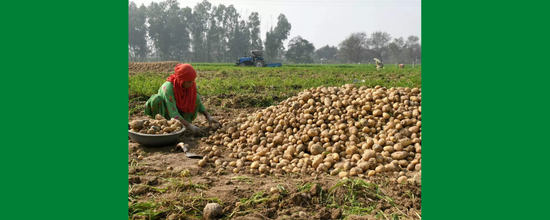
Potato Fourteenth to fifteenth week practices
Harvesting practices are to be followed very carefully. The time of harvest is very important in potato. The development of tuber continues till vines die. The main crop is ready for harvest within 75-120 days of planting depending upon the area, soil type and variety sown. Yellowing of the potato plant’s leaves and easy separation…
-
Potato Twelfth to thirteenth week practices
Spray 0:0:50 (N:P:K) to increase size of tubers because potassium play important role in increasing thickness of tubers. Apply irrigation again in this week. Late Blight (Phytophthora infestans) The infection appears at the tips or edges of the lower leaves with circular or irregular water soaked spots. White downy fungus growth appears on the underside…
-
Potato Tenth to eleventh week practices
Repeat control measures for early blight disease to save crop from infestation. Apply irrigation to crop at 2-3 days interval if frost appears to save crop from frost damage. Aphids (Myzus persicae) Aphids suck the sap from leaves. Affected plants become weak; leaves become yellow and curl downwards. Aphid secretes honeydew, which gives rise to…
-
Potato Eighth to ninth week practices
To increase the number of tubers per plant, spray 0:52:34 (N:P:K) because tubers production depends upon phosphorus quantity in soil at this time. Charcoal Rot (Macrophmina phaseoli)- The roots of the affected plants become brown in colour. The rotting starts on the stem portion. The skin of the stern becomes ash coloured. Line dark lesions…
-
Potato Sixth to seventh week practices
Early Blight of potato (Alternaria solani)- Symptoms- The infection appears on lower leaves with necrotic spots having concentric rings. The fungus survives in the soil in diseased plant debris. The collateral host is tomato. High moisture and low temperature are favourable for disease. Control Measures- 1. Follow crop rotation 2. Collect and bum plant debris…
-
Potato Fourth to fifth week practices
Spray post emergence application of metribuzin 70% WP @100-200 g/acre and earthing up is to be done. Proper development of tubers depends upon, aeration, moisture availability and proper soil temperature. Therefore, proper earthing up is necessary. Earthing should be done when the plants are 15-22 centimetres high. The ridges should be broad, loose and high…
-
Potato First to third week practices
First week to third week- Analysis of soil Potatoes can be produced on a wide range of soils, ranging from sandy loam, silt loam, loam and clay soil. Well drained sandy loam and medium loam sols, rich in humus are most suitable for potato. Alkaline or saline soils are not suitable for potato cultivation. They…
-
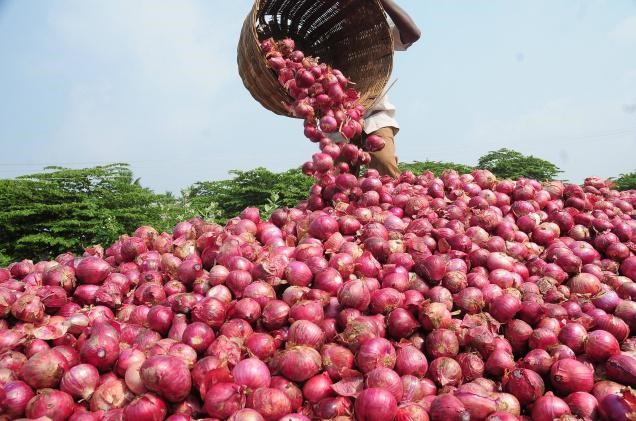
Onion Fifteenth week practices
Harvesting and yield: Onions are ready for harvest in 3-5 months after transplanting depending on variety. Harvesting is done by pulling out plants when tops are drooping but still green. During hot days when soil is hard, bulbs are pulled out with a hand-hoe. Yield varies with season and variety. 15-25 tonnes of bulbs are…
-
Onion Thirteenth to fourteenth week practices
Onion Smudge: It occurs on white onion varieties and reduces the market value of the bulbs. The disease is characterized by small dark green to black spots, which appear on the outer scales. Control: Thorough curing of the bulb after harvesting and storing the bulbs in well ventilated rooms can control the disease Black Mould:…
-
Onion Eleventh to twelfth week practices
Damping-off: The disease is more prevalent during kharif season and causes about 60-75% damage. High soil, moisture and moderate temperature along with high humidity especially in the rainy season leads to the development of the disease. Two types of symptoms are observed- Pre-emergence damping-off: The pre-emergence damping off results in seed and seedling rot before…