Author: Sewa Bharati
-
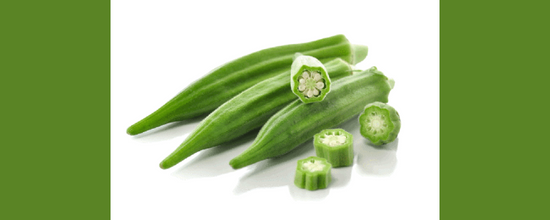
Okra Third week practices
Root rot: Infested roots become dark brown in color and plant die in case of severe infestation. Avoid monocropping and follow crop rotation. Before sowing do seed treatment with Carbendazim@2.5gram per kg of seed. Drench the soil with Carbendazim solution@1gm/Ltr of water. Wilt: In wilt disease, initially older leaves turn yellow followed by complete wilting…
-
Okra First to second week practices
First to Second week- Climate: During the growing period, it requires long warm season. In humid condition, it gives good yield. It grows well within a temperature range of 22-35°c. It grows the best in rainy season and in heavy rainfall areas. It is highly receptive to frost injury. Below 20°c seeds will fail to…
-
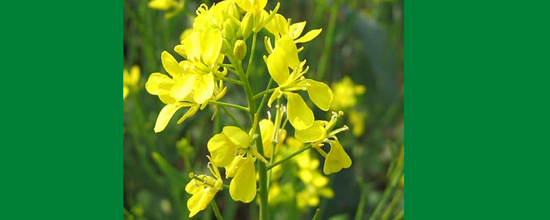
Mustard Twelfth to thirteenth week practices
Club root: Symptoms: Affected plants remain stunted. Tiny nodules to large club shaped outgrowths develop in the root system. Leaves turn pale green or yellow followed by wilting and under severe conditions the plants die Management: Soil fumigation with Methyl bromide 1kg/10m2 followed by covering with plastic film. Seed treatment with Captan/Thiram 4g/kg, followed by T.viride 4g/kg. Application…
-
-
Mustard Eighth to ninth week practices
Irrigation should be done this week. Mustard aphid: Symptoms: Both nymphs and adults suck the sap from leaves, buds and pods. Curling may occur for infested leaves and at advanced stage plants may wither and die. Plants remain stunted and sooty molds grow on the honeydew excreted by the insects. Management: Spray the crop with…
-
Mustard Sixth to seventh week practices
Bihar hairy caterpillar: Symptoms: Management: Powdery mildew: Symptoms: Cultural control: Chemical control:
-
Mustard Fourth to fifth week practices
Apply 16 kg/acre urea After the application of fertilizer, irrigate the field. Mustard saw fly: Symptoms: Initially the larva nibbles leaves, later it feeds from the margins towards the midrib. The grubs cause numerous shot holes and even riddle the entire leaves by voracious feeding. They devour the epidermis of the shoot, resulting in drying…
-
Mustard First to third week practices
First to third week: Climate: Temperature: 22oC-25oC Rainfall: 25-40 mm Sowing temperature: 20oC-22oC Harvesting temperature: 28oC-30oC The crop prefers low humidity Soil: Light to heavy soil is good for mustard and rapeseed cultivation. Raya can be grown in all types of soil whereas loam to heavy soils are suitable for toria crop. Sandy and loamy…
-
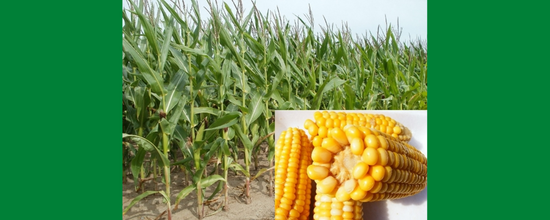
Maize Fifteenth to sixteenth week practices
Methods of harvesting maize For grains Harvesting by hand is only performed in very small fields or gardens where maize is mainly cultivated for self-use (human consumption or feed for farm animals that the family owns). This method is not cost- or time-effective since one person will need from 30 to 100 hours to harvest…
-
Maize Thirteenth to fourteenth week practices
Head Smut of Maize: Symptoms: Infection of the tassel may be limited to individual spikelets, or may cover it completely. Leaf-like formations emerge, forming unusual structures on infected tassels. No pollen is produced. Most commonly, affected ears are round or tear-drop shaped, lacking silks, and filled with black spores. Management: Cultural Control- Rogue out –removal…