First to second week-
Soil–
Brinjal is a hardy crop so it can be grown on different type of soils. As it is a long duration crop, it requires well drained fertile sandy loam soil which is best suited for its cultivation and gives good yield. For early crop light soil are good and for high yield clay loam, silt loam are suitable. For good growth pH of soil should be 5.5 to 6.6.
Sandy soil-

Sandy Soil is light, warm, dry and tends to be acidic and low in nutrients. Sandy soils are often known as light soils due to their high proportion of sand and little clay (clay weighs more than sand).
These soils have quick water drainage and are easy to work with. They are quicker to warm up in spring than clay soils but tend to dry out in summer and suffer from low nutrients that are washed away by rain.
The addition of organic matter can help give plants an additional boost of nutrients by improving the nutrient and water holding capacity of the soil.
Loam soil-

Loam soil is a mixture of sand, silt and clay that are combined to avoid the negative effects of each type.
These soils are fertile, easy to work with and provide good drainage. Depending on their predominant composition they can be either sandy or clay loam.
As the soils are a perfect balance of soil particles, they are considered to be a gardeners best friend, but still benefit from topping up with additional organic matter.
Popular varieties with their yield
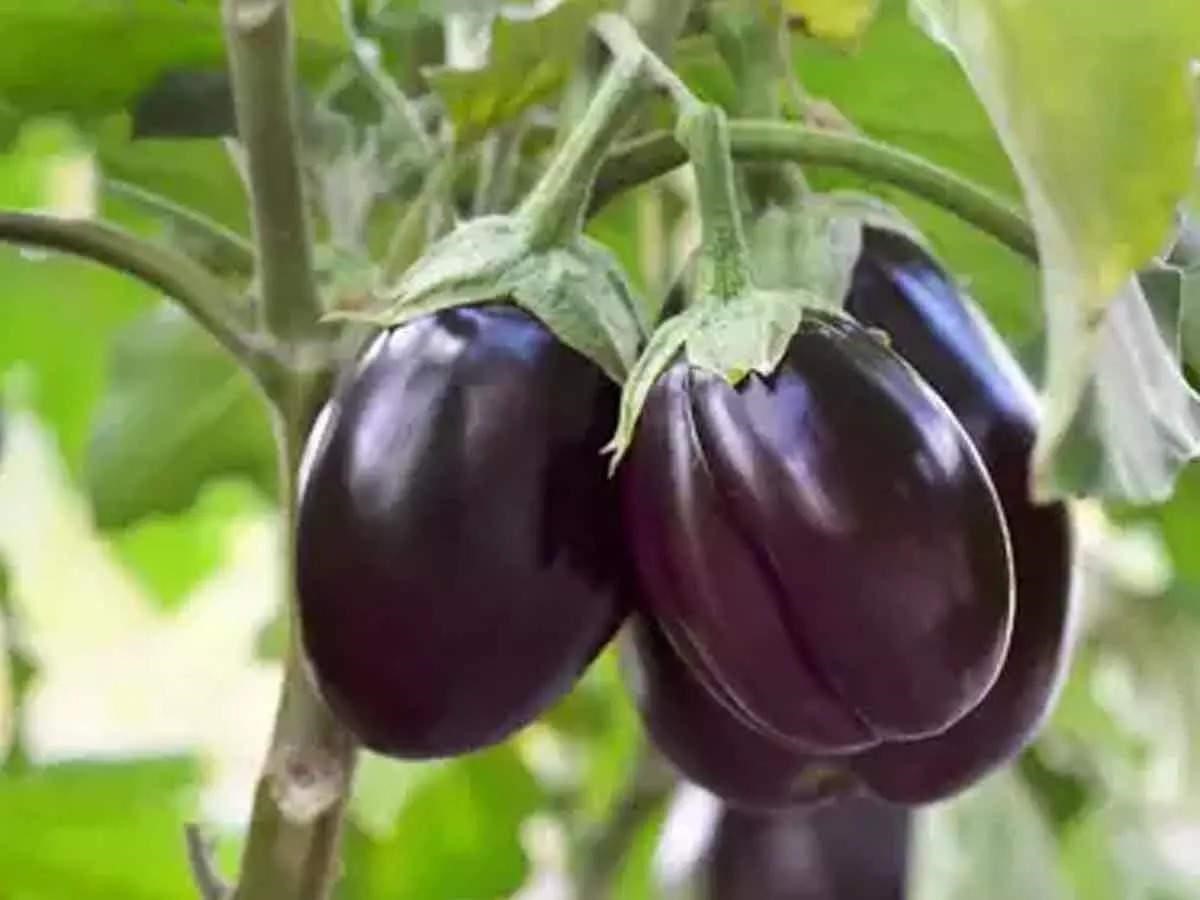
Punjab Bahar: Plant height is about 93 cm. Fruits are of round, dark purple shinning color having less seeds. It gives average yield of 190 qtl/acre.
Punjab No 8: Plants are of medium height. Fruits are of medium size, round shape having light purple color. It gives average yield of 130 qtl/acre.
Jamuni GOI (S 16): Variety developed by Punjab Agriculture University. Fruits are long plumy and shining purple color.
Punjab Barsati: Variety developed by Punjab Agriculture University. These are tolerant to fruit borer. Fruits are of Medium size, long and purple color. It gives average yield of 140 qtl/acre.
Punjab Neelam: Variety developed by Punjab Agriculture University. Fruits are of long purple color.It gives average yield of 140 qtl/acre.
Punjab Sadabahar: Variety developed by Punjab Agriculture University. Fruits are of long black color. It gives average yield of 130 qtl/acre.
PH 4: Variety developed by Punjab Agriculture University. Fruits are medium size and long. Fruits are of dark purple color. It gives average yield of 270 qtl/acre.
PBH-5: Released in 2017. It gives an average yield of 225qtl/acre. It has long, shining and black-purple color fruit.
PBHR-41: Released in 2016. It gives an average yield of 269qtl/acre. It has round, moderate to large, shining and is greenish purple color fruits.
PBHR-42: Released in 2016. It gives an average yield of 261qtl/acre. It has egg-round shape, moderate, shining, and black-purple color fruits.
PBH-4: Released in 2016. It gives an average yield of 270qtl/acre. It has moderately long, shining and black-purple color fruits.
Punjab Nagina: Released in 2007. It gives an average yield of 145qtl/acre. It has black-purple color and shining fruits. The variety is ready for harvesting after 55 days of sowing.
BH 2: Released in 1994. It gives an average yield of 235qtl/acre. The average weight of fruit is 300gm.
Punjab Barsati: Released in 1987. It gives an average yield of 140qtl/acre. It has moderately long and shining purple fruit.
Pusa Purple Long: Early maturing variety. Its ready to harvest in 70-80 days after sowing in winter season and 100-110 days during summer season. Plants having medium height, fruits are of long, purple color. It gives average yield of 130 qtl/acre.
Pusa Purple Cluster: Developed by ICAR, New Delhi. Medium duration variety. Fruits are of deep purple color and borne in clusters. It is moderately resistant to bacteria wilt.
Pusa Hybrid 5: Fruits are long with dark purple color. Ready to harvest in 80-85 days. Gives average yield of 204 qtl/acre.
Pusa Purple Round: It is tolerant to little leaf and shoot and fruit borer.
Pant Rituraj: Fruits are round with attractive purple color with less seed. Gives average yield of 160 q/acre.
Seed rate-
Use seed rate of 500-600 gm for preparing seedling for one acre land sowing.
Seed Treatment-

For sowing use only trusted and good seeds. Before sowing do seed treatment with Thiram @3gm or Carbendazim @3gm/kg of seeds. After chemical treatment, treat seeds with Trichoderma viride@4gm/kg of seed, dry in shed and sow immediately.
| Fungicide name | Quantity (Dosage per kg seed) |
| Carbendazim | 3 gm |
| Thiram | 3 gm |
Nursery management and transplanting

Seeds of brinjal are sown in nursery beds which are 3 meter long, 1 meter wide and15 cm high. Well rotten farm yard manure is then mixed in nursery bed. Nursery bed is then drenched with Captan solution two days before sowing to avoid the attack of damping off disease in brinjal nursery. Then seeds are sown in rows 5 cm apart and covered the nursery with compost or dry leaves. Light irrigation is done. The nursery beds should be covered with black polythene sheets or paddy straw till the seed germinates. Healthy seedlings having 3-4 leaves or 12-15 cm in height are ready for transplanting. Transplanting is done in evening and light irrigation is done after planting.
Cover nursery with polythene or with any simple cloth to protect brinjal nursery from moisture loss. Crop ready to transplant in 25-30 days after seed sowing.
LAND PREPARATION
Before transplanting the soil should be well prepared by deep ploughing 4-5 times and levelled. When the field is well prepared and levelled, the beds of suitable size are made in the field before transplanting.
Advantages –
- It loosens the soil.
- It aerates the soil.
- It prevents soil erosion.
- It allows easy penetration of roots into the soil.
Disadvantages –
The downside of tilling is that it destroys the natural soil structure, which makes soil more prone to compaction. By exposing a greater surface area to air and sunlight, tilling reduces soil’s moisture-retaining ability and causes a hard crust to form on the soil surface.
At last ploughing apply well decomposed cow dung@10ton/acre in soil.
Spacing
The spacing generally depends on the variety (size and spread and bearing period) soil fertility. Use row to row spacing of 60 cm and plant to plant spacing of 35-40 cm.

Sowing Depth

In nursery sow seeds at depth of 1 cm and then covered with soil.
Method of Sowing-

Transplanting seedlings in the main field. Transplanting should be done at evening because in morning direct sunlight effects the growth of newly transplanted plant.
Damping Off:

Moist and poorly drained soil causes damping off disease. It is a soil borne disease. Water soaking and shriveling of the stem occurs. Seedlings killed before emergence. If it appears in a nursery the entire lot of seedling may get destroyed. It is a serious disease of brinjal.
Before sowing, do seed treatment with Thiram@3gm per Kg of seeds. Do soil solarisation of nursery soil. If damping off is observed in the nursery. Drained out water and drenched soil of the nursery with Copper Oxychloride@3gm/Ltr of water.
Apply N:P:K fertilizer dose in the form of Urea@55kg/acre , SSP@155kg/acre and MOP@20kg/acre. Apply Full dose of Phosphorus, Potash and Nitrogen at time of transplanting. Apply irrigation after fertilizer application in the crop.
Leave a Reply