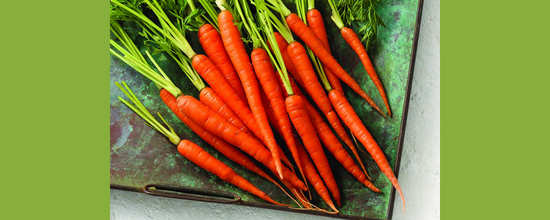
Carrot is an important root crop cultivated throughout the world for its fleshy edible roots. Carrot farming is done in the spring, summer, and autumn in temperate climate countries and during winter in tropical and subtropical regions. The roots of carrots are used as a vegetable for soups & curries; graded roots are used as a salad, and tender roots as pickles also Carrot halwa and jam are famous. Carrot juice is a rich source of carotene and is sometimes used for coloring buffers and other food particles. Carrot tops are used for the extraction of leaf protein, as fodder, and also for poultry feed. Carrots possess many medicinal properties and are used in Ayurvedic medicine. Carrots are a rich source of b-carotene and contain appreciable amounts of thiamine and riboflavin. The Carrot crop is the second most popular vegetable in the world after the potato. China ranks first in production, followed by Russia. India’s major carrot-growing states are Karnataka, Punjab, Uttar Pradesh, Tamil Nadu, and Andhra Pradesh.
Climate Requirement for Carrot Farming:
Carrot is a cold-weather crop, and it also does well in warm climates.
The optimum temperatures for excellent growth are between 16 to 20 °C, while temperatures above 28°C drastically reduce top growth.
Temperatures lower than 16°C affect the development of color and result in long slender roots, while higher temperatures produce shorter and thicker roots.
The temperatures between 15 and 20°C result in attractive roots with excellent red color and quality.
Soil Requirement for Carrot Farming:
Carrots can be grown well in a wide variety of soils. However, commercial carrot farming’s ideal soil should be deep, loose, well-drained, and rich in humus. Loamy or sandy loam soils with sufficient quantities of humus are well suited to the cultivation of carrots. The ideal pH range for obtaining a good yield is 5.5-6.5. Soils with pH up to 7.0 can also be used, but too alkaline or acidic soils are unsuitable for this crop.
Loamy Soil

Loam soil is a mixture of sand, silt, and clay that are combined to avoid the negative effects of each type.
These soils are fertile, easy to work with, and provide good drainage. Depending on their predominant composition they can be either sandy or clay loam.
As the soils are a perfect balance of soil particles, they are considered to be a gardener’s best friend, but still benefit from topping up with the additional organic matter.
Sandy soil

Sandy Soil is light, warm, and dry and tends to be acidic and low in nutrients. Sandy soils are often known as light soils due to their high proportion of sand and little clay (clay weighs more than sand).
These soils have quick water drainage and are easy to work with. They are quicker to warm up in spring than clay soils but tend to dry out in summer and suffer from low nutrients that are washed away by rain.
The addition of organic matter can help give plants an additional boost of nutrients by improving the nutrient and water-holding capacity of the soil.
Soil treatment:
- 20-25 metric tonnes of well-rooted manure.

Benefits of soil treatment- Some benefits of soil treatment are given below-
Water benefits-
- Healthy soil acts as a sponge: more rainwater is absorbed and stored in the ground, where it recharges groundwater and aquifers.
- Healthy soil prevents run-off and erosion and reduces evaporation.
- Healthy soil improves water quality by filtering pollutants.
Nutritious food-
- Healthy soil increases the nutritional value of food and forage.
- Healthy soil provides plants with the nutrition they need and strengthens plants natural resistance to pests and diseases.
Economic security-
- Healthy soil improves farm productivity and provides stability.
- Healthy soil cuts down on inputs, which increases profit.
- Healthy soil helps withstand extreme weather, floods, and drought.
Environmental and health benefits-
- Healthy soil helps reverse global warming by absorbing carbon from the atmosphere where it acts as a greenhouse gas.
- Healthy soil provides a habitat for soil microbes to flourish.
- Healthy soil supports greater biodiversity and species stability.
Soil and land preparation:
Tractor-drawn cultivator:

A cultivator is an implement used for finer operations like breaking clods and working the soil to a fine tilth in the preparation of seedbeds. A cultivator is also known as a tiller or tooth harrow. It is used to further loosen the previously plowed land before sowing. It is also used to destroy weeds that germinate after plowing. The cultivator has two rows of tynes attached to its frame in staggered form. The main object of providing two rows and staggering the position of tynes is to provide clearance between tynes so that clods and plant residues can freely pass through without blocking. Provision is also made in the frame by drilling holes so that tynes can be set close or apart as desired. The number of tynes ranges from 7 to 13. The shares of the tynes can be replaced when they are worn out.
Disc Harrow:

The disc plow bears little resemblance to the common mold board plow. A large, revolving, concave steel disc replaces the share and the mold board. The disc turns the furrow slice to one side with a scooping action. The usual size of the disc is 60 cm in diameter and this turns a 35 to 30 cm furrow slice. The disc plow is more suitable for land in which there is much fibrous growth of weeds as the disc cuts and incorporates the weeds. The disc plow works well in soils free from stones. No harrowing is necessary to break the clods of the upturned soil as in a mold board plow.
Laser Land Leveller:

Laser Land Leveller is a more advanced technique for smoothing the land surface from its average height with a certain degree of the desired slope using a guided laser beam throughout the field. Laser Land Levelling is an important technology for good agronomic, the highest possible yield, crop management, and water-saving.
Sowing time and Seed Rate:
Carrots are sown from the beginning of March to September the optimum time being August in cold areas while from the middle of August to November in warm areas. The seed rate varies from 7 to 9 kg per hectare according to the thickness of sowing/ broadcasting.
Seed treatment:
| Active Ingredients (Applied rate) | Major Pests |
| Thiram (2.50 g ai/kg) Iprodione (5.00 g ai/kg) | Soil Borne Fungal Disease Alternaria |
| Mefenoxam (0.075 g ai/kg), Fludioxonil (0.025 g ai/kg), Azoxystrobin (0.025 g ai/kg) Iprodione (5.00 g ai/kg) | Pythium/Phytophthora, Fusarium/Rhizoctonia, Soil/Seed Borne Fungal Disease Alternaria |
| Mefenoxam (0.075 g ai/kg), Fludioxonil (0.025 g ai/kg), Azoxystrobin (0.025 g ai/kg), Iprodione (5.00 g ai/kg) Thiamethoxam (0.05 mg ai/seed) | Pythium/Phytophthora, Fusarium/Rhizoctonia, Soil/Seed Borne Fungal Disease, Alternaria Systemic Insecticide (aphids, beetles, certain seed and root maggots, flea beetles, white fly, and wireworms) |
Methods of Sowing:
Carrots are sown in raised beds having a dimension of 1 meter breadth, any convenient length, and raised from 15 to 30 cm. In order to have an evenly sown crop the seeds are mixed with dry/loose soil. Generally, there are two methods of sowing as described below:-
Broadcast Sowing:

In this method, the seeds are sown in lines with the help of a marker at a distance of 6 cm apart. The seeds are then covered with loose and friable soil of about 2-4 cm depending upon the rainfall and season. In this method, proper spacing is not maintained even after thinning out.
Row Sowing:

In this method, the seeds are sown in lines with the help of a marker at a distance of 6 cm apart. The seeds are then covered with loose and friable soil of about 2-4 cm again depending upon the rainfall and season, In this case, proper spacing can be maintained and after-care like weeding and thinning is easier.
Seed drill method:

Manures and Fertilizers:
20-25 metric tonnes of well-rooted manure should be applied as basal dressing during the final preparation of the land. The fertilizer application should be as per the soil test. However in general a carrot crop would require the following quantities of chemical fertilizers per hectare.
| Urea | 87 Kg |
| Single Super Phosphate | 250 Kg |
| Muriate of Potash | 130 Kg |
The whole quantity of Single Super Phosphate, Muriate of Potash, and half the quantity of Urea are to be given as a basal dose at the time of final preparation of the land and the other half of Urea is to be given 30 to 45 days after sowing, as a top dressing.
Irrigation:
The first irrigation should be light and carried out immediately after sowing. Subsequent irrigations are given as needed.
Too much moisture causes short carrots with light color and a larger diameter. The frequency of irrigation depends upon soil type, season, and variety.
In general, one irrigation every 4-5 days in summer and 10-15 days in winter provides adequate moisture for the crop.
During the rainy season, only occasional irrigations are needed. Water stress should be avoided during root development to prevent cracking of the roots.
Weed control:
Weeds compete with the crop; therefore, Weeds can be controlled mechanically, by hand, mulching, and chemically or by combining all these methods.
Earthing up:
It should be done 60 to 70 days after sowing to help in the development of roots. The soil is earthed up and covered the top of developing roots to prevent loss of color of tops; the tops become green and toxic when exposed to sunlight.
Insect-pest of carrot:
Aster leafhopper:

Nature and symptoms of damage:
Both nymphs and adults feed by inserting piercing and sucking the plant to extract sap. If a leafhoppers feed on an infested plant, it ingests the aster yellow pathogen. When the leafhopper moves to another plant to feed, it transmits the pathogen in its saliva. In carrots, disease symptoms appear about 3 weeks later. Symptoms may appear as early as 10 days after infection or as late as 40 days after infection.
Management:
Aster leafhoppers may effectively be controlled by excluding them from carrot planting with floating row covers. Place the yellow sticky cards in the field early in the spring when plants are newly sprouted. Remove weeds from the field edges as these may be reservoirs for the pathogen.
Flea beetle:

Nature and symptoms of damage:
They make small holes or pits in leaves that give the foliage a characteristic “shothole” appearance; Young plants and seedlings are particularly susceptible; plant growth may be reduced.
Management:
Early planting will help to avoid the population of flea beetles while the plants are small and vulnerable, enclosing the seed bed with floating row cover to get protection from laying by adults, application of a thick layer of mulch to prevent beetles from reaching the surface, applications of diamotecoeus earth or oils such as neem oil are to effective control methods for organic growers and application of insecticides containing carbaryl, spinosad, bifenthrin, and permethrin can provide adequate control of beetles.
Willow carrot aphid:

Nature and symptoms of damage:
Aphids feed on carrot foliage, but they are key pests because they can transmit diseases such as the motley dwarf virus. If aphid infestation is heavy it may cause leaves yellow, necrotic spots on leaves, and stunted shoots; aphids secrete a sticky, sugary substance called honeydew, which encourages the growth of sooty mold on the plants.
Management:
Use tolerant varieties, sanitation for curbing the spread of the viruses, plowing all crop residues under as soon as harvest, use reflective mulches such as silver-colored plastic can deter aphids from feeding, use predators such as green lacewing larvae, and lady beetles, and syrphid fly larvae prey on this aphid, use of insecticidal soaps or oils such as neem or canola oil, etc. are followed to control the aphids.
Carrot weevil:

Nature and symptoms of damage:
Their grub-like larvae either tunnel down into the root or leave the stalk and bore into the side of the root from beneath the soil. Larvae may kill young plants. Damage to older plants is typically observed in the upper one-third of the root. Feeding injury may allow entry by pathogens that will cause roots to rot.
Management:
Removing all debris from Umbelliferous crops to reduce sites where weevil can survive and persist, crop rotation, using of Azadirachtin is quite effective against carrot weevil.
Carrot rust fly:

Nature and symptoms of damage:
Their Larva feeds on the carrot root, rendering the carrots impossible to market. Carrot rust flies obtain their common name from the rust-colored frass they deposit in the superficial feeding tunnels on the carrot.
Management:
The use of row covers will help to protect plants from damage but they must be installed before adult flies lays eggs on plants.
Cutworm:

Nature and symptoms of damage:
Large larvae may destroy several plants in one evening. The larvae often pull the stem of the severed plant into the subterranean burrow.
Management:
Deep plowing and stirring of soil, and flooding of fields so that caterpillars are exposed to birds and other enemies. Hand-picking and destruction of caterpillars found just under the damaged plant. Soil application (drenching) of chlorpyriphos @ 0.1 percent. Poison baits containing wheat bran + carbaryl + molasses be spread on the ground to attract and kill larvae and the Mixing of insecticidal dust are some of the practices to control the cutworms.
Disease in Carrot:
Alternaria leaf blight:

Symptoms:
Green-brown water-soaked lesions on leaves that enlarge and turn dark brown or black; lesions may coalesce causing leaves to turn yellow and die; lesions may be present on petioles.
Management:
The disease can be difficult to control in wet, warm conditions; apply appropriate fungicides when first symptoms appear or as a protective measure in humid areas; treat seeds with fungicide or hot water prior to planting; apply gibberellic acid to carrot foliage to promote upright growth and promote air circulation through the canopy.
Black rot:

Symptoms:
Damping-off of seedlings; root and crown necrosis; blighted foliage; lower portion of petioles black and necrotic; black ring around petiole attachment black, sunken lesions on taproot
Management:
Black rot is difficult to control and can survive in the soil for long periods of time: practice long crop rotations; plow crop residue into the soil immediately after harvest; plant resistant varieties; plant only pathogen-free seed; treat seeds with hot water prior to planting.
Cercospora leaf blight:

Symptoms:
Small, necrotic flecks on leaves develop a chlorotic halo and expand into tan-brown necrotic spots; lesions coalesce and cause leaves to wither, curl and die.
Management:
Plant only pathogen-free seed; rotate crops; plow crop debris into the soil after harvest; apply appropriate fungicide sprays.
Cottony rot (Sclerotinia rot) Sclerotinia sclerotiorum:


Symptoms:
Small, water-soaked, soft lesions on crown and roots; white fluffy fungal growth all over affected tissues; soft and decaying tissue developing
Management:
Cultural practices play an important role in the control of cottony rot as there are no resistant carrot varieties: in carrot fields, the use of drip irrigation 5-8 cm below the soil surface can provide good control; deep plowing of soil and trimming back carrot foliage to promote air circulation can also be useful; fungicides may be warranted in periods of extended cool, damp weather
Downy mildew Peronospora umbellifarum:

Symptoms:
Yellow spots on the upper surface of leaves; white fluffy growth on the underside of leaves; lesions become darker as the mature
Management:
Plant pathogen-free seed; do not overcrowd plants; rotate crops with non-umbelliferous varieties
Powdery mildew Erisyphe heraclei:

Symptoms:
Powdery growth on leaves, petioles flowers stalks, and bracts; leaves becoming chlorotic; severe infections can cause flowers to become distorted.
Management:
Plant-tolerant varieties; avoid excess fertilization; protective fungicide applications provide adequate protection; sulfur application can be used in infection that occurs early in the season.
Bacterial leaf blight Xanthomonas campestris:

Symptoms:
Small, angular, yellow spots on leaves expand into irregularly shaped, brown, water-soaked lesions with a yellow halo; centers of lesions dry out, and become brittle; leaves may become curled or distorted; flower stalks may develop elongated lesions that exude a bacterial ooze; infected umbels may be blighted
Management:
Plant pathogen-free seed; avoid using sprinkler irrigation; apply appropriate bactericides if available
Soft rot:

Symptoms:
Sunken dull orange lesions on taproot which cause tissue to collapse and become soft
Management:
Control relies on the avoidance of conditions conducive to bacterial infection: plant carrots in well-draining soils; allow plants to dry before irrigating again; avoid wounding plants during harvest to prevent post-harvest development of disease; disinfect all equipment regularly
Cavity spot Pythium spp.:

Symptoms:
Sunken, elliptical, gray lesions across the root; the outer layer of root ruptures and develops dark, elongated lesions; small vertical cracks may form on the cavities
Management:
Some cultural practices can control the disease: avoid planting in fields/areas known to previously had carrot spots; do not over-fertilize plants; application(s) of appropriate fungicide can provide adequate control
Damping-off:

Symptoms:
Soft, rotting seeds which fail to germinate; rapid death of seedlings prior to emergence from soil; the collapse of seedlings after they have emerged from the soil caused by water-soaked reddish lesions girdling the stem at the soil line
Management:
Avoid planting carrots in poorly draining, cool, wet soil; planting in raised beds will help with soil drainage; plant high-quality seed that germinates quickly; treat seeds with a fungicide prior to planting to eliminate fungal pathogens.
Harvesting:
Early carrots are harvested when they are partially developed. For distinct markets, otherwise, they are retained in the soil till they reach the full maturity stage they should not be retained full maturity stage because they become hard and unfit for consumption.
Postharvest handling of carrots:
Storage conditions:
- Minimum quality requirements are that carrots should be intact, sound, clean, free from attack by diseases, pests, mold, or rot, and without foreign smell or taste.
- Storage life depends on storage temperature and humidity.
- At 20°C and 60–70% relative humidity, carrots will keep for two to three days.
- At 4°C and 80–90% relative humidity, carrots will keep for one to two months.
- At 0°C and greater than 95% relative humidity, carrots will keep for up to six months.
- The ideal conditions for best-keeping quality are pre-cooling and storage at 0°C and 95–100% relative humidity.
- The recommended temperature for storage is 0 to 2°C.
General facts:
- Ideally, carrots should be cooled to below 5°C within 24 hours of harvest.
- Preferred cooling methods are hydro-cooling, forced-air cooling, or hydro-vacuum cooling.
- Ideal conditions for long-term storage are at 0°C and greater than 95% relative humidity.
- Carrots freeze at about –1.4°C.
Carrots are susceptible to dehydration. Silvering (‘white scale or white blush’) results from dehydration of the partially removed outer skin (periderm) of carrots. Further dehydration results in the development of phenolic browning in the tissue beneath the periderm. The use of liners during storage and transportation increases moisture retention, reduces dehydration, and hence reduces silvering and phenolic browning.
Brush polishing removes the periderm from carrots solving the silvering problem but exposing roots to phenolic browning. Browning is initiated by physical damage of the surface during harvest and postharvest brushing, thereby exposing the internal tissue to oxidation. Browning usually develops when carrots are on the market shelf after a period of cold storage.
Carrots are sensitive to ethylene, so avoid mixed storage with ethylene-producing produce such as tomatoes, melons, apples, pears, plums, kiwifruit, and avocados. Ethylene causes the development of bitter flavors by stimulating the production of compounds called isocoumarins.
Available chlorine at 50 to 100 parts per million (ppm) in clean rinse water reduces the likelihood of a bacterial and fungal breakdown. For chlorine to be effective, water pH has to be maintained from 7.0 to 7.6.

Leave a Reply