Category: Uncategorized
-
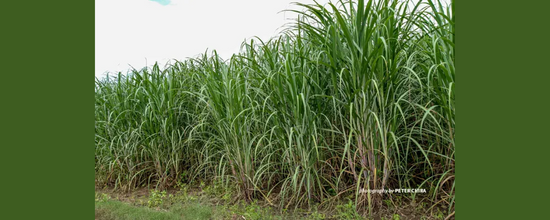
Sugarcane Fifteenth to sixteenth week practices
Red Striped Disease: Symptoms: The disease first makes its appearance on the basal part of the young leaves. The stripes appear as water soaked, long, narrow chlorotic streaks and become reddish brown in a few days. The core is discolored to reddish brown and shriveled and forms a cavity in the center. In badly affected…
-
Sugarcane Thirteenth to fourteenth week practices
In fourteenth week we should give nitrogen @ 40-45 kg/acre. After giving the fertilizer to the crop then Irrigation to be done. Root Grub: Symptoms: Grubs are fleshy “C” shaped, whitish yellow in color found close to the base of the clump. Adult beetles are a rusty-red color just after emerging from the pupal stage,…
-
Sugarcane Eleventh to twelfth week practices
Wooly Aphid: Symptoms: Nymphs produced by late females are relatively active, have long, elliptical bodies and are pale greenish white in color. The apterous adult female is 1.78 mm long and 1.07mm wide with a very soft, broad, laterally depressed body which is densely covered by white, cotton-like secretions. The attack generally begins in the…
-
Sugarcane Ninth to tenth week practices
Irrigation should be given in the ninth week. Top Borer: Symptoms: Larvae are Smooth, white or cream colored with a red colored mid – dorsal line and yellow head. White colored moth (with a buff orange colored anal tuft of hairs in female). Parallel rows of short holes in the emerging leaves causes a white…
-
Sugarcane Seventh to eighth week practices
Manual hoeing is also practiced during this interval. Root Borer: Symptoms: Fully grown caterpillars are white in color, relatively active and measure 2-5 cm in length. The full grown larvae are white color. In grownup canes the damage symptom is visible in the form of yellowing of leaves. The canes need to be uprooted to…
-
Sugarcane Fifth to sixth week practices
Lifesaving irrigation should be done this week. Before the irrigation apply 40-45 kg/acre of nitrogen. Early Shoot Borer: Symptoms: Larva is dirty white with five dark violet longitudinal stripes and dark brown head. Pale grayish brown moth with black dots near the coastal margin of the forewings and with white hind wings. Dead heart in…
-
Sugarcane Third to fourth week practices
In the fourth week farmers have to visit the field on a regular basis, if they find any unwanted plant of weed other than sugarcane then plow it. In the fourth week farmers have to spray herbicide like 2-4D @ 1 ltr/acre + atrazine 1 kg/acre in 500-600 liters of water if the farmer does…
-
Sugarcane First to second week practices
Soil for sugarcane cultivation: Well-drained, loamy deep soil with a groundwater 1.5-2 m below the soil surface with ample water holding capacity is the best for sugarcane cultivation. Sugarcane does not require any specific type of soil as it can be successfully raised on diverse soil types ranging from sandy soils to clay loams & heavy…
-
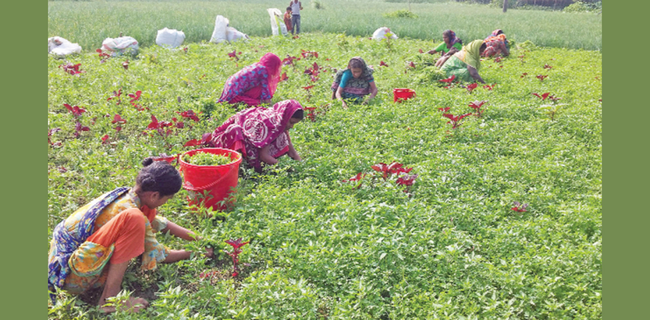
धनिया की कटाई और भंडारण
धनिया की कटाई धनिया के पत्तों को बढ़ते मौसम के दौरान – सितंबर तक लगातार काटा जा सकता है। वास्तव में, यदि आप केवल पत्तियों की कटाई करना चाहते हैं, तो आपको फूल बनने में देरी करने के लिए नियमित रूप से जड़ी-बूटियों को काटने की आवश्यकता होगी। यह इसलिए जरूरी है क्योंकि धनिया के…
-
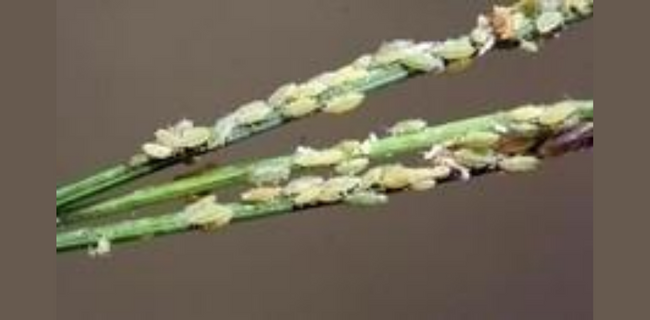
धनिया फसल के कीट और उनका प्रबंधन
प्लांट का संरक्षण कीट और उनका नियंत्रण: एफिड : यदि एफिड का हमला दिखे तो इसके नियंत्रण के लिए इमिडाक्लोप्रिड 6 मि.ली./10 लीटर पानी या थियामेथोक्सम 4 ग्राम/10 लीटर पानी में मिलाकर स्प्रे करें।