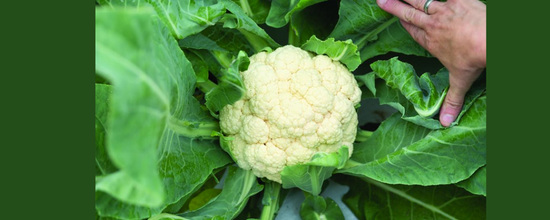
- Hand weeding should be done in this week.
Black rot:

Symptoms:
Irregularly shaped dull yellow areas along leaf margins which expand to leaf midrib and create a characteristics “V-shaped” lesion; lesions may coalesce along the leaf margin to give plant a scorched appearance
Management:
Primary method of controlling black rot is through the use of good sanitation practices; rotate crops to non-cruciferous crops every 2 years; plant resistant varieties; control cruciferous weed species which may act as a reservoir for bacteria; plant pathogen-free seed.
Wirestem (Damping-off):

Symptoms:
Death of seedlings after germination; brown-red or black rot girdling stem; seedling may remain upright but stem is constricted and twisted (wire stem).
Management:
Plant pathogen-free seed or transplants that have been produced in sterilized soil; apply fungicide to seed to kill off any fungi; shallow plant seeds or delay planting until soil warms.
Cabbage aphid:

Symptoms:
Large populations can cause stunted growth or even plant death; insects may be visible on the plant leaves and are small, grey-green in color and soft bodied and are covered with a white waxy coating; prefer to feed deep down in cabbage head and may be obscured by the leaves.
Management:
If aphid population is limited to just a few leaves or shoots then the infestation can be pruned out to provide control; check transplants for aphids before planting; use tolerant varieties if available; reflective mulches such as silver coloured plastic can deter aphids from feeding on plants; sturdy plants can be sprayed with a strong jet of water to knock aphids from leaves; insecticides are generally only required to treat aphids if the infestation is very high – plants generally tolerate low and medium level infestation; insecticidal soaps or oils such as neem or canola oil are usually the best method of control; always check the labels of the products for specific usage guidelines prior to use.
Cabbage looper:

Symptoms:
Large or small holes in leaves; damage often extensive; caterpillars are pale green with a white lines running down either side of their body; caterpillars are easily distinguished by the way they arch their body when moving; eggs are laid singly, usually on the lower leaf surface close to the leaf margin, and are white or pale green in colour.
Management:
Looper populations are usually held in check by natural enemies; if they do become problematic larvae can be hand-picked from the plants; biological controls such as spraying with Bacillus thuringiensis can be effective at controlling looper numbers; application of appropriate insecticide also controls looper populations; selective insecticides help to protect populations of natural enemies on crop.
Sclerotinia stem rot:

Symptoms:
Irregular, necrotic grey lesions on leaves; white-grey lesions on stems; reduced pod set; shattering seed pods.
Management:
Rotate crop to non-hosts (e.g. cereals) for at least 3 years; control weeds; avoid dense growth by planting in adequately spaced rows; apply appropriate foliar fungicides.
Large cabbage white (Cabbageworm):

Symptoms:
Large ragged holes in leaves or bored into head; green-brown frass (insect feces) on leaves; caterpillar is green in color and hairy, with a velvet-like appearance; may have faint yellow to orange stripes down back; slow-moving compared with other caterpillars.
Management:
Plant cHand-pick caterpillars from plants and destroy; scrape eggs from leaves prior to hatching; apply appropriate insecticide if infestation is very heavy.
Thrips:

Symptoms:
If population is high leaves may be distorted; leaves are covered in coarse stippling and may appear silvery; leaves speckled with black faces; insect is small (1.5 mm) and slender and best viewed using a hand lens; adult thrips are pale yellow to light brown and the nymphs are smaller and lighter in colour.
Management:
Avoid planting next to onions, garlic or cereals where very large numbers of thrips can build up; use reflective mulches early in growing season to deter thrips; apply appropriate insecticide if thrips become problematic.
White rust:

Symptoms:
White pustules on cotyledons, leaves, stems and/or flowers which coalesce to form large areas of infection; leaves may roll and thicken.
Management:
Rotate crops; plant only disease-free seed; apply appropriate fungicide if disease becomes a problem.
Leave a Reply