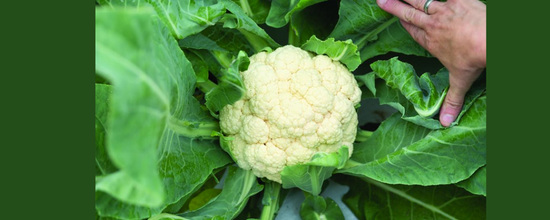
Climatic requirement:
Temperature: 12-30oC
Rainfall: 120-125mm
Sowing temperature: 25-30oC
Harvesting temperature: 12-18oC
Suitable soil pH requirement: 6-7.
Soil:
Cauliflower can be grown in all types of soil with good fertility and good regime. In light soil, the plants are most sensitive to drought and therefore, adequate moisture supply is important. For early crops, the light soils are preferred, while, loamy and clay loam soils are more suitable for mid-season and late maturing types.
Well drained soil:
Simply put, well-drained soil is soil that allows water to drain at a moderate rate and without water pooling and puddling. These soils do not drain too quickly or too slowly. When soil drains too quickly, the plants do not have enough time to absorb the water and can die. Likewise, when the soil does not drain quickly enough and plants are left in pooling water, their oxygen intake from the soil is reduced and the plants can die. Also, plants that are weak and suffering from insufficient watering are more susceptible to disease and insect damage.
Soil treatment:
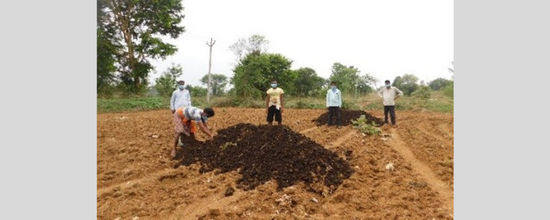
Apply organic manure like FYM/compost/well-decomposed press mud (about 8-10 tonnes/acre). Quantity of organic manure could be adjusted and Decomposing cultures can be mixed with the organic manures. This will improve the soil fertility to realize higher yields.
Benefits of soil treatment:
Water benefits:
- Healthy soil acts as a sponge: more rainwater is absorbed and stored in the ground, where it recharges groundwater and aquifers.
- Healthy soil prevents run-off and erosion, and reduces evaporation.
- Healthy soil improves water quality by filtering pollutants.
Nutritious food:
- Healthy soil increases the nutritional value of food and forage.
- Healthy soil provides plants with the nutrition they need and strengthens plants natural resistance to pests and diseases.
Economic security:
- Healthy soil improves farm productivity and provides stability.
- Healthy soil cuts down on inputs, which increases profit.
- Healthy soil helps withstand extreme weather, floods and drought.
Environmental and health benefits:
- Healthy soil helps reverse global warming by absorbing carbon from the atmosphere where it acts as a greenhouse gas.
- Healthy soil provides habitat for soil microbes to flourish.
- Healthy soil supports greater biodiversity and species stability
Fertilizer:
Apply well decomposed cow dung@40 tonnes per acre in soil along with Nitrogen@50 kg, Phophorus@25 kg and Potash@25 kg in form of Urea@110 kg, Single Superphosphate@155 kg and Muriate of Potash@40 kg. Apply whole quantity of cow dung, SSP and MOP and half quantity of Urea before transplanting.
Land preparation:
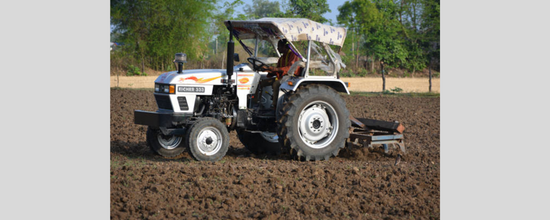
Bring soil to fine tilth by ploughing land thoroughly. Add well decomposed cow dung and mixed well in soil at time of last ploughing
Sowing:
Time of sowing
| Maturity Group | Sowing time | Transplanting Time |
| Extra Early | End of February | March |
| Early I (A) | Mid May | July beginning |
| Early I (B) | May end-June end | Mid July |
| Mid early | July end | Sept. beginning |
| Mid late | Aug. end | Sept. end |
| Late | Sept. end – mid Oct. | Oct. end –mid Nov. |
Spacing:
- Early crop: 45 x 30 cm
- Mid and Late crop: 60 x 45 cm.
Sowing Depth: Sow seeds at depth of 1-2 cm.
Varieties:
SBECF – 102 (Sabour Agrim)
- Source: BAU, Sabour; 2014
- Early; form curd at average temp. 22-27 oC, plants are erect to semi spreading; 65 – 68 days for 50% curd (450g) maturity, yield potential of 150-200q/ha.
- Seed rate: 400-450 g/ha. Sowing time: Kharif (June-July)
- States: M.P., Maharashtra and Goa
DC 31:
- Source: IARI, Pusa, New Delhi; 2014
Suitable for July transplanting and reaches marketable maturity during October. - Curds compact with retentive white colour. Curd weight 500-600g with yield potential of 160-180q/ha.
- Seed rate: 400-450 g/ha. Sowing time: Kharif (June-July)
- States: Punjab, U.P., Bihar and Jharkhand
Hybrid: KTH-301
- Source: IARI (RS), Katrain; 2019
- Suitable for cultivation in the mid-season with the harvesting of curd in the month of November-December; Yield: 390 q/ha.
- Seed rate: 400-450 g/ha. Sowing time: Kharif (June-July)
- States: J&K, H.P., Uttarakhand, Rajasthan, Gujarat, Haryana and Delhi.
Pusa Deepali:
- Developed at IARI, New Delhi.
- Recommended for Northern India particularly Delhi and Punjab.
- Early maturing variety, curds compact, self-blanching, white, medium sized and almost free from raciness.
- Curds ready for harvest in late October.
- Average yield is 12 t/ha.
Early Kunwari:
- Recommended for Haryana, Punjab, and Delhi.
- Very early variety.
- Curds hemispherical with even surface, ready for harvesting from mid-September to mid-October.
- Average yield is 8 t/ha.
Punjab Giant-26:
- Main season variety.
- Curds solid, white, medium-sized. Ready for harvesting from mid-November to December.
- Average yield is 17 t/ha.
Punjab Giant-35:
- Main season variety.
- Curds white, compact medium sized.
- Ready for harvesting from mid-November to December.
- Average yield is 17 t/ha.
Pant Shubhra:
- Recommended for cultivation in Northern India.
- Early growing variety.
- Curds are compact, slightly conical and creamish white.
- Ready for harvest in November.
- Average yield is 20 t/ha.
Pusa Snowball-1:
- Latematuring variety.
- Curds very compact, medium in size and snow white in colour.
- Ready for harvesting from January to April.
- Average yield is 25-30 t/ha.
- Susceptible to black rot.
Sonwball-16:
- Ideal for cooler climates of North Indian states.
- Late maturing variety.
- Curds medium sized, solid, having attractive white colour.
- Ready for harvesting from January to March.
- Average yield is 25-30 t/ha.
Pusa Early Synthetic:
- Main season variety. Curds somewhat creamy white to white and compact.
- Ready for harvest from mid-December to mid-January.
- Average yield is 11 t/ha.
Pant Gobhi-2:
- Early maturing variety.
- Curds compact, composite and creamy white.
- Curds ready for harvesting from November to December.
- Average yield is 12 t/ha.
Pant Gobhi-3:
- Early maturing variety.
- Curds medium sized and solid white.
- Curds ready for harvest from October.
- Average yield is 10 t/ha.
Dania Kalimpong:
- Commonly grown in eastern parts of India.
- Late season variety.
- Curds are medium-large, compact, attractive and white.
- Less sensitive to fluctuations of environment.
- Ready for harvesting from January to April.
- Average yield is 25-30 t/ha.
Seeds Rate:
Early varieties: 600-700gm/ha.
Mid-Early varieties: 500gm/ha.
Mid-Late varieties: 400gm/ha.
Late varieties: 300gm/ha.
Seed Treatment:
Before sowing dip seeds in hot water (50°C for 30 min) or streptocycline@0.01 gram per litre of water for two hours. After treatment dry them in shade and then sow on bed. Black rot mostly observed in Rabi. As a preventive measure seed treatment with mercury chloride is essential. For that dip seeds in Mercury chloride@1 gram per litre of water solution for 30 min after that dry them in shed. Crop grown in sandy soils are more prone to stem rot. To prevent it do seed treatment with Carbendazim 50%WP @3gm/kg of seed.
Method of sowing:
For Sowing dibbling method and transplanting methods can be used.
Sow seeds in nursery and apply irrigation, fertilizer dose as per requirement. Seedlings are ready to transplant within 25-30 days after sowing. For transplantation use three to four weeks old seedlings.
Dibbling Method:
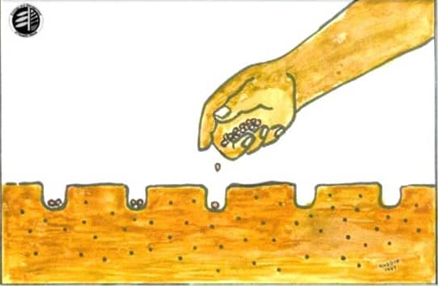
Dibbling is a method of putting a seed or a few seeds or seed materials in a hole or pit or pocket, made at predetermined spacing and depth with a dibble or planter or very often by hand or by any convenient implements such as spade, hoe etc. and covering them with soil.
The dibbling method is suitable for wider spaced planted crops requiring a specific area for their canopy development or cultural practices such as weeding, earthing up, and irrigation in furrows. Seeds may be dibbled in level fields or on ridges or the sides of the ridges or in localized pits or pockets that form hills, rings, or stations distinctly separated from each other.
Advantages of Dibbling method:
- For such a seeding method, the entire field need not be prepared for the seedbed but only the seeding zone. Moreover:
- It facilitates the practice of conservative tillage and reduces the chances of soil erosion.
- It requires fewer seeds, and it gives rapid and uniform germination with good seedling vigor.
- Intercultural practices like weeding, earthing up, and care of individual plants can be facilitated.
- When proper and uniform spacing is maintained, it becomes effortless to calculate the plant population and thereby expected yield.
Disadvantages of Dibbling method:
- Uniform germination is not possible if all seeds are not placed at a uniform depth. Besides, dibbling is a more laborious, time-consuming, and expensive process compared with broadcasting.
Transplanting method:
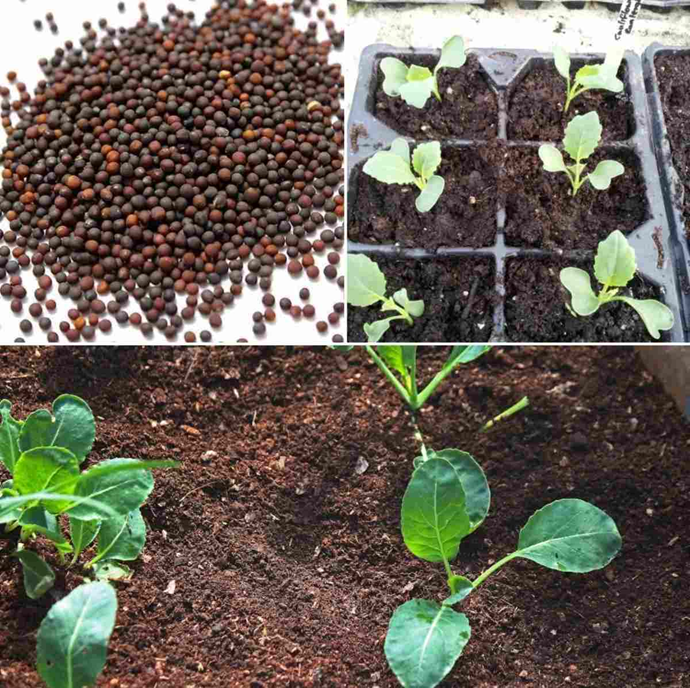
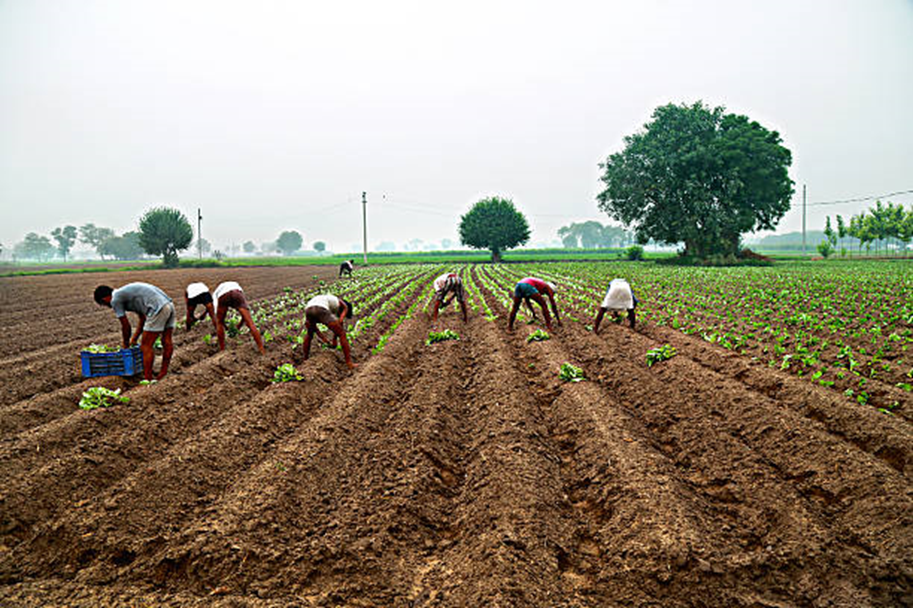
Transplant 30 to 40 days old seedlings at a spacing of 45 cm. Avoid land infected with ‘club root disease’. Raise the seedlings in shade net house. A nursery area of 5 cents with slanting slope of 2% is required for the production of seedlings for 1 ha.
Weed management: To check weed control apply Fluchloralin (Basalin) 800ml/150-200Ltr water before transplantation. Apply Pendimethalin@1Ltr/acre one day before transplanting of seedlings.
- If field is not irrigated then irrigate the field immediate after sowing.
Root knot nematodes:
Symptoms:
Galls on roots which can be up to 3.3 cm (1 in) in diameter but are usually smaller; reduction in plant vigour; yellowing plants which wilt in hot weather.
Management:
Plant resistant varieties if nematodes are known to be present in the soil; check roots of plants mid-season or sooner if symptoms indicate nematodes; solarizing soil can reduce nematode populations in the soil and levels of inoculum of many other pathogens.
Leave a Reply