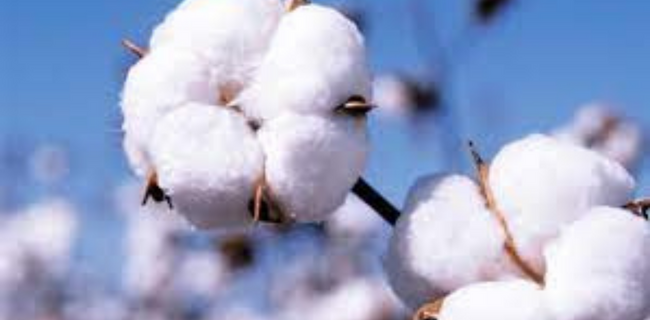
First dose of fertilizers given during that time period @ 40kg urea, 5kg zinc sulphate/acre near roots. Light or heavy irrigation should be given depending on the seasonal rainfall to promote reproductive stage, release chrysoperla @ 10,000/ha to save crop from sucking pests. To control parawilt disease foliar application of 10ppm cobalt chloride on infected plants. Inter culture and hand weeding should be done at this stage, crushing of larvae in the shoots mechanically for control of spotted and spiny bollworm. Set up pheromone traps @ 5 traps/hac for monitoring bollworm. Farmers have to visit fields regularly to check infestation of spotted and spinny bollworm insect to prevent cotton lint from larval feeding.
Spotted and spiny bollworms


Description of Insect Stages
Eggs are spherical bluish green, sculptured and less than 0.5 mm diameter. Eggs are laid singly on most part of the cotton plant (flower buds, bolls, peduncles and bracteoles); the favoured region being young shoots.
Life History
The female moth deposits 2 or 3 eggs on bracts, leaf axils and veins on the under surface of leaf. A female may lay about 385 eggs and the incubation period is about 3 days. The larva becomes fully grown in 10-12 days. The pupal period is 7-10 days. The total life cycle ranges from 20-22 days. E. insulana is the most abundant species in northern states and E. vittella is predominant in Peninsular India. Okra or bhendi crop provides effective means of carryover from one to the next season.
Damaging Symptoms


• Drying and drooping of terminal shoots during pre-flowering stage.
• Shedding of squares and young bolls.
• Flaring up of bracts during square and young boll formation stage.
• Holes on bolls and rotting of bolls.
Management-
- The pest can be suppressed with clean cultivation.
- Chemical control measures to control this pest are given below-
- Organochlorin 0.07% of endosulfan 35 EC.
- Organophosphates triazophos 40 EC, quinalphos 25 EC, monocrotophos 36 SL, phenthoate 50 EC, propenophos 50 EC @ 0.05%.
- Carbamate 2.5 kg of carbaryl 50 WP.
- Synthetic pyrethroids 0.05% of cypermethrin 10 EC, 0.03% of cypermethrin 25 EC, 0.02% of deltamethrin 2.8 EC and 0.02% of alphamethrin 10 EC.
- Trichogramma brasiliense (Ashmead) the exotic parasitoid has been used. The release of this reduced the incidence by 50% in fields. The cumulative release in july-August and innoculative releases afterwards are recommended.
Leave a Reply