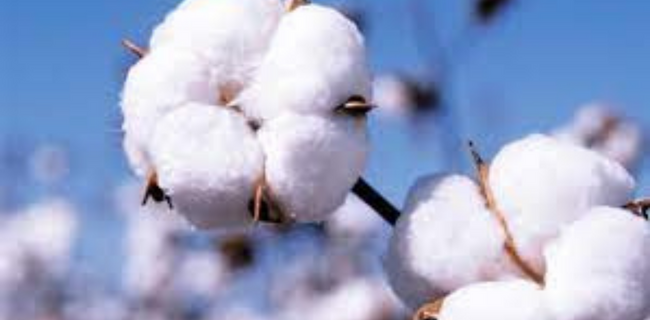
Inter cultering and hand weeding is to be done during this week. Apply second dose of fertilizers @ 30kg urea, 50kg SSP and 8kg sagarika/acre near roots to promote square formation stage. For ballworm attack regular monitoring should be done at weekly interval during this phase.
Verticillium wilt: Verticillium dahlia

Symptoms
- It affects the crop in square and boll formation stages
- Bronzing of veins followed by interveinal chlorosis, yellowing and scorching of leaves
- Leaves exhibit drying of leaf margins and areas between veins known as “Tiger stripe symptom”
- Affected plants remain barren showing pinkish discoloration in stem and wood. It may produce smaller bolls
Management
- Treat the delinted seeds with Carboxin or Carbendazim at 4 g/kg.
- Remove and destroy the infected plant debris after deep ploughing in summer months (June-July).
- Apply heavy doses of farm yard manure or compost at 100t/ha.
- Follow crop rotation by growing paddy or lucerne or chrysanthemum for 2-3 years.
- Spot drench with 0.05 % Benomyl or 0.1 % Carbendazim.
Pink bollworm-


Egg (3-4) days Pupa (7-8) days Larva (12-15) days

Adult: Small, deep brown moth, blackish spots on the forewing, hindwings are fringed with hairs.
Symptoms of damage-
- Rosetted flowers.
- Excreta observed at the point of bore holes by larval feeding. When bolls are opened, damaged seed kernel would be observed.
- They cut window holes (interlocular burrowing) in the two adjoining seeds thereby forming “double seeds“
- The attacked buds and immature bolls drop off
- Discolored lint and burrowed seeds
Identification of the pest
Larva
- Shows colour variation. Young larva are white and late instar becomes almost black, brown or green to pale or pink
- Several dark and light alternating bands running the entire length
Adult
- Small moth
- Forewings are brown or dull yellow olive grey with dark spots
- Hind wings margins are deeply fringed
Management
- The destruction of off-season cotton sprouts, alternative host plants or the burning of plants debris from the cotton fields, minimizes the incidence of this pest.
- Deep ploughing with a furrow-turning plough by the end of February is also helpful in reducing the carry-over of this pest to the next season.
- In case the damage exceeds 5%, the crop should be sprayed immediately and thereafter @ 10 days interval with any of following insecticides-
- Organochlorin 0.07% of endosulfan 35 EC.
- Organophosphates triazophos 40 EC, quinalphos 25 EC, monocrotophos 36 SL, phenthoate 50 EC, propenophos 50 EC @ 0.05%.
- Carbamate 2.5 kg of carbaryl 50 WP.
- Synthetic pyrethroids 0.05% of cypermethrin 10 EC, 0.03% of cypermethrin 25 EC, 0.02% of deltamethrin 2.8 EC and 0.02% of alphamethrin 10 EC.
- At least 5-6 sprays are required for the effective control bollworms. Same insecticides should not be sprayed repeatedly to avoid the development of pesticides resistance and appearance of secondary pests. Also, avoid using insecticides of same group in more than 3 sprays.
- Nagaraja (Trichogramma achaeae) and Nagarkatti (Trichogrammatidae) parasitizes the eggs of this pest throughout India and the incidence is 6-27% in north India. It appears late in the season and is common in area where pesticides are used sparingly.
Leave a Reply