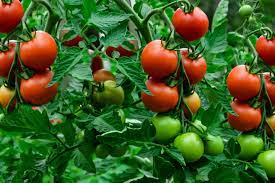
Apply first split application of mineral fertilizers-
- At this stage, plants are growing very rapidly, and they need more food in the form of nutrients to support this growth. The fertilizers added to the soil before planting have been used. If you are using flood irrigation, side dressing is recommended:
- Apply the fertilizers pellets on the furrows and work them into the soil. This is side dressing.
- At this stage, a quarter of the total need of nitrogen is added, amounting to 20 kg of urea per acre.
- If no rain is expected, do not forget to irrigate the crops so that the nutrients can reach the plant roots.
- If using drip irrigation, the fertilizers can be mixed with the irrigation water at the recommended doses.
Irrigation schedule for vigorous growth of the crop-
- Timely irrigation is essential for good vegetative growth, flowering, fruit set and fruit development.
- Water requirement will off-course depends on rainfall, but also on the type of soil and the season. Thus, higher yield may be obtained at optimum moisture level and soil fertility conditions.
- Water stress, especially during fruit growth and ripening, can cause reduced yield. Symptoms of water stress include shedding of the flowers, sun scalding and dry rot of fruit. The most critical stages for watering are at transplanting, flowering and fruiting stages. Irrigation at flowering and fruiting stage will help to improve fruit soluble solids and fruit color.
Recommendations for healthy and productive plants:
- During hot and dry weather, irrigation should be applied every 4-5 days.
- During cool, humid weather, irrigation may be planned every 7-12 days.
- Do not forget that sandy soils require more frequent irrigation than clay soils.
- Never irrigate extra after a long spell of drought; this may cause fruit deformation.
- Do not overwater, as vegetable crops are usually very sensitive to flooding.
Leave a Reply