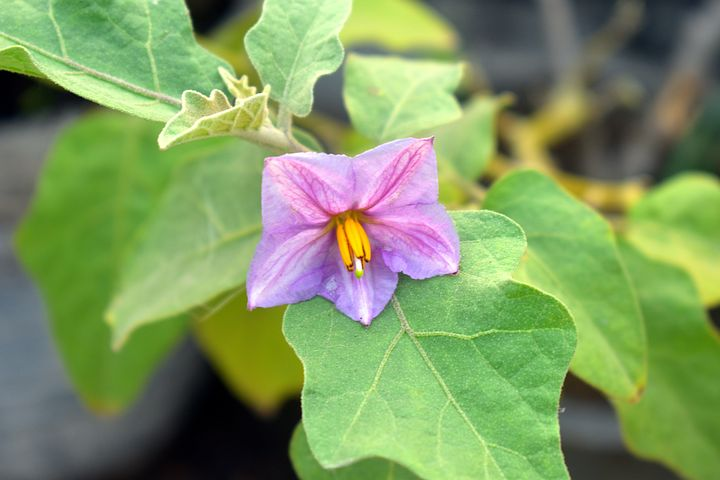
Flowering stage
Monitoring of field-

Monitor the growth of your crop often. Walk through your field in a random manner or zigzag and check for signs of diseases, pests and deficiencies. Deficiencies are characterized by the discoloration of leaves and poor vigor of the plants. Diseases are often visible as discoloration and spots or streaks on leaves. Finally, remember that most of the insects present in the field are beneficial for your crop. Those that attack your crop will leave behind damage on leaves and buds in the form of holes.
Whiteflies


Description of Insect Stages
Eggs are yellowish white laid singly on the under surface of leaves. They are stalked and sub elliptical in shape. Nymphs are yellowish and brownish, sub elliptical and scale-like. They are found in large numbers on the underside of leaves. Pupae also resemble nymphs in shape and have brownish opercula. Adults are tiny and white in color. They have a yellow body dusted lightly with a white waxy powder. Females are 1.1 –1.2 mm long; males are slightly smaller. Antennae of females are longer than males. Hind legs are larger than the anterior pair of legs. Large numbers of adults are found in the middle region of the plant.
Nature of Damage and Symptoms
Whiteflies cause damage to plants in two ways: firstly by sucking the sap and secondly by excreting honey dew on which sooty mould grows. Damage from direct feeding reduces the photosynthetic activities of the plant and hence the yield. Indirect damage results from lint contamination with honeydew and associated fungi and through transmission of leaf curl virus disease. Late season severity affects the seed development and the lint quality. Leaves curl upwards and the plant vigour reduces. Leaves become shiny with honeydew or darkened by sooty mold growing on honeydew. Lint contamination with honeydew and associated fungi occur during heavy infestations after boll opening.
Life History
The female whitefly lays the eggs singly on the under surface of leaves and mostly on the top and middle crop canopy. Each female is capable of laying about 120 eggs. The incubation period varies from 3-5 days during spring and summer, 5-17 during autumn and >30 days during winter. The nymphs after hatching fix themselves to the underside of the leaves and they moult thrice before pupation. The nymphal period varies from 9-14 days during summer, and 17-19 days during winter. The pupal period is 2-8 days. The total life-cycle ranges from 14 to 107 days depending upon the weather conditions. There are about 12 overlapping generations in a year and the pest also reproduces parthenogenetically at times. Whiteflies have extremely wide host range.
Management of whiteflies
- Avoid late sowing and excessive use of “N” fertilizers.
- Destroy infected shoots during early stages.
- Release predators like Coccinellids or Chrysoperla carnea.
- Any of the following insecticide can be used: 0.05% oxyedemeton methyl 25 EC, 0.02% dimethoate 30 EC, 0.02% acephate, 75 SP or 0.005% 1 of imidachlorpid 17.8 SL.
Little Leaf:

The affected leaves become thinner. The petals turn green like. Infected plant does not bear fruit. The disease is transmitted by leafhopper. Use a disease resistant variety. In nursery use 10% Foret (20 gm, for 3 X 1 m broad bed). At time of sowing apply Phorate in between two rows of seeds. If infection is observed, at the initial stage, remove disease affected plants. Spray the crop with Dimethoate or Oxydemiton Methyl@1ml per litre of water. Little leaf is spread mainly through Aphid infestation, to keep check on Aphid Population spray with Thiamethoxam 25%WG@5gm/15Ltr of water.
Wilt:

Dropping of entire leaves along with yellowing of crops. Wilting or drying of the entire plant is seen. If infected stems are cut and dipped in water, a white milky stream appears.
Follow crop rotation. Cultivation of brinjal after french beans helps in controlling wilt. Remove and destroy infected plant parts away from the field. Avoid water stagnation in the field, to control wilt drench soil with Copper Oxychloride@2.5gm/1Ltr of water.
Mosaic:

Light and green patches observed on leaves. Small bubbles or Blisters are formed on leaves and leaf size remains small. Select healthy and disease free seeds for cultivation. Uproot and destroy infected plants away from the field. Recommendations given for aphids may be adopted. (Take spray of Acephate 75SP@1gm/Ltr or Methyl demeton 25EC@2ml/Ltr of water or Dimethoate@2ml/Ltr of water.
Leave a Reply