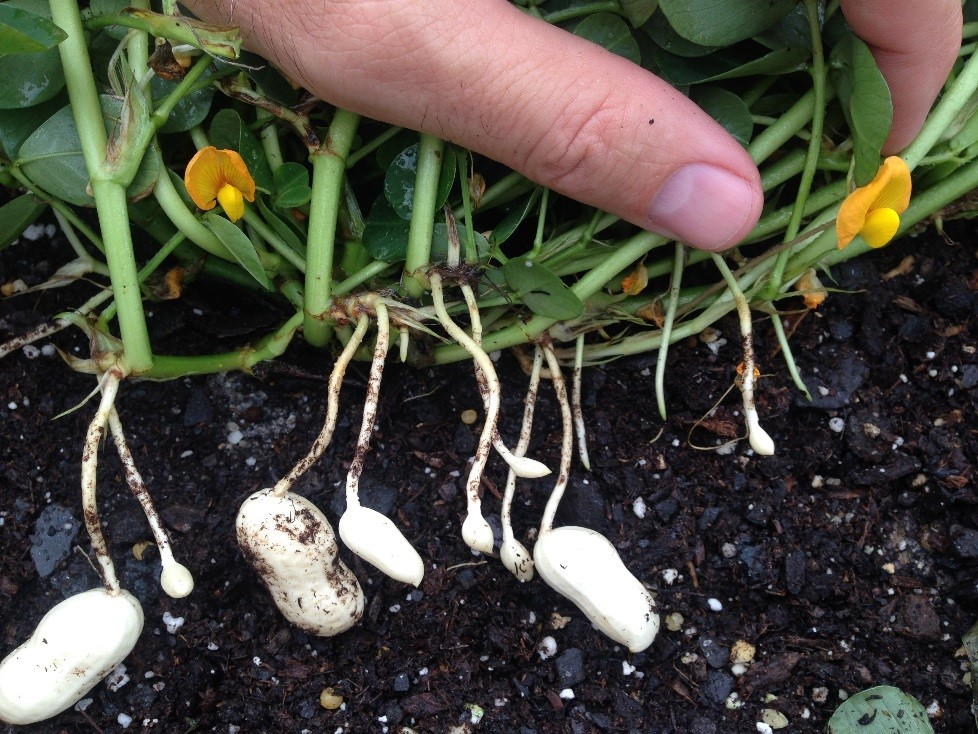
Add micronutrients to your crop-
Secondary nutrients and micronutrients are usually added after a soil test or after the detection of a deficiency in your crop. Boron, iron, zinc, manganese and calcium are the most common compliments. The addition can be done as a side dressing at the base of the plant, or as a foliar spray. This will depend on the nutrient itself, the weather conditions and the severity of the deficiencies. Here are some recommendations-
- Calcium can be added in the form of calcium nitrate or calcium chloride solutions (3g/l).
- Magnesium is sprayed in the form of magnesium sulfate solutions (3g/l).
- Iron is sprayed as ferrous sulfate solutions (2g/l).
- Boron is usually applied to soils before seed sowing in the form of borax (800g/acre), mixed with sand.
- Zinc is usually sprayed as zinc sulfate solutions (2g/l).
- Molybdenum is usually sprayed as sodium or ammonium molybdate solutions (2g/l).
Monitoring of field-
Monitor the growth of your crop often. Walk through your field in a random manner or zigzag and check for signs of diseases, pests and deficiencies. Deficiencies are characterized by the discoloration of leaves and poor vigor of the plants. Diseases are often visible as discoloration and spots or streaks on leaves. Finally, remember that most of the insects present in the field are beneficial for your crop. Those that attack your crop will leave behind damage on leaves and buds in the form of holes.
Deficiency and their remedy-
Potassium Deficiency:
Leaves are not growing properly or grow in irregular shape. Mature leaves show pale yellow appearance and veins remain green. To overcome this deficiency apply Muriate of Potash @16-20kg/acre.
Calcium Deficiency:
Calcium deficiency mostly observed in light soils or alkaline soils. Plants not grow properly. Leaves show curling up. To overcome this deficiency applies Gypsum @ 200kg/acre at peg formation stage.
Iron deficiency: Entire leaf get white or chlorotic. If deficiency is observed, spray crop with ferrous sulphate @5gm + citric acid@1gm/Ltr of water with one week interval. Continue spraying till deficiency gets disappeared.
Zinc Deficiency:
Affected plant shows leaves in cluster form, leaves growth get stunted and appear small.
Take spray of Zinc sulphate@2gm/Litre of water. Spray for two-three times with 7 days interval. Sulphur Deficiency:
Young Plant growth get stunted and appeared smaller in size. Also leaves are small and give yellowish appearance, maturity of plants get delayed. As a preventive measure apply Gypsum @200kg/acre at planting and pegging stage.
Monitor your field for disease and insect/pest incidences-
Gram pod borer: Helicoverpa armigera

Symptoms of damage:
- Larvae feed on the foliage, prefers flowers and buds
- When tender leaf buds are eaten symmetrical holes or cuttings can be seen upon unfolding of leaflets
Identification of the pest:
- Eggs: Spherical in shape and creamy white in colour, present singly
- Larva: Shows colour variation from greenish to brown. It has dark brown grey lines on the body with lateral white lines and also has dark and pale bands.
- Pupa: Brown in colour, occurs in soil, leaf, pod and crop debris
- Adult: Light pale brownish yellow stout moth. Forewings are olive green to pale brown with a dark brown circular spot in the centre. Hind wings are pale smoky white with a broad blackish outer margin.
Management:
- Deep summer ploughing
- Intercrop one rows of red gram for every 5 or 6 rows
- Install pheromone trap @ 5/ha
- Use Trichogramma chilonis @ 1 lakh/ha or Chrysoperla carnea @ 50000/ha at 40 and 50 days after sowing of groundnut can effectively check the pest
- Apply HaNPV @ 250 LE/ha or B.t (Bacillus thuringiensis) 1 kg/ha or 5% NSKE for monitoring eggs and early instar larvae
- Conserve the bio control population of spiders, long horned grasshoppers, preying mantids, robber fly, ants, green lace wing, damsel flies/dragon flies, flower bugs, shield bugs, lady bird beetles, ground beetle, predatory cricket, braconids, trichogrammatids, NPV, green muscardine fungus
- Spray any one of the following insecticide
- quinolphos 2ml/lit of water
- chloropyriphos 3ml/lit of water
- Imidacloprid 2ml/lit of water.
Pod borer:

The holes are observed in young plant that is plugged with excreta. Nymph is of white in early stages and later turns brown.
Apply Malathion 5D@10 kg/acre or Carbofuran 3%CG @13 kg/acre, on soil at 40 days prior to sowing on infected area.
Leave a Reply