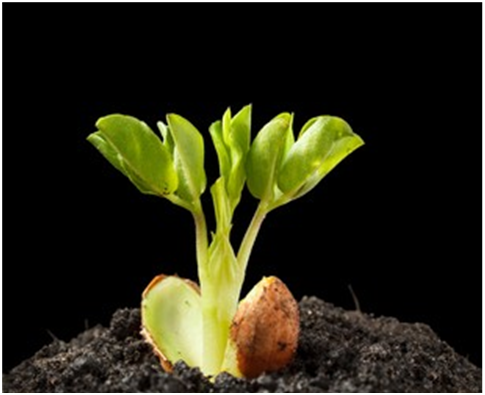
Method of sowing–
Seeds are sown with the help of a seed drill or a dibbler.
Seeds Rate-
For sowing, use a seed rate of 38-40 kg/acre.
Sowing Depth-

Healthy and well developed pods should be hand shelled with a suitable groundnut sheer about fortnight before sowing. Pods are sown with help of seed drill at depth of 8-10 cm at a seed rate of 38-40 kg/acre.
Spacing

Spacing to be adopted depends upon the type of variety. i.e For the spreading variety (M 522) use spacing of 30cm between the rows and 22.5 cm between plants and for bunchy type varieties (SG-99, SG84) use spacing of 30 x 15 cm.
Irrigation the groundnut crop-
Water supply is particularly important during three stages of crop growth: germination, flowering stage and pod/seed development. Here are some recommendations on how to prepare an irrigation plan so that your plants are vigorous and healthy. Remember that the exact quantity applied will depend on the type of soil, variety and weather.
- The initial irrigation after sowing must be substantial in order to favor seed-soil contact and the moisture of the seeds.
- Irrigation can be planned 3-5 days after that, depending on soil moisture and water availability.
- If there is no rain, fields should be irrigated regularly (every 7-15 days) during the vegetative stage.
- The last irrigation event should be during pod development to secure yields.
- Under no circumstances should you overwater, as leguminous crops are very sensitive to flooding.
Note- When 80% of pods are dry, plants should be left to dry for about 20-25 days before harvesting.
Monitor your field for some disease and insect/pest incidences-
Termites: Odontotermes spp

Symptoms of damage:
- Wilting of plants in patches
- Termites penetrate and hollow out the tap root and stem thus kill the plant.
- Bore holes into pods and damage the seed.
- It removes the soft corky tissue from between the veins of pods causing scarification, weaken the shells, make them liable to entry and growth of Aspergillus flavus that produces aflotoxins
Identification of the pest:
- The termites are endemic in red and sandy soils.
- These are social insects, live in termataria, in distinct castes, workers, king and queen.
- Workers’ are small (4 mm) and have a soft, white body and a brown head
Management:
- Digging the termataria and destruction of the queen is most important in termite management
- Use well rotten organic manure
- Harvest the groundnut as soon as they are matured, early removal of the produce from the field will reduce the chances of termite damage to pods
- Apply chlorpyriphos 20 EC to control termites
- Dust chlorpyriphos @ 30-40 kg/ha in soil before sowing in endemic areas
- Seed treatment with chlorpyriphos @ 6.5ml /kg of seed may reduce termite damage.
Groundnut leaf miner: Aproaerema modicella


Symptoms of damage:
- Young larvae initially mine into the leaflets, feed on the mesophyll and form small brown blotches on the leaf
- Later stages larvae web the leaflets together and feed on them, remaining within the folds
- Severely attacked field looks “burnt” from a distance
Identification of the pest:
- Eggs: Shiny white and are laid singly on the underside of the leaflets.
- Larvae: Green in colour with dark head and prothroax
- Adult: Brownish grey moth, 6 mm long with 10 mm wing span. Forewings with white spot on the costal margin
Management:
ETL: 1 larvae/meter row
- Set up light traps @12/ha
- Apply anyone of the following insecticides
- Dimethiate 30 EC 660 ml/ha
- Malathion 50 EC 1.25 l/ha
- Methyl demeton 25% EC 1000 ml/ha.
Leave a Reply