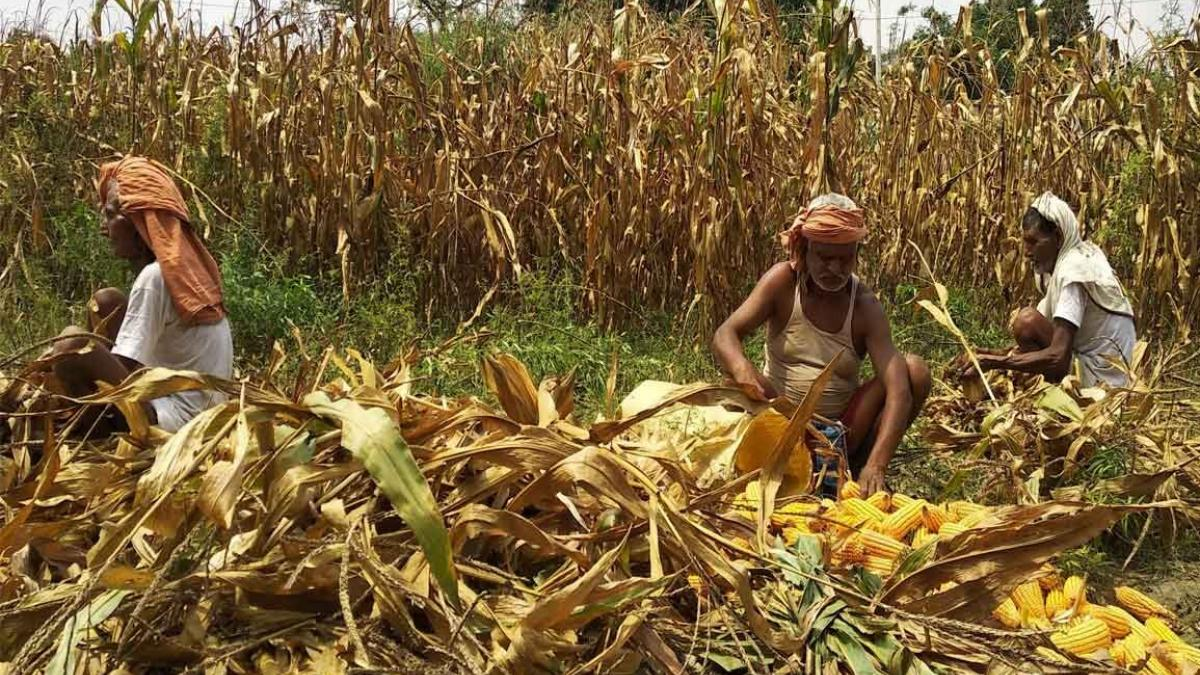
Methods of harvesting maize
For grains
Harvesting by hand is only performed in very small fields or gardens where maize is mainly cultivated for self-use (human consumption or feed for farm animals that the family owns). This method is not cost or time-effective since one person will need from 30 to 100 hours to harvest one hectare with maize plants.
In most cases, maize is mainly harvested mechanically, using threshing, shelling, or combined machines. The farmer can own these machines, or they can be rented together with an experienced operator during the harvesting period. In this case, the time needed to harvest one hectare by using the machine is at least 6 times less, depending on the machine used. At the same time, the efficiency of the grain harvest is estimated at 80-95%.
In all cases, it is very important to check the condition and the precision of the machines that will be used to limit yield loss and reduce the breaking of the grains. The farmer or the operator should have some knowledge or training on how these machines operate, which is the optimum grain moisture content at the harvest and which are the optimum speed settings.
For silage
For selecting the above-ground biomass of maize plants intended for animal feed, farmers use field choppers. Generally, maize plants for silo production are chopped at an average height of 10-20 cm (4-8 inches) or a maximum of 45cm (18 inches). Ideally, the chop length should be 10-15 mm, but the particles can be larger or smaller depending on the moisture level.
Storing of maize –
Best practices for safer and longer maize post-harvest storage
Prior to harvest, the farmer has to choose between selling his/her products directly or storing them for a specific period. In the first scenario, the farmer should have already found a buyer (that is the case in contract farming), and he/she does not have to worry about over-drying or storage costs. However, in this case, since the product offer is quite high, the prices that the maize can get are probably relatively low. By storing the product, the farmer has the opportunity to sell when the prices have reached a higher, more desirable level. In areas where the storing conditions cannot be optimum, the risk of more extended storage is higher since it can cost the farmer up to 80% of his/her yield. In case they decide to store the maize kernels and to reduce the risk of losses due to infestation of the grains, the farmer or silo manager should follow specific steps and perform:
The silo (storing bins) should meet certain specifications.
You can build, buy or rent an appropriate Maize Storage Silo. The silo’s floor should be covered-paved, smoothed, clean, and dry with moisture insulation. Good aeration is also essential. You have to keep the area around the storage bins (3 meters or 10 feet radius) clean from grain residues and vegetation. The silo should be thoroughly cleaned and sanitized before placing the new grains. You can inspect the silo carefully for cracks or old grain residues (such as dust or false floors). Do not forget to clean the vents and repair any cracks or holes in the bins. Additionally, you can spray with certified (residual) insecticides on the floor and the walls of the silo before storing the new grains.
Place only healthy grains in the silo
The moisture content and the temperature the maize kernels will be stored will definitely affect the length of the storing period. The grains should be further dried (if needed) to reach a maximum of 13.5% moisture content when long storage is intended (around 6 months). If the kernels are going to be used for feed and they have a higher moisture content, the farmer can use some conservatives like propionic acid or a mixture of acetic and propionic acid. These substances won’t affect the nutritional value and safety of the product and will protect it from fungal infections. Ask your local licensed agronomist.
Categorize the kernels based on quality.
Remove all the infected seeds and the foreign matter. It is best not to pile the grains or place them directly on the floor without moisture-proof materials. It is highly advised to put the grains in bags or/and check them periodically to assure that their health and quality remain in good levels.
Chemical protection
From the harvest moment, the farmer can apply protective products with the following active compounds: Pirimiphos-methyl, (S) – Methoprene. The grains can be treated with appropriated and certified insecticidal dust if necessary. Usually, it is advised to perform such treatments before placing the seeds in the storing bins, and in this case, the storing will last more than a year. If the grains are stored in areas where the temperature and the humidity levels are high, then a grain protectant is important to be applied, sometimes followed by a capping treatment (application at the top of the grain mass).
Furthermore, a large variety of fumigant insecticides can be used on the corn grains stored in piles (not in bags). Some of the most important active ingredients are:
- Aluminum phosphide,
- Carbon dioxide (CO2),
- Magnesium phosphide,
- Methyl bromide
- Deltamethrin
Depending on the product the farmer will use, he/she should follow the product’s label instructions and of course ask the local licensed agronomist. For better results, the farmer should perform such applications when the temperature exceeds 15.5 oC (60 oF), but the humidity levels remain close to 12-13%.
Regular inspections
More extended on-farm storage of harvested maize increases the risk of post-harvest losses due to pathogens (mold), rodents, and stored grain pests, even when the previous steps have been followed. When the temperature inside the silo is above 13-15.5 oC (55-60 oF), then the inspection should be performed more often (around once a week), while when the temperature is below 13 oC (55 oF), the inspection can be performed once every 2 weeks. Except for the visual inspection, the farmer should take representative samples from the grain piles and examine them for insect damage-presence and fungal contamination. Keep in mind that when the temperature is low, it is better to take sample from the center of the piles where it is more probable to find any insects at that time. In combination with sampling, the farmer can use probe traps to track the species and numbers of the stored maize insects.
The most commonly found insects in maize stored grains are:
- Maize Weevil (Sitophilus zeamais).
It can feed on undamaged corn grains. It is very hard to detect an infestation in an early stage since the insects penetrate and stay inside the grains.
- Lesser grain borer (Prostephanus truncates) or “Scania”.
The larvae can feed on damaged kernels). It is considered the most destructive insect of stored products in Africa. Additionally to the damage, by feeding with the corn grains, it causes extensive losses due to the transition of funguses like A. flavus, F. moniliforme, and P. islandicum. The farmer should take controlled measures immediately when he/she finds 5 or more insects per trap.
- Moths like Sitotroga cerealella
The larvae cannot be easily detected since it grows inside the kernels. The maize grains can be parasitized both in the fruiting stage of the plants and the post-harvest stages.
- Red rust flour beetle (Tribolium castaneum).
It thrives in temperate areas and can survive winter months in protected heated areas. It can feed on damaged kernels. Measurable losses will occur when more than 1,000 insects are detected per trap weekly.
Leave a Reply