| BOTANICAL NAME | SACCHARUM OFFICINARUM |
| SPECIES | SACCHARUM SPONTANEUM |
| FAMILY | POACEAE |
| SUBFAMILY | PANICOIDEAE |
| KINGDOM | PLANTAE |
| GENUS | SACCHARUM |
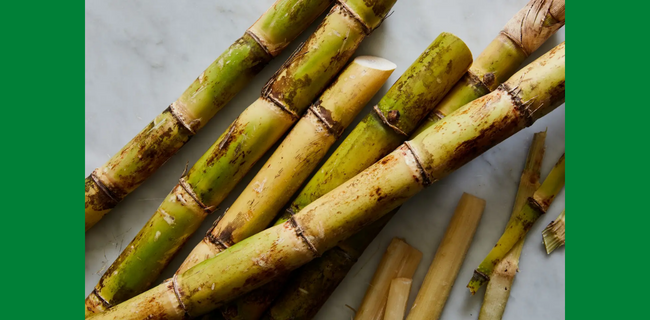
Sugarcane is a tall perennial plant growing erect even up to 5 to 6 meters. The plant is composed of four principal parts, the root system, the stalk, the leaves, and the inflorescence. A description of each of these parts is given as follows:
Root System

The root system is fibrous and consists of two types of roots namely, ‘sett roots’ and ‘shoot roots’. When sugarcane sett is planted in the soil and covered with moist soil, the root primordial (translucent dots) situated at the base of every cane joint is activated and produces roots. These roots are known as ‘sett roots’ and are mostly temporary. These are thin and much branched and function for a limited period. These roots provide moisture and nutrients for the growing primary shoot until it forms roots of its own. Later on, these ‘sett roots’ cease to function and die. After the emergence of the primary shoot from the bud, other rots are produced from the lower rings of the lower nodes of the shoots. Later, this process occurs progressively in the upper rings of the nodes near the soil surface. Those formed, first goes downwards, whereas those formed near the soil surface grow in the upper layer of the soil for providing anchorage for the plant. These roots produced from shoots are known as ‘shoot roots’. These are permanent roots and are fleshy and white in colour. New roots are continually produced from tillers.
Stalk:

Sugarcane stalk is roughly cylindrical and is composed of many distinct nodes and internodes. It is above ground portion of the plant which bears leaves and flowers. A small portion of the stalk is below ground which is called rootstock. At each node, there is a bud, sometimes known as an ‘eye’ appearing on the opposite side of the cane. These buds are protected by the leaf sheath, which is folded tightly around the internode. Just below the bud is a raised portion known as a leaf scar, a point of attachment of the leaf sheath to the stalk. Before this is the wax band. Internodes of most varieties are coated with a waxy material. This coating is usually most evident just below the node, two or three translucent dot-like structures known as root primordial appear in the root band. These roots primordial give rise to ‘sett roots’ as indicated earlier. At the apex of the stalk is an apical bud which is responsible for the elongation of the stalk. Sugarcane produces branches that grow from below the surface of the soil. The underground portion of the stem tapers rapidly and from the lateral buds of this region and shoots develop. These are called tillers. Single cane may produce as many as 20 to 40 tillers depending upon variety and environmental conditions.
Leaves

The leaves of the cane plant grow alternately on opposite sides of the cane stalk from the nodes. The leaf of sugarcane consists of a sheath and a blade with the ligule in between. The sheath is attached to the stalk by a basal ring and completely clasps the stalk. It is normally a light green color. The outer surface of the sheath is often hairy. The leaf blade is a long, flat structure varying from one to one and a half meters in length and 5 to 7 centimeters wide. The color of the blade varies from yellowish green to very dark green depending on both the variety and nutritional status of the plant. The midrib is prominent with a groove on the upper surface. The leaf edges are generally serrated.
The projection from the leaf sheath near the blade joint is the auricle, which does not occur in some of the varieties. At the junction of the sheath and blade there is a membranous attachment known as the ligule which bears long hairs.
Inflorescence

The inflorescence of sugarcane generally called the ‘arrow’ is an open panicle. It is long (30 cm or more) and tapering. The arrangement of the spikelets is racemose, that is, the oldest flowers are at the bottom and the youngest at the top. The flowers open in succession over a number of days. Flowers have both male and female organs, but not all produce fertile pollen. Some of the varieties have fertile pollens but they are usually small and of low vitality. Sugarcane usually flowers at the age of ten to twelve months, but some varieties in north India do not flower at all. Due to this fact cane has so long been propagated vegetatively by cuttings of sugarcane. Cane produced from seed is not so vigorous, but it is important for breeders.
Suitable Climate:
Sugarcane is a tropical plant. It grows more successfully in those regions where the climate is more or less tropical but it can grow in sub tropics too as in north India. Rainfall between 1100 and 1500 mm is adequate provided the distribution is right.
Annual Normal Rainfall:
In India sugarcane is grown in areas ranging in rainfall of about 600 mm to 3000 mm. The crop can survive normal variation around a mean of 1200 mm. for obtaining higher yields, a rainfall of 2000 to 2500 mm per annum, evenly distributed is considered ideal. During the active growth period rainfall encourages rapid cane growth, cane elongation and internode formation. But during ripening period, it is not desirable as it leads to poor juice quality, encourage vegetative growth, formation of water shoots and increase in the tissue moisture. It also hampers harvesting and transport operations.
The critical mean temperature range:
Germination phase : 300C-350C
Tillering phase : 300C-320C
Grand growth phase : 300C-320C
Ripening phase : 250C-300C
Sunlight : 12 to 14 hours
High humidity : 80-85%
Suitable Soil pH range : 6.5-7.5

Soil for sugarcane cultivation:
Well-drained, loamy deep soil with a groundwater 1.5-2 m below the soil surface with ample water holding capacity is the best for sugarcane cultivation. Sugarcane does not require any specific type of soil as it can be successfully raised on diverse soil types ranging from sandy soils to clay loams & heavy clays.
Soil treatment:
Apply organic manure like FYM/compost/well-decomposed press mud (about 8-10 tonnes/acre). Quantity of organic manure could be adjusted in such a way as to supply 112 kg N/acre through one or more sources depending on their N content. Trichoderma and Pseudomonas (each 1kg/acre) and Decomposing cultures can be mixed with the organic manures. This will improve the soil fertility to realize higher yields.

Benefits of soil treatment:
Water benefits:
- Healthy soil acts as a sponge: more rainwater is absorbed and stored in the ground, where it recharges groundwater and aquifers.
- Healthy soil prevents run-off and erosion, and reduces evaporation.
- Healthy soil improves water quality by filtering pollutants.
Nutritious food:
- Healthy soil increases the nutritional value of food and forage.
- Healthy soil provides plants with the nutrition they need and strengthens plants natural resistance to pests and diseases.
Economic security:
- Healthy soil improves farm productivity and provides stability.
- Healthy soil cuts down on inputs, which increases profit.
- Healthy soil helps withstand extreme weather, floods and drought.
Environmental and health benefits:
- Healthy soil helps reverse global warming by absorbing carbon from the atmosphere where it acts as a greenhouse gas.
- Healthy soil provides habitat for soil microbes to flourish.
- Healthy soil supports greater biodiversity and species stability.
Suitable Soils with texture ranges:
Suitable Soils with texture ranges- Clay, Loam, sandy, Red and yellow soil.
Clay soil:

Clay Soil is a heavy soil type that benefits from high nutrients. Clay soils remain wet and cold in winter and dry out in summer.
These soils are made of over 25 percent clay, and because of the spaces found between clay particles, clay soils hold a high amount of water.
Because these soils drain slowly and take longer to warm up in summer, combined with drying out and cracking in summer, they can often test gardeners.
Loam soil:

Loam soil is a mixture of sand, silt and clay that are combined to avoid the negative effects of each type.
These soils are fertile, easy to work with and provide good drainage. Depending on their predominant composition they can be either sandy or clay loam.
As the soils are a perfect balance of soil particles, they are considered to be a gardenes best friend, but still benefit from topping up with additional organic matter.
Sandy soil:

Sandy Soil is light, warm, dry and tends to be acidic and low in nutrients. Sandy soils are often known as light soils due to their high proportion of sand and little clay (clay weighs more than sand).
These soils have quick water drainage and are easy to work with. They are quicker to warm up in spring than clay soils but tend to dry out in summer and suffer from low nutrients that are washed away by rain.
The addition of organic matter can help give plants an additional boost of nutrients by improving the nutrient and water holding capacity of the soil.
Red and yellow soil:

Found in Deccan plateau, Western Ghat, Orissa, and Chhattisgarh.
Characteristics:
The soils are red due to iron oxide in them. The soils form when metamorphic rocks weather away. Rich in potash. Somewhat acidic. Poor in nitrogen, magnesium, lime, phosphorus, and organic matter. Soils are sandy.
Soil and land preparation:
Sugarcane crop stand in field more than a year, it is necessary to give deep ploughing by mould board plough drawn by tractor. The proper time for ploughing is immediately after the preceding, as crop is harvested or just after a good shower of rain received, the land is then exposed to atmosphere for a month. The harrowing is done 3 to 4 times to break clouds and to make the land smooth and even to facilitate uniform irrigation. Four to six ploughing to produce good tilth is recommended.Well drained, deep, loamy soil with ground water table 1.5-2 m from the soil surface with adequate water holding capacity is ideal for sugarcane cultivation. It can tolerate considerable degree of acidity and alkalinity so it can be grown on soil, ranging pH from 6.5 to 7.5. If soil is low in pH (less than 5) add lime in soil and for high pH (more than 9.5) do gypsum application. Give two ploughing to land. First ploughing should be given at depth of 20-25 cm. Crush clods with suitable implements or machine.
Implements used in Soil and Land preparation:
Disc Plough:

The disc plough bears little resemblance to the common mouldboardplough. A large, revolving, concave steel disc replaces the share and the mouldboard. The disc turns the furrow slice to one side with a scooping action. The usual size of the disc is 60 cm in diameter and this turns a 35 to 30 cm furrow slice. The disc plough is more suitable for land in which there is much fibrous growth of weeds as the disc cuts and incorporates the weeds. The disc plough works well in soils free from stones. No harrowing is necessary to break the clods of the upturned soil as in a mould board plough.
Tractor Drawn Cultivator:

Cultivator is an implement used for finer operations like breaking clods and working the soil to a fine tilth in the preparation of seedbed. Cultivator is also known as tiller or tooth harrow. It is used to further loosen the previously ploughed land before sowing. It is also used to destroy weeds that germinate after ploughing. Cultivator has two rows of tynes attached to its frame in staggered form. The main object of providing two rows and staggering the position of tynes is to provide clearance between tynes so that clods and plant residues can freely pass through without blocking. Provision is also made in the frame by drilling holes so that tynes can be set close or apart as desirect. The number of tynes ranges from 7 to 13. The shares of the tynes can be replaced when they are worn out.
Laser land leveller:

Laser Land Leveler is a more advanced technique for smoothing the land surface from its average height with a certain degree of the desired slope using a guided laser beam throughout the field. Laser Land Levelling is an important technology for good agronomic, highest possible yield, crop-management, and water-saving.
Advantages of soil preparation:
- It loosens the soil.
- It aerates the soil.
- It prevents soil erosion.
- It allows easy penetration of roots into the soil.
Disadvantages of soil preparation:
The downside of tilling is that it destroys the natural soil structure, which makes soil more prone to compaction. By exposing a greater surface area to air and sunlight, tilling reduces soil’s moisture-retaining ability and causes a hard crust to form on the soil surface.
Sugarcane varieties released and notified for different zones:
Peninsular Zone
| Co 06022: This variety has been developed by ICAR-SBI, Coimbatore in early group for Peninsular Zone and identified in 2012. The variety has exhibited cane yield by 105.23 t/ha, CCS yield 13.76 t/ha and sucrose 18.88% in juice. This variety is high yielding and quality with tolerance to salinity. This variety has been released & notified by the CVRC during 2018. |  |
| Co 09004 (Amritha): This variety has been developed by ICAR-SBI, Coimbatore in early group for Peninsular Zone and identified in 2017. The variety has exhibited cane yield by 109.85 t/ha, CCS yield 14.56 t/ha and sucrose 18.94% in juice. This variety is tolerant to drought and salinity. This variety has been released & notified by the CVRC during 2018. |  |
| Co 10026 (Upahar): This variety has been developed by ICAR-SBI, Coimbatore in early group for Peninsular region and identified in 2018. The variety exhibited cane yield by 109.06 t/ha, CCS yield 13.86 t/ha and sucrose 17.98% in juice. It is tolerant to drought and salinity conditions. It is resistant to red rot and YLD. This variety has been released & notified by the CVRC during 2019. |  |
| Co 12009 (Sankalp): This sugarcane variety has been developed by ICAR-SBI, Coimbatore in midlate group for Peninsular Zone and identified in 2019. The variety has exhibited cane yield by 119.65 t/ha, CCS yield 17.31 t/ha and sucrose 19.91% in juice. Reaction to red rot, MS-MR (plug) and R (nodal), resistant to smut & YLD. |  |
North West Zone
| CoLk 09204 (Ikshu-3): This variety has been developed by ICAR-IISR, Lucknow under mid-late group for North-West zone and identified in 2017. The variety recorded cane yield by 82.80 t/ha, CCS yield 9.30 t/ha and sucrose 17.0% in juice. It is lodging tolerant and suitable for multiple ratooning with lush green top at maturity. This provides additional benefit in the form of green fodder to the farmers. This variety has been released & notified by the CVRC during 2018. |  |
| Co 09022 (Karan-12): This variety has been developed by ICAR-SBI, Coimbatore under mid-late group for North-West zone and identified in 2017. The variety recorded cane yield by 83.56 t/ha, CCS yield 10.06 t/ha and sucrose 17.49% in juice. This variety is suitable for water logging conditions. It is a good substitute of CoS 767 which is deteriorated due to increased incidence of GSD and red rot. This variety has been released & notified by the CVRC during 2018. |  |
| CoLk 11206 (Ikshu-4): This variety has been developed by ICAR-IISR, Lucknow in mid-late group for North West Zone and identified in 2017. The variety recorded cane yield by 91.50 t/ha, CCS yield 11.20 t/ha and sucrose 17.65% in juice. This variety is non-loading, non-flowering, better rationing and nutrient responsive and good performer under moisture stress conditions. This variety has been released & notified by the CVRC during 2018. |  |
| CoLk 11203 (Ikshu-5): This variety has been developed by ICAR-IISR, Lucknow in early group for North-West Zone and identified in 2017. The variety recorded cane yield by 81.97 t/ha, CCS yield 10.52 t/ha and sucrose 18.41% in juice. The variety CoLk 11203 is a good ratooner. This variety has been released & notified by the CVRC during 2018. |  |
| Co 12029 (Karan-13): This variety has been developed by ICAR-SBIRC, Karnal under mid-late group for North-West zone and identified in 2018. The variety recorded cane yield by 95.57 t/ha, CCS yield 12.07 t/ha and sucrose 18.10% in juice. It is suitable for planting in autumn and spring seasons. It is a least susceptible to shoot borer, top borer and stalk borer. This variety has been released & notified by the CVRC during 2019. |  |
| CoS 12232 (Sahaj-3) : This sugarcane variety has been developed by UPCSR, Shahjahanpur in mid-late group for North West zone and identified in 2019 The variety has exhibited cane yield by 88.86 t/ha, CCS yield 11.21 t/ha and sucrose 18.18% in juice. This variety is Non lodging, Non flowering, better ratooning and nutrient responsive. Reaction to red rot was R to MR. |  |
| Co 13035 (Karan-14) : This sugarcane variety has been developed by ICAR-SBI Regional Centre, Karnal in mid-late group for North West zone and identified in 2019. The variety has exhibited cane yield by 86.76 t/ha, CCS yield 11.00 t/ha and sucrose 18.25% in juice. Reaction to red rot was R to MR. The variety is least susceptible to shoot borer, top borer and stalk borer. |  |
North Central & North Eastern Zones
| UP 09453: This variety has been developed by SRS, Gorakhpur (UPCSR, Shahjahanpur) in early group for North Central & North Eastern Zones and identified in 2017. The variety has exhibited cane yield by 74.74 t/ha, CCS yield 8.76 t/ha and sucrose 17.90% in juice. It is better suited for water logged conditions. This variety has been released & notified by the CVRC during 2018. | |
| CoLk 12207 (Ikshu-6): This variety has been developed by ICAR-IISR, Lucknow in early group for North Central & North East Zones and identified in 2018. The variety has exhibited cane yield by 75.42 t/ha, CCS yield 8.74 t/ha and sucrose 16.90% in juice. It is non-lodging, non-flowering, better ratooning and nutrient responsive. It is resistant to red rot and water logged condition. This variety has been released & notified by the CVRC during 2019. |  |
| CoLk 12209 (Ikshu-7): This variety has been developed by ICAR-IISR, Lucknow in mid-late group for North Central & North East zones and identified in 2018. The variety has exhibited cane yield by 77.5 t/ha, CCS yield 9.38 t/ha and sucrose 17.65 % in juice. It is non-lodging, non-flowering, better ratooning and nutrient responsive. This variety has been released & notified by the CVRC during 2019. |  |
East Coast Zone
| CoA 11321 (Sri Mukhi): This variety has been developed by RARS, Anakapalle in early group for East-Coast Zone and identified in 2017. The variety has exhibited cane yield by 111.31 t/ha, CCS yield 13.59 t/ha and sucrose 17.16% in juice. It is a thick yellowish green cane with black encrustation, cylindrical internodes with straight alignment. Medium size bud, round in shape, bud cushion and bud groove absent. This variety has been released & notified by the CVRC during 2018. |  |
| CoA 08323 (Buddhi): This variety has been developed by RARS, Anakapalle in early group for East-Coast Zone and identified in 2013. The variety has exhibited cane yield by 106.30 t/ha, CCS yield 11.76 t/ha and sucrose 16.41% in juice. It is suitable for irrigated conditions, limited irrigated and rainfed situations and it is good ratooner. This variety has been released & notified by the CVRC during 2017. |  |
| CoA 05323 (Revathi): This variety has been developed by RARS, Anakapalle in mid-late group for East-Coast Zone and identified in 2011. The variety has exhibited cane yield by 103.18 t/ha, CCS yield 11.18 t/ha and sucrose 16.74% in juice. It is tolerant to moisture stress, suitable for normal irrigated and very good ratooner. This variety has been released & notified by the CVRC during 2017. |  |
| CoC 13339: This sugarcane variety has been developed by SRS, Cuddalore in mid-late group for East Coast Zone and identified in 2019. The variety has exhibited cane yield by 117.97 t/ha, CCS yield 15.16 t/ha and sucrose 18.21% in juice. This variety is moderately resistant to red rot and YLD. It is also moderately resistant to smut. |  |
Zone-wise prominent sugarcane varieties
Peninsular zone
| Co 86032 (Nayana): The wonder variety, Co 86032 of the decade was developed at the Sugarcane Breeding Institute, Coimbatore from the progenies of Co 62198 x CoC 671 and identified in 1994 for the peninsular zone (Gujarat, Madhya Pradesh, Chattisgarh, Maharashtra, Karnataka, interior plains of Andhra Pradesh, interior plains of Tamil Nadu and Kerala). It was released and notified in the year 2000. In Tamil Nadu it occupies nearly 80% of the area and in Andhra Pradesh, Karnataka, Gujarat and Maharashtra around 40% in each state. This is a high yielding, high sucrose midlate variety with good ratooning ability. This is cultivated in wide range of soils except water logging. It yields 120 t/ha and 15.09 t/ha of cane and sugar, respectively. The average sucrose content is 19.19%. |  |
| This is resistant to smut, moderately resistant to wilt and field tolerant to red rot. This is amenable for multiple ratooning and suitable for mechanization as it performs well under wide row spacing. This can be cultivated in drought and saline affected areas. Co 86032 substituted CoC 671, a predominant variety in the early 1990s when it gradually succumbed to red rot and subsequently withdrawn from cultivation. This wonder variety of the decade is still preferred as a major variety in all the states of peninsular zone. | |
| CoM 0265 (Phule 265): is a mid-late maturing variety. It is a selection from the progeny of Co 87044 GC. It was identified in 2009 for release in the peninsular zone (Gujarat, Madhya Pradesh, Chattisgarh, Maharashtra, Karnataka, interior plains of Andhra Pradesh, interior plains of Tamil Nadu and Kerala). This variety is high yielding (111. 45 t/ha) with good ratooning ability. It is suitable for cultivation in spring, autumn and as adsali (18-month duration) crop. It is moderately resistant to red rot and tolerant to drought and salinity. The adsali crop of this variety yielded about 200 t/ha with increase of 16.9% over existing varieties like Co 86032. In pre-season and suru planting also, the cane yield was higher than existing varieties. It has recorded 21.8 t/ha sugar which was 18.75% higher than existing variety Co 86032. It is most suitable for cultivation in salinity affected soils and is fast spreading in Maharashtra and other states in peninsular zone. It is now most preferred by the farmers. |  |
| Co 99004 (Damodar): This variety has early vigorous growth, shy flowering, tall, erect canes and without spines on leaf sheath. Resistant to red rot and tolerant to wilt and internode borer, tolerant to drought and salinity, mid-late maturing variety with high cane yield. Recommended for cultivation in the Peninsular Zone- Gujarat, Maharashtra, Madhya Pradesh, Karnataka, Interior Andhra Pradesh, Tamil Nadu and Kerala. |  |
| Co 2001-13: This variety was notified for release in Peninsular zone during 2009. This mid-late maturing variety has 14.73 t/ha CCS, 108.6 t/ha cane yield and 19.03% sucrose. The canes are medium thick, semi erect with cylindrical zigzag internodes and dark purple and wax coated canes. The variety is high tillering with good ratooning potential and is well suited for drought and saline conditions. It is resistant to red rot and smut diseases, internode borer and free from all pests under natural conditions. The variety gives A1 quality jaggery with moderate fibre (13.43%). Medium thick canes with purple colour. Leaf sheath has sparse hairs and is tightly clasping. Internode is cylindrical, zigzag and growth cracks absent, rind surface is smooth and with heavy wax. Bud cushion absent. Number of millable canes per stool is high. |  |
| Co 2001-15: This variety was notified for release in 2009 and showed superiority for cane yield, sugar yield and CCS % in AICRP trials of Peninsular zone (2006-08). This variety is suitable under normal and drought conditions at different centres. Canes are tall and medium thick with a light canopy and more partitioning towards canes. The average cane yield is 108.18 t/ha, CCS yield 14.57 and sucrose % juice is 18.90. The variety also combines resistance to red rot and smut diseases, internode borer and tolerance to drought and salinity. Jaggery quality of this variety is A1. The fibre content in cane is 14.70%. Tall, erect, greenish purple cane with medium thickness. Cylindrical and zigzag internodes with corky patches on the rind and light wax. Bud is ovate, medium, bud groove absent, bud cushion present and bud tip below the growth ring. Leaf sheath is semi clasping with sparse hairs, deltoid ligule, calcariform auricle and yellow green dew lap. Leaf blade is arched with medium width. Green canopy with tip drooping leaves. |  |
| Co 0403: Co 0403 (Sammriddhi) has recently been notified by Central Varietal Release Committee, and is recommended for cultivation in Peninsular zone. First identified by the varietal identification committee of the 28th AICRP(S) Workshop held at NAU, Navasari during October 2010. Performance of Co 0403 in Peninsular zone at 300 days (Mean of two plant and one ratoon crops). Distinct Morphological features: Cane is tall, erect and rind colour is greenish purple. Leaf sheath has no hairs and is with deltoid ligule, dentoid inner auricle and light green dewlap. Leaf is medium wide, arched and leaf sheath is semi clasping. Internode is medium thick, cylindrical, without zigzag alignment, without growth cracks, ivory marks present and with heavy waxiness. Bud is ovate with shallow bud groove and bud is cushion absent with bud tip touching the growth ring. Number of millable canes is very high. |  |
North West Zone
| Co 0238 (Karan 4): This variety Co 0238 was developed at the ICAR-Sugarcane Breeding Institute Research Centre, Karnal. Co 0238 (early maturing) is a selection from the progeny of the cross CoLk 8102 x Co 775. It was identified in 2008 and released & notified in 2009 for cultivation in North West Zone (Punjab, Haryana, Rajasthan, Uttar Pradesh (western & central) and Uttarakhand). In the zonal varietal trials conducted across 8 centres of North West Zone, it recorded 81.08 t/ha of cane yield, 9.95 % of CCS t/ha and 17.99 % of sucrose. There was 19.96, 15.83 and 0.50 per cent improvement over the best check CoJ 64. The fibre (%) is around 13.05 %. Experiments conducted in Uttar Pradesh at DSCL Sugar, Ajbapur and Simbhaoli Sugar Mills Ltd., Simbhaoli indicated an improvement in cane yield under water stress and water logging conditions by more than 20 t/ha over respective standards. Co 0238 is good ratooner as the reduction in cane yield when harvested during winter was 4.66% compared to CoJ 64 which recorded 41.29 % reduction. This variety also performed well in UP, Bihar and Haryana. Sugar recovery was found to be improved by an average of 1.14 units over mill recovery of 10.83% across crushing during the months of March and April, 2008 at Shahabad Cooperative Sugar Mills Ltd., where it is a major variety occupying 45% (18,505 ha) of the total area. Due to its wider adaptability, the variety is fast spreading in Haryana (19,517 ha), Punjab (26,683 ha), Uttarakhand (2,950 ha), UP (72,628 ha) and Bihar (91,795) which was 14.83, 27.78, 2.68, 3.08 and 0.66 % of the total sugarcane areas of the respective states. |  |
| Co 0118 (Karan-2): It is non-flowering early maturing variety for subtropical region. Co 0118 is a selection from the progeny of the cross Co 8347 x Co 86011. This variety was identified from seedling ratoon nursery raised at Sugarcane Breeding Institute, Regional Centre, Karnal and was tested under the Pre Zonal Varietals Trial. Co 0118 is a medium thick, green yellow canes with obconoidal internodes, rectangular buds, lanceolate auricle on both sides (generally long on one side), shallow bud groove and weak spines on leaf sheath. The variety is free from splits, pith and bud cushion. The fibre % is about 12.78 %. The jaggery is of A1 quality with light yellow color. This variety is moderately resistant (MR) to the prevalent races of red rot pathogen by plug method of inoculation. This variety has been evaluated under All India Coordinated Research Project in the North Western Zone. Co 0118 ranked 3rd in the zone for cane yield (78.20 t/ha), sugar yield (9.88 t/ha) and sucrose in juice (18.45%) based on average of 2 plant and 1 ratoon crops at 7 research stations in the zone. Co 0118 was released by the Central Sub Committee on Crop Standards, Notification and Release of Varieties for Agricultural Crops in 2009. This variety proved as high quality early maturing varieties under assured irrigation, water stress or water logging areas. |  |
| CoH 128: CoH 128 has been developed from a cross of CoH 70 x CoS 510 at CCSHAU Regional Research Station, Uchani (Karnal). This variety was evaluated in different selection stages for cane yield, juice quality and insect-pests / disease tolerance against standards in plant and ratoon crops. It has an excellent ratooning capability. The variety has the potential of high tonnage for cane yield with experimental mean as 76.23 t/ha. The variety recorded 21.08, 6.30 and 09.32 per cent more cane yield as compared to the checks CoS 8436, Co 1148 and CoS 767, respectively. Similarly the variety recorded high commercial cane sugar (9.28 t/ha) which was 21.62, 9.31 and 9.82 per cent higher as compared to the checks CoS 8436, Co 1148 and CoS 767, respectively. It recorded good sucrose percent (17.70) at 360 days which is numerically superior than the standards CoS 8436 (17.68), Co 1148 (17.22) and CoS 767 (17.64). |  |
North Central & North Eastern Zones
| CoLk 94184 (Birendra): This variety was developed at the ICAR-Indian Institute of Sugarcane Research, Lucknow. CoLk 94184 is a selection from the progeny of selfed CoLk 8001. It was identified in 2007 and released & notified in 2008 for North Central Zone (eastern U.P., Bihar and West Bengal). This is early maturing high yielding variety with a rare combination of two attributes early maturity and good ratoonability. It gives cane yield of 75-80 t/ha in plant crop and more than 70 t/ha in ratoon crop. The variety withstands both moisture stress and water logging and therefore, is replacing the existing varieties that do not perform well under water logged conditions in eastern U. P. and Bihar. The average sugar recovery is about from 10-11% which is 1.13 to 1.23 units higher with existing varieties. In a varietal trial at Balrampur Chini Mills, Balrampur (U.P.), the sugar recovery ranged from 10.23 to 11.13% showing increase up to 1.23 units. The variety is moderately resistant to red rot and tolerant to top borer. It is fast spreading in U.P. and Bihar and covered more than 2.5 lakh ha area. |  |
| Co 0232 (Kamal): The variety is early maturing, water logging tolerant and red rot resistant. This variety is suitable for cultivation in the North Central and North East zones comprising of Eastern Uttar Pradesh, Bihar, West Bengal and North Eastern states. This variety was identified from Sugarcane Breeding Institute, Research Centre, Motipur (presently under IISR, Lucknow) during 2002. Under water logging conditions Co 0232 performed better over the best standard CoSe 95422 with 7.63 % higher cane yield, 11.55 % higher CCS t/ha and 0.77 % higher sucrose content. It is also tolerant to early drought and top borer. Erect canes with medium height and reddish orange rind color. Sparse leaf sheath hairiness, incipient inner auricle, green dewlap, conoidal internode shape, heavy internode waxiness, ovate bud and bud tip not touching growth ring. |  |
| Co 0233 (Kosi): A mid-late maturing variety for North Eastern and North central Zone. This variety was identified from Sugarcane Breeding Institute, Research Centre, Motipur (presently under IISR, Lucknow). It is a selection from the cross CoLk 8102 x Co 775 and is suitable for cultivation in the North Central and North East zones. The cane and sugar yield of Co 0233 was 21.11 % and 24.62% higher over best standard CoSe 92423. This variety is high yielding, tolerant to early drought, water logging and top borer and resistant to red rot. Plant is erect. Leaf sheath has sparse hairs, crescent ligule, dentoid auricle, dark green dew lap, arched, medium wide leaf blade and leaf sheath is weak. The internode color is purplish green. Internode thickness is medium, cylindrical, with smooth rind and medium waxiness. Bud is round of medium size, bud groove and bud cushion absent and bud tip touching the growth ring. |  |
| CoP 06436: The Variety is of cardinal importance in sugarcane cultivation. It should fulfil not only the requirements of cane in the early and mid-late seasons but should also ensure high cane and sugar yield under varied climatic situation, free from diseases with low insect incidences of various kind which affect yield or recovery. The trial network of AICRP on Sugarcane are being conducted to enhance the productivity and sugar yield of the country. Presently in Bihar sugarcane is being grown on 2.98 lakh hectares with total production of 149 lakh tons of cane (2013-14) at an average cane yield of 50 tons per hectare. Cane and sugar yield of North Central and North Eastern Zone are lower in comparison to other Zones of India due to many factors which adversely affect yield. Among them, cultivation of low yielding sugarcane varieties is a major factor while another important factor is spreading of sugarcane varieties which are not recommended or released for this zone, which restricts optimum cane yield and sugar recovery in this zone. CoP 2061 showed consistent performance for cane and sugar yield in plant and ratoon crops across the all zonal Centre over the years and trials. This variety recorded 9.18 t/ha commercial cane sugar yield which was 24.1%, 28.3% and 24.4% higher than the checks BO 91(7.40 t/ha), CoP 9301 (7.12 t/ha) and CoSe 92423 (7.38 t/ha), respectively. |  |
East Coast Zone
| CoOr 03151 (Sabita): This early maturing variety, CoOr 03151 is a selection from the progeny of CoC 671 x Co 1148. It was identified in 2009 and released & notified in 2011 for cultivation in East Coast Zone (Odisha, coastal Andhra Pradesh and coastal Tamil Nadu). This variety, on an average, yields 105.28 t/ha of cane and 11.13 t/ha of sugar. It is moderately resistant to red rot and well suited to irrigated upland and could be grown in rice land with standing water of about 1-2 ft during rainy season. It is tolerant to water logging and drought. This variety has good ratooning ability and is a non-flowering. In front line demonstrations, the variety has given more than 60% higher cane yield over the existing varieties. There is growing demand of this variety and is fast spreading in Odisha. |  |
| Co 06030: The variety was notified by the Central Sub-Committee on Crop Standards, Notification and Release of Varieties for Agriculture Crops, New Delhi for cultivation in the East Coast zone comprising the coastal regions of Tamil Nadu, Andhra Pradesh and Odisha vide notification no. S.O. 2817(E) dtd 19.9.2013. It recorded a cane yield of 104.0 t/ha compared to the best standard CoV 92102 (95.11 t/ha) with an improvement in yield of 10.59 % over Co 86249. In ratoon trials it recorded an improvement of 15.31% over Co 86249 and 12.47% over CoV 92102.The variety Co 06030 was ranked first in the zone with a CCS yield of 11.21 t/ha as against 10.53 t/ha of the best standard CoV 92102. It recorded an improvement of 19.12% over Co 86249, 7.92% over Co 7219 and 6.52% over CoV 92102 for CCS yield. In ratoon trials, it performed well at Anakapalle and Nellikuppam recording 25.53%, 11.73% and 9.32% improvement over the zonal checks Co 86249. The variety recorded sucrose at 12 months -16.6%, and fibre-13.6% and has A-1 Jaggery quality with golden yellow colour. |  |
| Co 86249 (Bhavani): High yielding, mid-late variety in tropical India. Resistant to red rot, smut and rust. Tolerant to major pests. Tolerant to drought. Erect cane, medium thick, good ratooner. Suitable for planting in October and January/February. East Coast Zone comprising Coastal Tamil Nadu, Andhra Pradesh, Odisha and all Zones with the problem of red rot. |  |
Treatment of selected variety:
- Select healthy setts for planting.
- The setts should be soaked in 100 litres of water dissolved with 50g Carbendazim, 200ml malathion and 1 kg urea for 15 minutes.
- Treat setts with Aerated steam at 50°C for one hour to control primary .infection of grassy shoot disease


Methods of sowing:
Furrow method:

One step further, the double row method is better than the sugarcane planting method but not an ideal method. In this method, the line-to-line distance design is in the ratio of 90:30:90 or 90:50:90. It means line to line gap is 90 cm and sowing in 30 to 50 cm area. This method not works properly for heavy production and has some shortcomings. Two-eyed cuttings generally use in the double row method. Production rate in double row method, just better than flat method, 10-15cm deep furrows made in North India and about 20cm in South India in heavy soils. End to end sett planting. Mostly followed method in Eastern UP and Peninsular India in heavy soil.
Trench method:

The Trench method is one of the best modern methods of sugarcane plantation. In this method, fewer sugarcane cuttings (two-eyed) use per acre and all cuttings get almost 80% sprout and growth. Despite, a modern scientific method of sugarcane plantation, it is less costly and gives a longer sugarcane yield. Plants consume less water in this method through hedges. In the method, there is no disturbance of spontaneous plants to sugarcanes. It is easy to grid sugarcanes without any problem of space gap. Followed in very long cane growing areas such as coastal areas to save crop from lodging. 20-25 cm deep and 30 cm wide trench at 75-90 cm distance are made. End to end sett planting.
STP technique (Spaced transplanting):

One of the most scientific methods of sugarcane plantations is the vertical nursery method of STP. In this method, one-eyed cuttings prepare in nursery cups. These basic nursery cups help to get almost 90% sprout from the cuttings. After caring for them in nursery cups for 20 to 25 days, they become ready for fields. These sprouts get quick and better growth in fields. The only method which gives better results for the STP method is the trench method. STP method helps to get almost 80% of sugarcane from cuttings, which is a great result in comparison to others.
Partha method:

Suggested for water logged or excess soil moisture conditions. Three eye budded sett are planted in a slanting position, 60° to the vertical, in the wet furrow or half-way on the ridges.
Ring-pit method:

The Ring pit method is a modern method of sugarcane planting. In the method, a cylindrical 45 cm deep, 22.5 cm radius rig shape dig. From ground level to 20 cm, organic compost covers the dig. On this compost, two-eyed (sometimes one-eyed) cuttings (20 to 30) do set in wheel shape like spokes of cycle tyre and then cover with soil. Per hectare, the same 4000 digs can possibly prepare. This method is costlier than other planting methods but works better than flat and double row methods. Sprouting and the growth rate is better with less demand for irrigation and composting. Ultimately, it is a costlier method of sugarcane plantation but gives results. In the ‘ring pit’ method, sugarcane Setts are planted and raised in round ‘pits’ at the spacing of 180 cm between rows and 150 cm between individual pits in a row. The pits are dug using specially designed tractor drawn power tillers.
Bud chip technique

In this technique, the shoot along with a portion of the nodal region is cut using a shoot cutting machine. Sprout shavings are treated with fungicide and planted in the raised bed nursery or in polyethylene bags filled with FYM / mud, soil, and sand press in a 1: 1: 1 ratio. The seedlings are transplanted as in the case of the STP technique. The advantages are that the amount of seed material (chip sprouts) required is only around 1 to 1.5 tons.
Tissue culture technique in sugarcane
- Micro-propagation of seed cane through tissue culture technology is useful in developing large-scale production of true, disease-free sugarcane seedlings using the apical meristem culture technique. A faster multiplication of a variety of sugar cane can be done.
- The apical meristem (growing part of sugarcane) is dissected and inoculated in a growth medium that has a defined nutrient composition.
- The apical meristem begins to produce clumps in the laboratory after approximately 45 days of incubation in controlled light and temperature conditions.
- An apical meristem can develop millions of seedlings in a period of seven to eight months.
- Well established and hardened seedlings in plastic bags are transplanted to field conditions.
- Apply 16.5 kg of granular lindane per hectare to the soil after fifteen days of transplanting and irrigate the field. This helps prevent early infestation of the borer.
- If necessary, the main shoot can be removed 35-40 days after transplant.
- The main grounding should be done between 90 and 100 days after the transplant.
- A seed multiplication ratio of 1:25 is obtained (planting material is obtained for 25 hectares from the one-hectare seed nursery) from the nursery planted with tissue culture seedlings.
- Well-hardened seedlings developed when used give 98 to 100% survival under field conditions.
Fertilizer Management:
- Soil testing after every three year is necessary to know actual need of fertilizer. Before sowing at time of last ploughing, add well decomposed cow dung@8ton or Vermicompost+ Ralligold@8-10kg or PSB@5-10kg per Acre. At time of sowing apply Urea@66kg per acre. At development stage, apply second dose of Urea@66kg at the time of second irrigation. Apply third dose of Urea@66kg at time of fourth irrigation.
- In winter due to low temperature uptake of nutrient by crop become less and plant give yellow appearance. To recovered crop take spray of 19:19:19@100gm/15Ltr of water. In water scarcity situation spray of Urea+Potash@2.5kg/100Ltr is helpful for crop.
Weed Management:
- As sugarcane is widely space crop, weeding with hand or interculture operation can be easily carried out. Take 3-4 hoeing after every irrigation.
- Crop rotation with fodder or green manure crops suppress weeds. Also sugarcane is wider space crop so there is opportunity for weed to grow in large numbers. If sugarcane is intercrop with short duration crops then it will suppress the weed growth also give additional benefit.
- To control weeds, carry out pre-emergence weedicide application with Simazine or Atrazine@600-800 g/acre or Metribuzine@ 800 g/acre or Diuron@1- 1.2 kg/acre. Apply pre-emergence herbicides immediately after planting. Apply 2,4-D@250-300 g/acre as post-emergence herbicide for broad-spectrum weed control in sugarcane.
Irrigation Management:
- Apply first irrigation when 20-25% crops have germinated. In monsoon, apply irrigation depending upon rainfall intensity and frequency. In case of scanty rainfall apply irrigation with 10days interval. Afterwards increase irrigation intervals, i.e apply water with 20-25days interval.
- To conserved moisture in soil do mulching in between cane rows. Avoid water stress from April to June. Water stress during these days will reduce yield. Avoid water logging in standing field. Tillering stage and elongation or grand growth phase are critical for irrigation.
Insect-Pest of Sugarcane:
| S.No. | Name of Insect | Infected crop stage |
| 1 | Early Shoot Borer (Chilo infuscatellus) | Germination Phase |
| 2 | Top Borer (Scirpophaga nivella) | Grand Growth Stage |
| 3 | Internode Borer (Chilo sacchariphagus indicus) | Internode Formation Stage |
| 4 | Root Borer (Emmalocera Depressella) | All Development Stage |
| 5 | Pyrilla (Pyrilla perpusilla) | Grand Growth Stage |
| 6 | Woolly Aphid (Ceratovacuna lanigera) | Grand Growth Stage |
| 7 | Whitefly (Aleurolobus barbodensis ) | Grand Growth Stage |
| 8 | Mealy Bug (Saccharicoccus sacchari) | Tillering Stage |
| 9 | Root Grub (Holotrichia serrata) | Tillering to Flowering Stage |
| 10 | Termite (Odontotermes obesus) | All stages of plant Development 18 |
Early Shoot Borer :-

Symptoms:
- Larva is dirty white with five dark violet longitudinal stripes and dark brown head. Pale greyish brown moth with black dots near the coastal margin of the forewings and with white hind wings.
- Dead heart in 1-3 month old crop, which can be easily pulled out, rotten portion of the straw coloured dead – heart emits an offensive odour. A number of bore holes at the base of the shoot just above the ground level.
Management:
Cultural Control:
Deep summer ploughing. Inter culture and hand weeding. Timely irrigation. Light earthing up of crops three months after planting. In ratoon crop mulching with trash reduce shoot borer attack. Grow resistant varieties like CO 312, CO 421, CO 661, CO 917 and CO 853. Inter crop: Onion or Garlic or Coriander for early shoot borer.
Mechanical Control:
Collection and destruction of adult moths, egg masses and dead hearts. Remove first leaf sheath to kill the larvae. Use of pheromone traps@4 in Nos/acre two weeks after planting. Trash mulching minimizes the pest incidence.
Biological Control:
Release egg parasitoid Trichogramma chilonis @20,000/acre. Parasitized eggs of Corcyra cephalonica @ 20,000/acre at 10 days interval beginning 30 days after planting during April-June would be useful.
Chemical Control:
Spray of Fipronil 5% SC @ 600-800 ml dissolve in 250-300 lit. of water/acre OR Chlorantraniliprole 0.4% GR @ 7.5 kg/acre. OR Chlorpyrifos 20% EC @ 500-600ml /acre OR Quinalphos 25 % EC @ 800 ml dissolve in 250-300 lit. of water/acre .
Top Borer :-


Symptoms:
- Larvae are Smooth, white or cream colored with a red colored mid – dorsal line and yellow head. White colored moth (with a buff orange colored anal tuft of hairs in female).
- Parallel rows of short holes in the emerging leaves causes a white streak which later turns reddish brown. Dead heart in grown up canes reddish brown in color which cannot be easily pulled. In tillering phase of the crop, the attacked shoots die, side shoots (tillers) develop producing a bunchy top appearance.
Management:
Cultural control:
Grow resistant varieties like-CO 419, CO 745, CO 6516, CO 859, CO 1158 and CO 7224. Autumn planted crop suffers less than spring planted and ratoon crop.
Mechanical Control:
Collection and destruction of adult moths egg masses and dead hearts of top borer. Use of pheromone traps @ 4-5m in No/acre for monitoring coinciding with brood emergence. Installation of light trap @ 1 in (Nos.) / acre.
Biological Control:
Release of Trichogramma spp. @ 20,000/acre 2-3 times at 10 days interval.
Chemical Control:
Chlorantraniliprole 18.5% SC @150 ml dissolve in 250-300 lit. of water/acre. Carbofuran 3% CG @ 8-10 kg/acre or Chlorantraniliprole 0.4% GR @ 7.5 Kg/acre.
Internode Borer:


Symptoms:
- Larvae are white with a black head which later become creamy in colour Body bearing stout hairs in each section of the body lour with prominent brown spots. Adult moths are yellowish or straw coloured with thin brown lines along the length of the forewings Hind wings in females are white but slightly darker in males.
- The neonate larva feeds on the ligular region and inner side of leaf sheath by scraping the epidermis for seven to eight days. Young larva also bores into the spindle region or the topmost formative internodes below the meristem egesting out fresh frass from the bore hole while scooping the tender surface of the shoot below the leaf sheath.
Management:
Cultural control:
Grow resistant varieties like-CO 975, CO 7304 and COJ 46. Recommended dose of nitrogen should be applied. Proper water management to avoid lodging.
Mechanical Control:
Detrashing of the crop at 5th, 7th and 9th month helps in minimizing the pest population. Install pheromone traps @ 3-5 in Nos. /acre for surveillance and monitoring, change the septa/lure once in 45 days.
Biological Control:
Release of Trichogramma chilonis @ 1.5 cc/ acre (1cc-20,000 eggs) at fortnightly interval starting from 4 th of sowing and until month before harvesting.
Chemical Control:
Chlorpyrifos 20% EC @ 500-600ml OR Monocrotophos 36% SL@ 750 ml dissolve in 250-300 litres of water/acre.
Root Borer :–


Symptoms:
- Fully grown caterpillars are white in color, relatively active and measures 2-5 cm in length. The full grown larva are white color.
- In grownup canes the damage symptom is visible in the form of yellowing of leaves. The canes need to be uprooted to detect the damage and the presence of larva. While attack by the first brood affects tiller production, second to fourth broods reduce cane length and weight in the decreasing order of magnitude with the brood number. Yield loss and sucrose reduction have been observed due to borer attack.
Management:
Cultural control:
Deep summer ploughing. Inter culture and hand weeding. Timely irrigation. Light earthing up of crops three months after planting. Grow onion/garlic/coriander as intercrop.
Mechanical Control:
Destruction of affected shoots along with borer larvae in the pre-monsoon period reduces pest inoculum. Use of pheromone traps @ 2 in Nos/acre for monitoring. Installation of light trap @ 1 in Nos. per acre.
Biological Control:
Release of 125 gravid females of Sturmiopsis inferens a tachinid parasitoid per acre. Release Trichogramma chilonis @ 20,000/acre @ 10 days interval at the time of incidence.
Chemical Control:
Spray of Fipronil 5% SC @ 600-800 ml OR Chlorpyrifos 20% EC @ 500-600 ml OR Quinalphos 5% granule @ 2 kg/acre. OR Monocrotophos 36% SL @ 600-900 ml dissolve in 250-300 lit. of water/acre.
Pyrilla:

Symptoms:
- Adult is a pale Brown in color soft bodied insect has a long stout or beak in front of head. Nymphs are brown in color with two feathery filaments at the end of the abdomen.
- Adults and nymphs suck phloem sap from leaves and excrete honeydew on the foliage leading to sooty mould development.
Management:
Cultural control:
Avoid late application of nitrogenous fertilizers.
Mechanical Control:
De- trashing of dry leaves during August – September. Remove lower leaves having pyrilla eggs during summer months. The burning of trash helps in destroying unhatched eggs and over wintering nymphs.
Biological Control:
Release of nymph and adult Ecto-parasitiod parasite Epiricania melanoleuca @ 3200-4000 nos./acre.
Chemical Control:
Spray of Chlorpyrifos 20% EC @ 600 ml OR Monocrotophos 36% SL @ 200 ml dissolve in 250-300 lit. of water/acre.
Wooly Aphid :–


Symptoms:
- Nymphs produced by alate females are relatively active, have long, elliptical bodies and are pale greenish white in color. The apterous adult female is 1.78 mm long and 1.07mm wide with a very soft, board, laterally depressed body which is densely covered by white, cotton like secretions.
- The attack generally begins in the middle leaves and extends to upper leaves. As the aphids grow and reach later instars, their body is covered with white waxy filaments giving the appearance of a white waxy coating to the infested leaves. Leaves turn yellow color because of sucking sap by these aphids. Sooty mould growth on lower leaves of woolly aphids infested plant.
Management:
Cultural control:
Grow resistant varieties like- COVC 2003 & 165. Paired row system of planting. Avoid excessive use of nitrogenous fertilizers.
Mechanical Control:
De-trashing of canes if infestation exceeds low intensity. Installation of yellow sticky traps @6-8/acre for woolly aphids.
Biological Control:
Release of predator Dipha aphidivora @400 cocoons/acre. Foliar spray of entomo pathogens such as Metarhizium anisopliae, Verticillium lecanii and Beauveria bassian @1kg / acre dissolve in 250-300 lit. of water.
Chemical Control:
Soil application of Carbofuron 3G @ 12 kg /acre in infested crop not more than six months old. First colonies noticed should be destroyed by spraying insecticides such as Acephate 75% SP @ 300-400g/acre dissolve in 250-300 lit. of water. Or Dimethoate 30% EC @2ml per liter of water as spot application.
Whitefly:

Symptoms:
- Neonate nymphs are pale yellow in colour, flat and oval in shape, later turn shiny black. There is a “T‟ shaped white marking on the thorax, which splits at the time of adult emergence. Adult Pale yellow body with hyaline wings dusted with waxy bloom, exhibit brisk fluttering movements.
- Whiteflies damage sugarcane by extracting large quantities of phloem sap from leaves. Large colonies of Aleurolobus barodensis nymphs suck the sap from the under surface of the leaves which turn yellow; in severe cases of infestation the leaves show pinkish discoloration.
Management:
Cultural control:
Clipping of infested leaves. Avoid water stress and water logged conditions. Avoid planting in low land areas. Synchronization of sugarcane planting and harvesting maybe adopted zone wise.
Mechanical Control:
Detrashing the puparia bearing leaves and immediately disposing by burning or burying to prevent emergence of adult white flies. Installation of yellow sticky traps@6-8 in Nos. for white fly.
Biological Control:
Release of natural enemies such as Encarsia sp, Eretmocerus spp @4-5 cards/acre.
Chemical Control:
Foliar sprays with Quinalphos 2 ml/lit. of water. Thiamethoxan 25% WG @ 50g/acre, 250-300 litre of water.
Mealy Bug:

Symptoms:
- Newly emerged nymphs are quite active with a pinkish transparent body. Adult are white with mealy coating, sessile.
- Pinkish oval insects beneath leaf sheath on the nodes, with whitish mealy coating, main cane stunned also attack roots. Sooty mould develops on the honey dew giving blackish appearance on canes.
Management:
Cultural control:
Grow resistant varieties like- CO 439, CO 443, CO 720, CO 730 and CO 7704. Avoidance of overdose of nitrogen and repeated ratoons in areas prone to the pest should be ensured. Drain excess water from the field and avoid water stress conditions.
Mechanical Control:
Detrashing is the single most effective practice that can easily disturb and dislodge fully developed females.
Biological Control:
Release of natural enemies such as Chilocorus, Hyperaspis, Chrysoperla, Aphytis, Coccophagus and Encarsia etc. @30000 to 40000 thousand grubs/acre.
Chemical Control:
Spray of any one of insecticides such as Acephate 75% SP @ 300-400g or Dimethoate 30% EC @ 200-250 ml or Monocrotophos 36% SL @ 600 ml/acre dissolve in 250-300 lit. of water/acre.
Root Grub:


Symptoms:
- Grub are fleshy “C” shaped, whitish yellow in color found close to the base of the clump. Adult beetles are a rusty-red color just after emerging from the pupal stage, but turn nearly black.
- Yellowing and wilting of leaves. Drying of entire crown. Affected canes come off easily when pulled. Cause extensive damage to roots and base of shoot.
Management:
Cultural control:
Grow resistant varieties like- Co 6304, Co 1158, Co 5510.
Mechanical Control:
At onset of monsoon collect and destroy the adult beetles by shaking the branches of trees on which they settle during night. Set up light trap @1 in Nos/acre for trapping of white grubs adults and kill them in kerosene oil.
Biological Control:
Entomopathogenic nematodes (EPNs) can be sprayed at the rate of 100 million nematodes per acre, in root grub infested sugarcane fields. Apply Beauveria brongniortti @ 1 kg/acre formulation mix with FYM@30kg at time of planting.
Chemical Control:
Fipronil 5% SC @ 300- 400ml or Imidacloprid 17.8% SL @ 150 ml/acre dissolve in 250-300 lit. of water.
Termite:

Symptoms:
- Adult Creamy colored tiny insects resembling ants with dark colored head. Newly hatched nymphs are yellowish white and about 1 mm long.
- Termite infestation occurs soon after planting when germinating setts and young shoots are affected. Newly planted setts suffer the most serious damage as termites enter through their cut ends or through the buds and feed on soft tissues replacing them with soil. The infested stools or shoots dry up soon after germination and these can be pulled out easily.
Management:
Cultural control:
Digging the termatoria and destroy the queen.
Mechanical Control:
At onset of monsoon collect and destroy the adult beetles by shaking the branches of trees on which they settle during night. Set up light trap @1 in Nos/acre for trapping of white grubs adults and kill them in kerosene oil water.
Biological Control:
Entomopathogenic nematodes (EPNs) can be sprayed at the rate of 100 million nematodes per acre, in termite infested sugarcane fields.
Chemical Control:
Spray of Chlorpyrifos 20% EC @ 600 ml or Chlorantraniliprole 18.5% SC @ 200-250 ml or Clothianidin 50% WDG @100g or Imidacloprid 17.8% SL @ 100-150 ml dissolve in 250-300 lit. of water/acre.
Disease of Sugarcane:
| S.No. | Name of disease | Infected Crop Stage |
| 1 | Red Rot (Colletotrichum falcatum) | Grand Growth Stage |
| 2 | Smut (Ustilago scitaminea) | Tillering Phase (Early Growth Stage) |
| 3 | Wilt (Cephalosporium sacchari) | Ripening Phase |
| 4 | Rust (Puccinia melanocephala) | Tillering Phase (Early Growth Stage) |
| 5 | Grassy Shoot Disease (Candidatus phytoplasma) | Tillering Phase (Early Growth Stage) |
| 6 | Red Striped Disease (Xanthomonas rubrilineans) | Tillering Phase (Early Growth Stage) |
| 7 | Pokkah Boeng (Fusarium moniliforme Sheldon) | Ripening Phase |
| 8 | Yellow Leaf Spot (Cercospora Koepkei) | Tillering Phase |
Red Rot :-
:


Symptoms:
- The first external symptom appears mostly on third or fourth leaf which withers away at the tips along the margins. The reddening of the internal tissues which are usually elongated at right angles to the long axis of the stalk. The presence of cross-wise white patches are the important diagnostic character of red rot.
Management:
Cultural Control:
Crop rotation for at least three years. Use disease free sets for planting. Grow resistant varieties like CO 6907, CO 7219, CO 8013, CO 8021, CO 7706, CO A 7602, COA 89082, CO A 89085, 87 A 397, CO T 8201, etc. Adopt crop rotation by including rice and green manure crops. Deep tillage to incorporate the left over debris.
Physical Control:
Hot water treatment of setts at 520C for 30 min. Seed soaking in Carbendazim 50% WP @2g/lit. of water for 1 kg seed . Setts can be treated with aerated steam at 52 0C for 4 to 5 hours.
Chemical Control:
Setts treatment with Carbendazim 50% WP @ 2.5 g/lit. of water for 30 Minutes. Dip fresh setts in 0.25% solution of Agallol or Aretan @ 200 g/50 litres of water for 2-3 minutes.
Smut :-


Symptoms:
- The affected plants are stunted and the central shoot is converted into a long whip-like, dusty black structure. The length of the whip varies from few inches to several feet. In early stages, this structure is covered by a thin, white papery membrane. The whip may be straight or slightly curved.
Management:
Cultural Control:
Grow resistant varieties like Co 6806 and Co 62175. Grow red gram as a companion crop between 2 rows of sugarcane. Follow crop rotation with green manure crops or dry fallowing.
Mechanical Control:
Remove the whip with thick cloth without allowing the spore to shed and destroy.
Physical Control:
Treat the setts in hot water at 52oC for 2 hours.
Chemical Control:
Seed treatment with Thiram 75% WP or Captan 75%WP @3g/kg seed. Setts treatment with fungicides viz., Triadimefon 25% WP @ 200g dissolve in 250-300 litre of water or Carbendazim 50% WP @ 2.5 g/lit. of water for 10 minutes.
Wilt :–


Symptoms:
- The first symptom of the disease is visible in the canes of 4-5 month age. The canes may wither in groups. The affected plants are stunted with yellowing and withering of crown leaves. The midribs of all leaves in a crown generally turn yellow, while the leaf lamina may remain green.
Management:
Cultural Control:
Select the seed material from the diseasefree plots. Burn the trash and stubbles in the field. Grow coriander or mustard as a companion crop in the early stages of crop. Avoid alkaline soils for growing the crop.
Physical Control:
Treat the setts in hot water at 500C for 2 hours followed by dipping in Carbendazim 75%WP @ 2g/lit. of water for 1kg of seed for 15 minutes. Dip the setts in @40 ppm Boron or Manganese for 10 minutes.
Biological Control:
Multiply Trichoderma viride @1kg/acre mix with 25 kg of Farm yard manure for 15 days and then apply to the soil.
Chemical Control:
Treatment of setts with fungi-toxicants before planting Bavistin 50% WP. Apply Carbendazim 50% WP @ 2gm/lit of water.
Rust :–


Symptoms:
- Minute, elongated, yellow spots (uredia), usually 2-10 x 1-3 mm appear on both the surfaces of young leaves. The pustules turn to brown on maturity. Late in the season, dark brown to black telia appear on the lower surface of leaves.
Management:
Cultural Control:
Use resistant varieties like Co 91010 (Dhanush), Co 87025 (Kalyani).
Mechanical Control:
Remove and destroy the alternate host Oxalis corniculata.
Chemical Control:
Spray the crop with Mancozeb 75% WP @ 500-600 g/acre dissolve in 250-300 lit. of water twice or thrice OR Dusting of sulphur@10 kg/acre.
Grassy Shoot Disease :-


Symptoms:
- The disease is characterised by the production of numerous lanky tillers from the base of the affected shoots. Leaves become pale yellow to completely chlorotic, thin and narrow. The plants appear bushy and ‘grass-like’ due to reduction in the length of internodes premature and continuous tillering.
Management:
Cultural Control:
Fresh sowing is done after 3-4 years with seed-setts from resistant variety. Uproot and destroy the affected clumps. Growing resistant varieties viz., Co 86249, Co G 93076 and Co C 22.
Physical Control:
Treat setts at with hot air 54°C for 8 hours to inactivate the casual Virus. Hot Water Treatment (HWT) of setts at 520C for 30 min OR Aerated Steam Therapy (AST) at 500C for 1 hr.
Chemical Control:
Control vector by spraying Dimethoate 30% EC @2ml/lit. of water OR Methyl -Demeton 25% EC @ 2 ml/lit. of water for controlling aphids/leaf hopper.
Red Striped Disease :-
:


Symptoms:
- The disease first makes it appearance on the basal part of the young leaves. The stripes appear as water soaked, long, narrow chlorotic streaks and become reddish brown in few days. The core is discolored to reddish brown and shrivelled and form cavity in the center. In badly affected fields, a foul and nauseating smell appears.
Management:
Cultural Control:
Rogue out and burn affected plants. Fresh sowing are done with resistance varieties in well drained soils. Apply nitrogen based on actual crop requirements. Ensure optimum seeding rate and wider plant spacing also appear to reduce the disease.
Chemical Control:
Spraying with Carbendazim 50% WP @ 1.0g per litre of water immediately after noticing the disease in the field.
Pokkah Boeng :-
:


Symptoms:
Chlorotic Phase:
- Frequently, a pronounced wrinkling, twisting and shortening of the leaves accompanied the malformation or distortion of the young leaves. The base of the affected leaves is seen often narrower than that of the normal leaves.
Acute Phase or Top-Rot Phase:
- The young spindles are killed and the entire top dies. Leaf infection sometimes continued to downward and penetrates in the stalk by way of a growing point.
Knife-cut Phase (associate with top rot phase):
- one or two or even more transverse cuts in the rind of the stalk /stem in such a uniform manner as if, the tissues are removed with a sharp knife, This is an exaggerated stage of a typical ladder lesion of a pokkah boeng disease.
Management:
Cultural Control:
Crop rotation should be followed in affected fields. Paired row or wider spacing planting of sugarcane. Raise and destroy diseased plants.
Chemical Control:
Spraying of Bavistin 50% WP @1 gm/ lit. of water OR Blitox- 50% WP @2gm/ lit. of water OR Dithane M-45 @3 gm/ lit. of water are the most effective fungicides for reducing the pokkah boeng disease. Two to three sprayings with an interval of 15 days interval reduces the multiplication of a pathogen. Sprinkle on the crop with sour whey.
Yellow Leaf Spot :-
:


Symptoms:
- Symptoms are a yellowing of the leaf midrib on the underside of the leaf. The yellowing first appears on leaves 3 to 6 counting down from the top expanding spindle leaf. Yellowing is most prevalent and noticeable in mature cane from October until the end of harvest in March.
Management:
Cultural Control:
Selection of disease free setts for planting. Application proper nutritional management and use resistant varieties.
Chemical Control:
Control of insect vectors that secondary transmission of the disease. Soil application of Carbofuran 3% CG @8kg/acre.
Harvesting:
- Sugarcane should be harvested only when it is mature. Practical tests to judge maturity are
- (a) general yellowish color of whole crop
- (b) cessation of growth
- (c) swelling of eye buds
- (d) metallic sound of cane
- (e) breaking of cane at the nodes
- (f) Brix saccharometer reading between 21 and 24.

Harvesting should be done with sharp cane cutting knife and very close to ground.

Leave a Reply