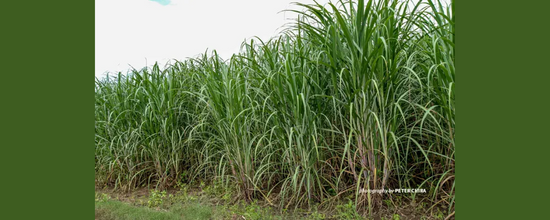
Pokkah Boeng:


Symptoms:
Chlorotic Phase:
- Frequently, a pronounced wrinkling, twisting and shortening of the leaves accompanied the malformation or distortion of the young leaves. The base of the affected leaves is often narrower than that of the normal leaves.
Acute Phase or Top-Rot Phase:
- The young spindles are killed and the entire top dies. Leaf infection sometimes continues downward and penetrates in the stalk by way of a growing point.
Knife-cut Phase (associate with top rot phase):
one or two or even more transverse cuts in the rind of the stalk /stem in such a uniform manner as if the tissues are removed with a sharp knife, This is an exaggerated stage of a typical ladder lesion of a pokkah boeng disease.
Management:
Cultural Control:
Crop rotation should be followed in affected fields. Paired row or wider spacing planting of sugarcane. Raise and destroy diseased plants.
Chemical Control:
Spraying of Bavistin 50% WP @1 gm/ lit. of water OR Blitox- 50% WP @2 gm/ lit. of water OR Dithane M-45 @3 gm/ lit. of water are the most effective fungicides for reducing the pokkah boeng disease. Two to three sprayings with an interval of 15 days reduces the multiplication of a pathogen. Sprinkle on the crop with sour whey.
Leave a Reply