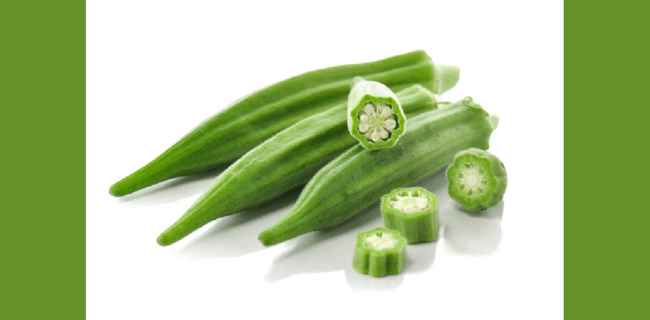
Okra is a multipurpose crop valued for its tender and delicious pods. It is the most important vegetable crop of the tropical and subtropical regions of the world. It belongs to the genus Abelmoschus and family Malvaceae.
Plant Name- Okra
Scientific Name – Abelmoschus esculentus (L.)
Family- Malvaceae
Hindi Common Name- Bhindi (भिंडी)
Lady Finger or Okra is also known as ‘Bhindi’ and is an important vegetable crop in India.
It is grown in both tropical and subtropical regions and also in the warmer parts of the moderate regions. 100g of edible okra’s nutritional value gives 1.9g protein, 0.2g fat, 6.4g carbohydrate, 0.7g minerals and 1.2g fibers. As a foreign exchange crop, Okra or Lady Finger has a good potential and it accounts for 65% of the export of fresh vegetables. It is cultivated in the area of about 0.35mt/ha and its production is 3.5mt/ha and productivity of 9.6mt/ha.
Okra plant anatomy-


Location:
Uttar Pradesh, Bihar, Orissa, West Bengal, Andhra Pradesh, and Karnataka are the major Lady Finger /Okra producing states in India.
Season:
It is grown in Kharif Season in the month of June-August
It also grows in Zaid season in the month of January – March.
Climate:
During the growing period, it requires long warm season. In humid condition, it gives good yield. It grows well within a temperature range of 22-35°c. It grows the best in rainy season and in heavy rainfall areas. It is highly receptive to frost injury. Below 20°c seeds will fail to germinate.
Varieties:
Punjab no.13: Developed by PAU. Suitable for cultivating in spring-summer season and fruits are light green and 5ridged and of medium length. It is susceptible to mosaic.
Parbhani Kranti: Developed by MKV. Fruits are medium long with tender smooth surface at marketable stage. Average yield is 8.5-11.5 t/ha in 120 days.
Arka Anamika: Developed by IIHR. Fruits are borne in two flushes and they are borne on the first stem 45-50 days after sowing during second flush. Fruits are spineless with 5-6 ridges.
Punjab Padmini: Developed by Punjab Agricultural University, Ludhiana. Fruits are quick growing, hairy and of dark green color. It’s ready to harvest within 55-60days after sowing. It is tolerant to yellow vein mosaic virus. Gives average yield of 40-48qtl/acre.
Punjab 7: It is resistant to yellow vein mosaic virus, jassid and boll worm. Fruits are dark green, medium in size. Gives average yield of 40qtl/acre.
Punjab 8: Developed from Pusa Sawani. Fruits are of dark green color and 15-16 cm long at time of harvesting. It is tolerant to yellow vein mosaic virus and resistant to fruit borer.
Punjab Suhavani: It gives an average yield of 49qtl/acre. It has dark green color fruits and is tolerant to yellow mosaic virus.
Parbhani Kranti: Fruits are medium long with good keeping quality. It is tolerant to yellow vein mosaic virus. It’s ready to harvest in 120 days. Gives average yield of 40 to 48qtl/acre.
Pusa Sawani: It is developed by IARI, New Delhi. It is suitable for cultivation in summer and rainy season. It’s ready to harvest within 50 days. Fruits are dark, green and 10-12cm long at time of harvesting. It is susceptible to yellow vein mosaic virus. Gives average yield of 48-60qtl/acre.
Soil Requirement:
It grows well in all kind of soils. For its cultivation, Sandy loam and clay-loam soils are the best.
The optimum pH range is 6-6.8. The soil should have good internal drainage. Soil with high organic matter is preferred so that cartful of FYM or compost should be assimilated during land preparation.
Loam soil-

Loam soil is a mixture of sand, silt and clay that are combined to avoid the negative effects of each type.
These soils are fertile, easy to work with and provide good drainage. Depending on their predominant composition they can be either sandy or clay loam.
As the soils are a perfect balance of soil particles, they are considered to be a gardeners best friend, but still benefit from topping up with additional organic matter.
Sandy soil-

Sandy Soil is light, warm, dry and tends to be acidic and low in nutrients. Sandy soils are often known as light soils due to their high proportion of sand and little clay (clay weighs more than sand).
These soils have quick water drainage and are easy to work with. They are quicker to warm up in spring than clay soils but tend to dry out in summer and suffer from low nutrients that are washed away by rain.
The addition of organic matter can help give plants an additional boost of nutrients by improving the nutrient and water holding capacity of the soil.
Land Preparation:
2-3 plowing is needed for well prepared land. At the time of land preparation, well decomposed FYM 25t/ha is integrated into the soil. It is sown on flat soil or on ridges. Sowing should be done on ridges if the soil is heavy. Neem cake and poultry manures helps in improving the growth of plant and the yield in this crop. By using neem cake and poultry manures or other compost it is possible to reduce the use of fertilizer.
Disc Plough

The disc plough bears little resemblance to the common mould board plough. A large, revolving, concave steel disc replaces the share and the mould board. The disc turns the furrow slice to one side with a scooping action. The usual size of the disc is 60 cm in diameter and this turns a 35 to 30 cm furrow slice. The disc plough is more suitable for land in which there is much fibrous growth of weeds as the disc cuts and incorporates the weeds. The disc plough works well in soils free from stones. No harrowing is necessary to break the clods of the upturned soil as in a mould board plough.
Tractor Drawn Cultivator:

Cultivator is an implement used for finer operations like breaking clods and working the soil to a fine tilth in the preparation of seedbed. Cultivator is also known as tiller or tooth harrow. It is used to further loosen the previously ploughed land before sowing. It is also used to destroy weeds that germinate after ploughing. Cultivator has two rows of tynes attached to its frame in staggered form. The main object of providing two rows and staggering the position of tynes is to provide clearance between tynes so that clods and plant residues can freely pass through without blocking. Provision is also made in the frame by drilling holes so that tynes can be set close or apart as desirect. The number of tynes ranges from 7 to 13. The shares of the tynes can be replaced when they are worn out.
Advantages of soil preparation-
- It loosens the soil.
- It aerates the soil.
- It prevents soil erosion.
- It allows easy penetration of roots into the soil.
Disadvantages of soil preparation-
The downside of tilling is that it destroys the natural soil structure, which makes soil more prone to compaction. By exposing a greater surface area to air and sunlight, tilling reduces soil’s moisture-retaining ability and causes a hard crust to form on the soil surface.
Seed Rate & Sowing Time:
- During summer season, the seed rate is 5-5.5Kg seeds/ha.
- During rainy season, the seed rate is 8-10Kg seeds/ha.
Seed rate normally depends on the germination percentage of spacing and season. Seeds should be soaked in a solution of Bavistin (0.2%) for 6 hours before sowing them. Then the seeds should be kept to dry in shade. The seeds are dibbled on both the sides of the furrows at a spacing of 60 x 30cm in Kharif season and 30 x30cm in summer season.
Seed Treatment-

Seed germination can be enhanced by soaking the seeds in water for 24hours. Seed treatment with Carbendazim will protect seeds from attack of soil born fungus. For that soak seeds in Carbendazim solution@2gm/Ltr of water for 6 hours and dry them in shades. Then immediately complete sowing. For better germination and also to protect crop from soil born disease, treat seed with Imidacloprid@5ml per 1Kg seed followed by treatment with Trichoderma viride@4gm/kg seeds.
| Fungicide name | Quantity (Dosage per kg seed) |
| Carbendazim | 2gm |
| Imidacloprid | 5gm |
Spacing:

In Okra, ridges and furrow type of arrangement is done. At a spacing of 75 x 30 cm and 60 x 45 cm hybrid varieties are planted. 3-4 days before sowing pre-soaking irrigation is very beneficial. The seeds germinate in about 4-5 days.
Sowing Depth-

Sowing depth for okra should be @ 1-2 cm.
Irrigation:

During summer, the crop requires appropriate moisture in the soil for faster growth. Drip irrigation is most useful to the crop as it provides consistent moisture throughout the season. The daily water demand of the crop is 2.4 liter for a day during the early growth stage. During the peak growth stage it demands 7.6 liter per day.
WEED CONTROL:

Weeding is done to control the growth of weeds in okra. Earthing up in the rows should be done in rainy season crop. First weeding is done after 20-25 days of sowing and second weeding is done after 40-45 days of sowing. Application of Fluchoralin 48%@1 liter per acre or Pendimethalin@1ltr/acre or Alachlor@1.6Ltr/acre is used as pre-emergence herbicide for controlling weeds in Bhindi is found an effective method.
Manures & Fertilizers:

Apply well decomposed cow dung@120-150qtl as basal dose. Overall okra crop required Nitrogen@36kg per acre in form of Urea@80kg/acre. Apply half dose Nitrogen at time of sowing and remaining after first picking of fruits. To obtain good yield, 10-15days after sowing take spray of 19:19:19 along with micro-nutrients@2.5 to 3gm/Ltr of water. Repeat the spray of 19:19:19@4-5gm/Ltr of water 10-15days after first spray. To obtain good flowering and fruiting, take spray of 00:52:34 @ 50gm/10Ltr water at before onset of flowering followed by another during fruit formation stage, at fruit development stage spray with 13:00:45 (Potassium Nitrate) @100gm/10Ltr of water to increase yield and to obtained good quality.
Pest and their control:
Shoot and Fruit borer:

The insect larvae bore into the shoots during vegetative growth resulting in drooping of affected shoots. In later stages bored fruits have larvae inside and filled with excreta.
Destroy infested parts. If pest population is high, spray Spinosad@1ml/Ltr water or Chlorantraniliprole 18.5%SC (Coragen) @7ml/15Ltr of water or Flubendiamide@50ml/acre added in 200Ltr water.
Blister beetle:

The beetle feed on pollen, petals and flower buds. If infestation is observed, collect and destroy adults and take spray of Carbaryl@800gm/150Ltr of water or Malathion@400ml/150Ltr of water or Cypermethrin@80ml per 150Ltr of water is effective.
Aphid:

Colony of aphids on young leaves and fruits can be seen. Adult and nymphs, both suck the sap thus weaken the plant. In severe infestation, they cause curling and deformation of young leaves. They secrete honey dew like substance and sooty, black mould is developed on affected parts. Destroy affected parts as soon as infestation is noticed. Apply Dimethoate 300 ml/150Ltr of water, 20 to 35 days after sowing. Repeat again if necessary. If infestation is observed, take spray of Thiamethoxam 25WG@5gm/15Ltr of water.
Disease and their control:
Yellow Vein Mosaic Virus:
The characteristic symptom of this disease is homogenous interwoven network of yellow veins. Growth of the plant gets affected and they remain stunted. Fruits also give yellow appearance with small size and tough texture. It causes yield losses up to 80-90%. This disease is spread due to white fly and leaf hopper. Use resistant varieties for cultivation. Remove and destroyed diseased plants away from field. To control white fly take spray of Dimethoate@300ml/200Ltr of water.
Powdery mildew:

White powdery growth is observed on young leaves and also on fruits. In severe condition premature defoliation and fruit drop is observed. Fruit quality gets deteriorated and they remain small in size.
If infestation is observed in field, take spray of Wet table Sulphur 25gm/10Ltr of water or Dinocap@5ml/10Ltr of water, 4times at 10days interval or Tridemorph@5ml or Penconazol@10ml/10Ltr of water for 4 times with 10days interval.
Cercospora leaf spot:

Spots of grayish centre and red borders appear on the leaves. In case of severe infestation, defoliation occurs.
To avoid future infection do seed treatment with Thiram. If infestation of disease is observed in field, take spray of Mancozeb@4gm/Ltr or Captan@2gm/Ltr or Carbendazime@2gm per Ltr of water or give 2-3 foliar spray of Difenoconazole/Hexaconazole@0.5gm/Ltr of water.
Root rot:

Infested roots become dark brown in color and plant die in case of severe infestation.
Avoid monocropping and follow crop rotation. Before sowing do seed treatment with Carbendazim@2.5gram per kg of seed. Drench the soil with Carbendazim solution@1gm/Ltr of water.
Wilt:

In wilt disease, initially older leaves turn yellow followed by complete wilting of crop. It can attack crop at any stage.
If infestation is observed, Drench with Carbendazim@10gm/10Ltr water around root zone.”
Harvesting:

Flowering starts from 35-40 days after planting. Crop starts harvesting in 55-65 days after planting when pods are 2-3 inches long. Pods are tender at this stage. It should be harvested after every 2-3 days as the Okra pods grow very fast. The pods should not mature on the plant because this will hinder more pods from growing and will reduce the production of the plant. Okra should be handled carefully because the pods blemish easily.
Yield:
The yield differs from 5-7 t/ha in summer and 8-10 t/ha in the rainy season.
POST-HARVEST
Okra has short shelf life and cannot be stored for longer time. The okra fruit should be stored at 7-10°C and 90% relative humidity to increase the shelf life. For local markets the fruits are filled in jute bags, whereas for distant markets the fruits are packed in perforated paper cartons. If the temperature will be below 7 degree, it would lead to chilling injury which will lead to discoloration of surface, pitting and decay.

Leave a Reply to Md noor ain Cancel reply